Plant classification (herbs, shrubs, trees) (BIOLOGY)
Watch this topic in 60 seconds
Free preview · Lesson 1
Understanding Plant classification (herbs, shrubs, trees) (BIOLOGY)
Plant Classification: Herbs, Shrubs, and Trees - Our Green Neighbors!
Hello young botanists! Have you ever looked around your neighborhood, a park, or even your own backyard and noticed how many different kinds of plants there are? Some are small and delicate, others are big and sturdy, and some are somewhere in between. Today, we're going to learn how scientists sort these amazing plants into groups based on how they grow. It's like organizing your toys into different boxes – one for LEGOs, one for stuffed animals, and one for board games! We'll focus on three main types of plants: **herbs**, **shrubs**, and **trees**.
What Makes a Plant a Plant?
Before we start sorting, let's remember what a plant is. Plants are living things that usually grow in soil. They have roots that anchor them and take in water and nutrients. They have stems that support them, and leaves that help them make food from sunlight, air, and water (this process is called photosynthesis!).
Group 1: Herbs - The Delicate Gardeners
Imagine the soft, leafy plants you might find in a kitchen garden, like basil, mint, or parsley. These are often **herbs**! Herbs are plants that have soft, green, and usually quite flexible stems. Think of them like the soft, bendy straws you might use for a drink.
Key Characteristics of Herbs:
- Stem: Their stems are soft, green, and not woody. They tend to die back to the ground in winter (if they live in a cold place) and regrow from their roots in the spring.
- Size: Herbs are generally smaller than shrubs and trees. They might grow low to the ground or stand a little taller, but they don't have that thick, woody trunk.
- Lifespan: Some herbs live for only one growing season (annuals), some live for two (biennials), and some can live for many years (perennials) by regrowing their soft stems each year.
Analogy Time! Think of herbs like a tender flower in a vase. The stem is soft and bendy. Or, think of them like the soft, green sprouts you might eat in a salad – delicious and not tough!
Examples of Herbs: Mint, basil, parsley, cilantro, lavender (when young), daisies, strawberries (the plant itself).
Group 2: Shrubs - The Bushy Builders
Now, let's think about plants that are a bit bigger and sturdier than herbs, but not as giant as trees. These are **shrubs**! Shrubs are like nature's little bushes. They have stems that become woody as they grow, but they usually branch out low to the ground, creating a bushy appearance.
Key Characteristics of Shrubs:
- Stem: Their stems are woody, meaning they are hard and can't be easily bent or snapped. They branch out from the base, creating multiple main stems.
- Size: Shrubs are typically larger than herbs but smaller than trees. They can range from a couple of feet tall to over 10 feet tall.
- Shape: They often have a rounded or spreading shape because of all the branching stems.
Analogy Time! Imagine a shrub like a friendly, multi-branched umbrella. Instead of one big pole, it has several smaller woody poles (stems) coming up from the ground and spreading out. Or, think of a blueberry bush – it’s full of woody branches, but no single giant trunk like an oak tree.
Examples of Shrubs: Rose bushes, blueberry bushes, lilac bushes, rhododendrons, hydrangeas.
Group 3: Trees - The Towering Giants
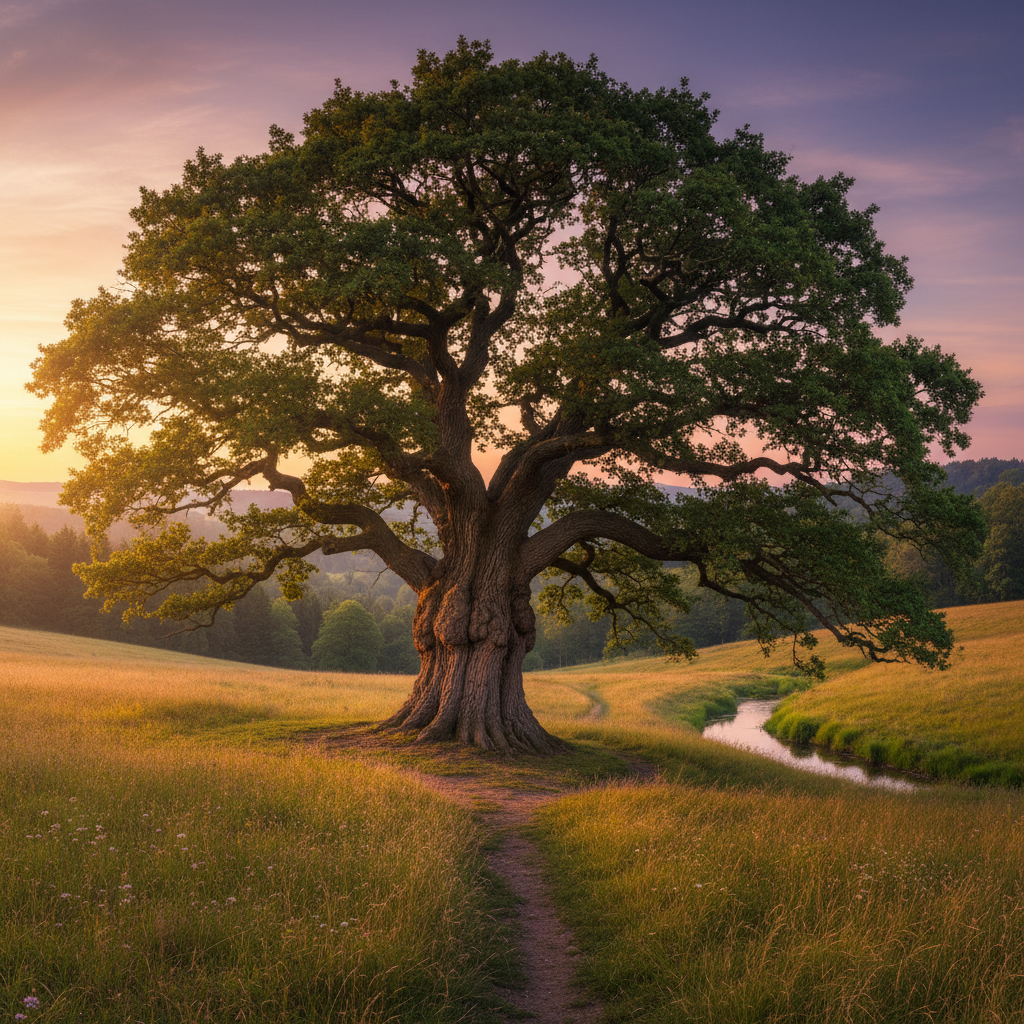
Finally, we come to the biggest and often oldest members of the plant kingdom: **trees**! Trees are the skyscrapers of the plant world. They are known for having one main, thick, woody stem called a trunk.
Key Characteristics of Trees:
- Stem: They have a single, dominant, woody trunk that grows tall and supports branches that spread out high above the ground.
- Size: Trees are generally the largest of the three plant types, often growing very tall.
- Structure: They have a clear distinction between the trunk and the canopy of leaves and branches above.
Analogy Time! A tree is like a tall building with a strong, single foundation (the roots), a sturdy main structure (the trunk), and floors with offices and windows (the branches and leaves). Or, think of an elephant's leg – it's thick, strong, and stands tall, supporting the rest of its massive body, much like a tree trunk supports its crown of leaves.
Examples of Trees: Oak trees, maple trees, pine trees, apple trees, palm trees.
 ⚠️ This picture may have spelling mistakes. Trust the words in the lesson.
Quick Comparison: Herbs, Shrubs, and Trees
Let's put them all together to see the differences:
| Feature | Herbs | Shrubs | Trees |
|---|---|---|---|
| Stem(s) | Soft, green, flexible | Woody, multiple stems from the base | One main, thick, woody trunk |
| Size | Small | Medium | Large/Tall |
| Shape | Low-growing, spread out or upright | Bushy, spreading, multi-stemmed | Tall, with a distinct crown of branches |
| Woody? | No | Yes | Yes |
Why Does Classification Matter?
Scientists classify plants to understand them better. Knowing if a plant is an herb, shrub, or tree helps us understand how it grows, what kind of environment it needs, and how it might be used. For example, gardeners know to plant herbs for quick harvests of leaves, shrubs for landscaping and borders, and trees for shade and long-term growth.
So next time you're outside, take a look around and see if you can spot the herbs, the shrubs, and the trees! You're now a plant detective!
Keep learning, free
Create a free Syllabax account to unlock practice questions and games for this topic.
Visual Learning Enhanced! 🚀
To help you master this topic, we use Advanced Syllabax AI to generate detailed diagrams and visual models.
Note on Visuals: The AI sometimes makes spelling errors in image labels. Please refer to the lesson text for the correct terminology.