Comparing areas [Area (Intro)]
Watch this topic in 60 seconds
Free preview · Lesson 1
Understanding Comparing areas [Area (Intro)]
Comparing Areas: How Much Space Does It Take Up?
Welcome, young mathematicians! Today, we're going on an exciting adventure to explore something called area. Have you ever wondered how much space a sticker covers on your notebook? Or how much paint you'd need to cover a picture frame? That's all about area! Area tells us how much flat space a shape or an object takes up. Think of it like a cozy blanket covering your bed – the bigger the blanket, the more of the bed it covers. The area is like the 'coziness' of the space.
What is Area?
Imagine you have two different-sized cookies. One is small and round, and the other is a bit bigger and also round. If you wanted to place them side-by-side on a plate, which one would take up more room? The bigger cookie, right? That's because it has a larger area. Area is simply the amount of surface a 2D shape covers. It's like measuring how much 'stuff' fits inside the lines of a shape.
Let's use some fun analogies:
- A Patch of Grass: Imagine a small square garden and a big rectangular garden. The bigger garden has more grass, so it has a larger area.
- A Puzzle: When you put together a jigsaw puzzle, each piece covers a certain amount of space on the table. The whole puzzle, once finished, covers a total area.
- A Sticker: A tiny sticker covers a small area on your pencil, while a big sticker covers a larger area on your backpack.
Comparing Areas: Which is Bigger?
Sometimes, we need to figure out which shape covers more space than another. This is called comparing areas. It's like looking at two rugs and deciding which one would cover more of your bedroom floor.
How can we compare areas? We can do it in a few ways:
1. Visual Comparison: Just Look!
Sometimes, you can just look at two shapes and tell which one is bigger. If you have a small square and a giant square, it's pretty obvious the giant square has a bigger area. It's like looking at a tiny ladybug and a big elephant – the elephant definitely takes up more space!
Example:
Imagine two drawings of a sun. One is small, and the other is drawn much bigger. The bigger sun drawing has a larger area.
2. Using Units: Counting Squares!
When shapes aren't so obviously different, or when we want to be very precise, we can use little squares to measure the area. Think of these little squares as tiny tiles. We can cover the shape with these tiles and count how many fit inside without overlapping. The number of tiles tells us the area!
Let's say we have a rectangle. If we can fit 4 little squares across the bottom and 3 little squares going up the side, we can fill the whole rectangle with 4 groups of 3 squares. That's 12 squares in total! So, the area of that rectangle is 12 'square units'.
Analogy:
Imagine you want to tile your bathroom floor. You have small square tiles. You count how many tiles you need to cover the whole floor. That count is the area of your bathroom floor!
Important Note: When we count squares, we are measuring in 'square units'. These units can be anything – like square inches, square feet, or even just 'square centimeters' if we're using a ruler. For now, we'll just call them 'square units'!
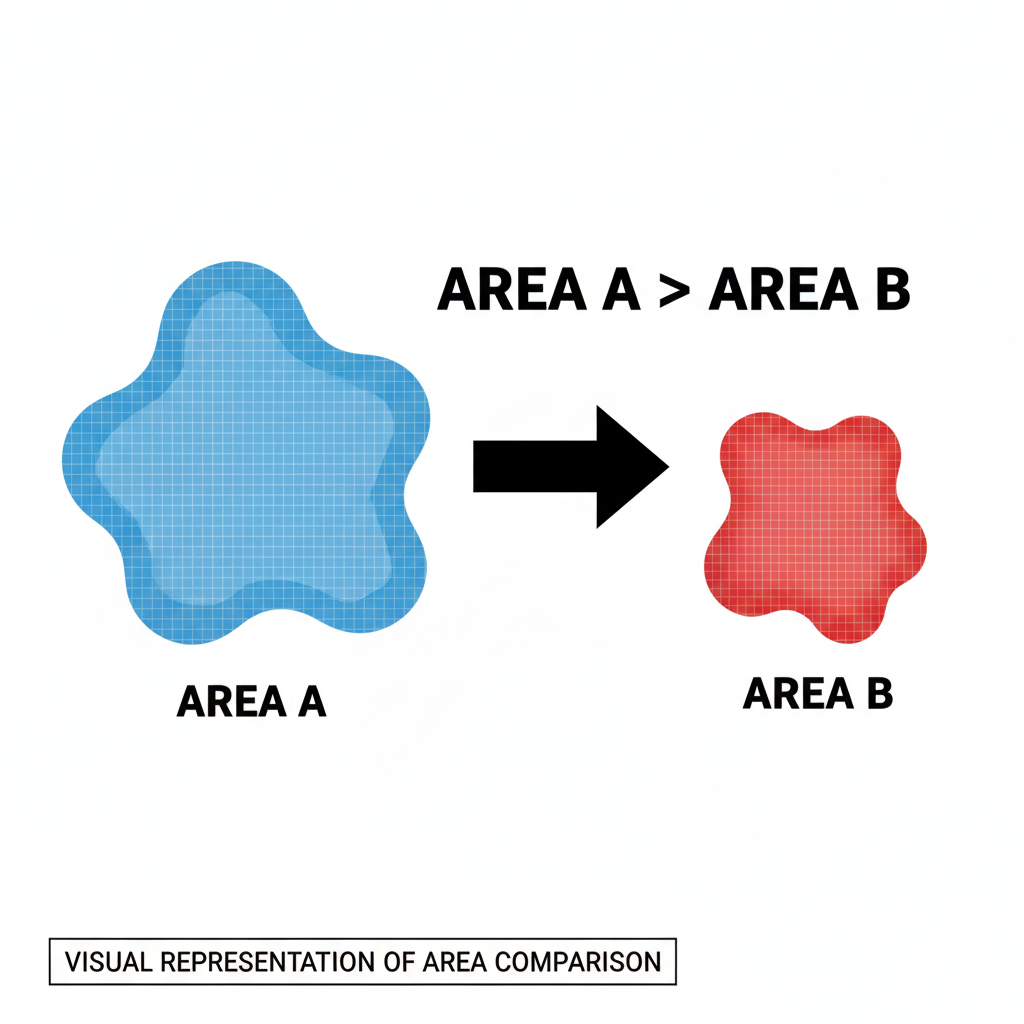
3. Overlapping: Seeing What Fits!
Another way to compare is to see if one shape can completely cover another. If you can place a smaller rug entirely on top of a larger rug, the larger rug must have a bigger area. It's like trying to put a small book on top of a big book – the big book has more space for the small one to sit on.
Example:
Imagine you have a square sticker and a round sticker. If you try to place the square sticker on top of the round sticker, and the square sticker fits completely inside the round sticker without any part sticking out, then the round sticker has a larger area.
Why is Area Important?
Understanding area helps us in many real-life situations:
- Decorating: Knowing the area of your walls helps you figure out how much paint or wallpaper you need.
- Gardening: If you want to plant flowers, knowing the area of your garden bed tells you how much space you have.
- Building: Carpenters and builders use area to calculate how much wood or carpet is needed for floors or walls.
- Playing: When you play on a playground, you're using the space, which is measured by area!
Let's look at another example. Imagine you have two different-sized pieces of paper. One is a small postcard, and the other is a big poster. The poster covers much more space on the wall, so it has a larger area than the postcard. We can compare them just by looking!
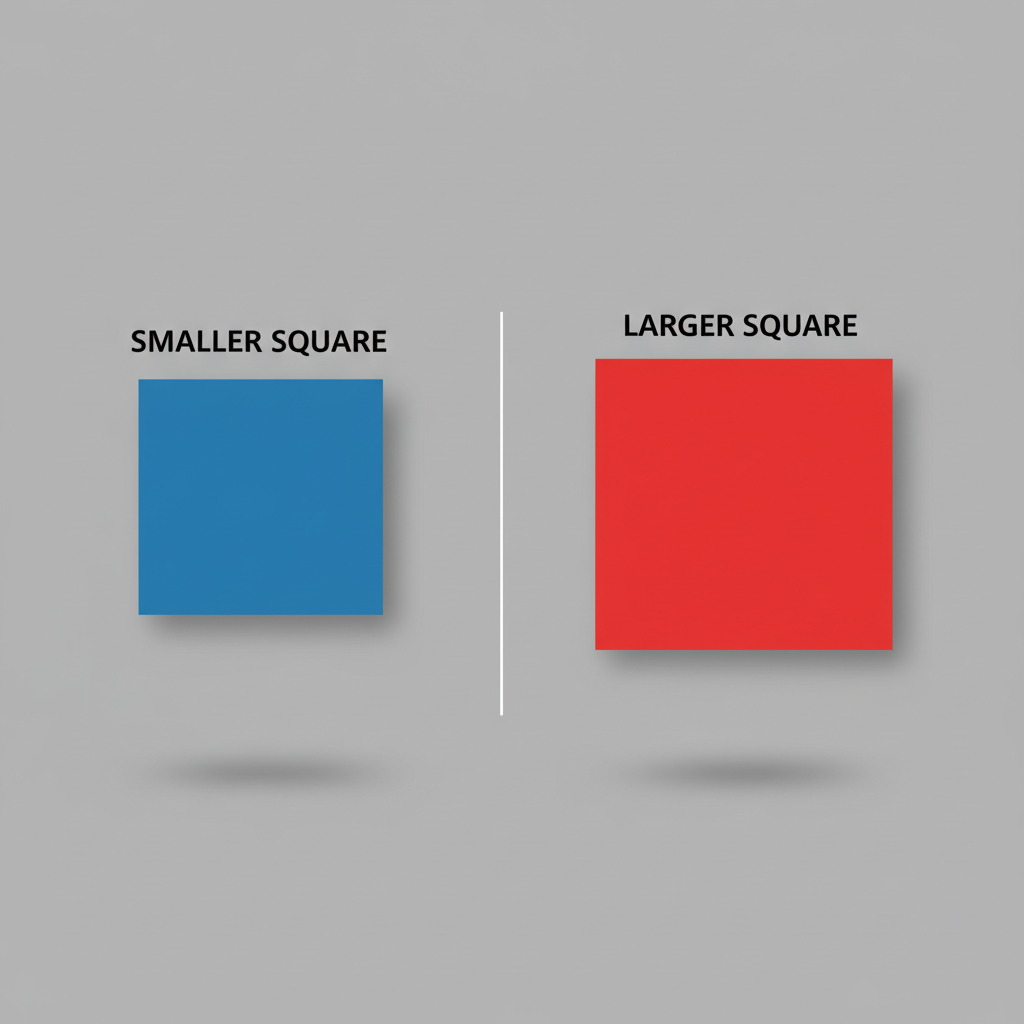
In our next lessons, we'll learn even more ways to measure and calculate area precisely. For now, remember that area is all about how much flat space something takes up. Keep looking around you for shapes and thinking about how much space they cover!
Keep learning, free
Create a free Syllabax account to unlock practice questions and games for this topic.
Visual Learning Enhanced! 🚀
To help you master this topic, we use Advanced Syllabax AI to generate detailed diagrams and visual models.
Note on Visuals: The AI sometimes makes spelling errors in image labels. Please refer to the lesson text for the correct terminology.