Understanding Multimedia
Watch this topic in 60 seconds
Free preview · Lesson 1
Understanding Understanding Multimedia
Understanding Multimedia: A Digital Feast!
Hey there, future digital explorers! Have you ever thought about all the cool stuff you see and hear on your computer, tablet, or even a TV? From your favorite video game to that catchy song, or a funny picture your friend sent, these are all parts of something called multimedia!
Think of 'multi' as meaning 'many' and 'media' as meaning 'ways of communicating or showing things.' So, multimedia simply means many ways of showing and telling information. It's like a super amazing sandwich that has lots of different, yummy ingredients all put together to make something fantastic!
The Ingredients of Our Multimedia Sandwich
Just like a sandwich has bread, fillings, and maybe some sauce, multimedia also has different 'ingredients' that work together. Let's break them down:
1. Text: The Foundation (Like the Bread!)
Text is simply words and numbers that you read. It's the most basic way we share information. Think of it like the bread in our sandwich – it holds everything together and gives us the main message. When you read a story online, a caption under a picture, or even this very sentence, you are interacting with text.
- Examples: Articles, headlines, captions, stories, emails, messages.
2. Images: The Colorful Fillings (Like Cheese or Veggies!)
Images are pictures, drawings, photographs, or graphics. They help us understand things quickly and make content much more interesting to look at. An image can tell a whole story without needing many words, just like a picture is worth a thousand words! They add color and flavor to our multimedia sandwich.
- Examples: Photos of your pet, drawings in a book, charts and graphs, emojis.
3. Audio: The Soundtrack (Like a Song Playing While You Eat!)
Audio is anything you can hear. This includes music, spoken words, sound effects, or even podcasts. Imagine trying to watch a movie without any sound – it just wouldn't be the same! Audio adds emotion and excitement, making the experience much richer. It's like having a cool song playing while you enjoy your sandwich!
- Examples: Songs, voice recordings, sound effects in games, podcasts, narrator's voice in a documentary.
4. Video: The Moving Story (Like a Mini-Movie Inside Your Sandwich!)
Video is a combination of moving pictures and sound. It's like watching a mini-movie! Videos are super popular because they can show us things happening in real-time, explain complex ideas, or simply entertain us. Think about your favorite cartoon or a science experiment video – that's video in action! It's the most dynamic part of our multimedia sandwich, bringing everything to life.
- Examples: YouTube clips, movie trailers, recorded TV shows, video calls with family.
5. Animation: The Magical Moving Drawings (Like a Flipbook Story!)
Animation is a little different from video. While video records real-life motion, animation creates the illusion of motion from a sequence of static images or drawings. Think of it like a flipbook where each page has a slightly different drawing, and when you flip them fast, it looks like it's moving! Many cartoons you watch are animations. It adds a magical, often fantastical, element to our multimedia experience.
- Examples: Cartoons, animated movies, GIFs, loading screens in video games.
Putting It All Together: Why Multimedia Matters!
The magic of multimedia is when these different ingredients are mixed and matched. Imagine a website that only had text – it would be boring, right? Now, imagine that same website with bright pictures, exciting videos, and maybe some background music. Much better!
Multimedia makes learning more fun, communication clearer, and entertainment more engaging. It helps us understand ideas better because we can see, hear, and read about them all at once. It's like getting to experience your amazing sandwich with all your senses!
Where do you find multimedia? Everywhere!
- On the Internet: Websites, social media, online games, streaming services.
- In School: Presentations, educational videos, interactive textbooks.
- Entertainment: Movies, TV shows, video games, music videos.
- Everyday Life: Digital ads, news reports, weather forecasts on TV.
So, the next time you're online or watching something, take a moment to notice all the different parts – the words, the pictures, the sounds, and the moving images. You'll be a multimedia expert in no time!
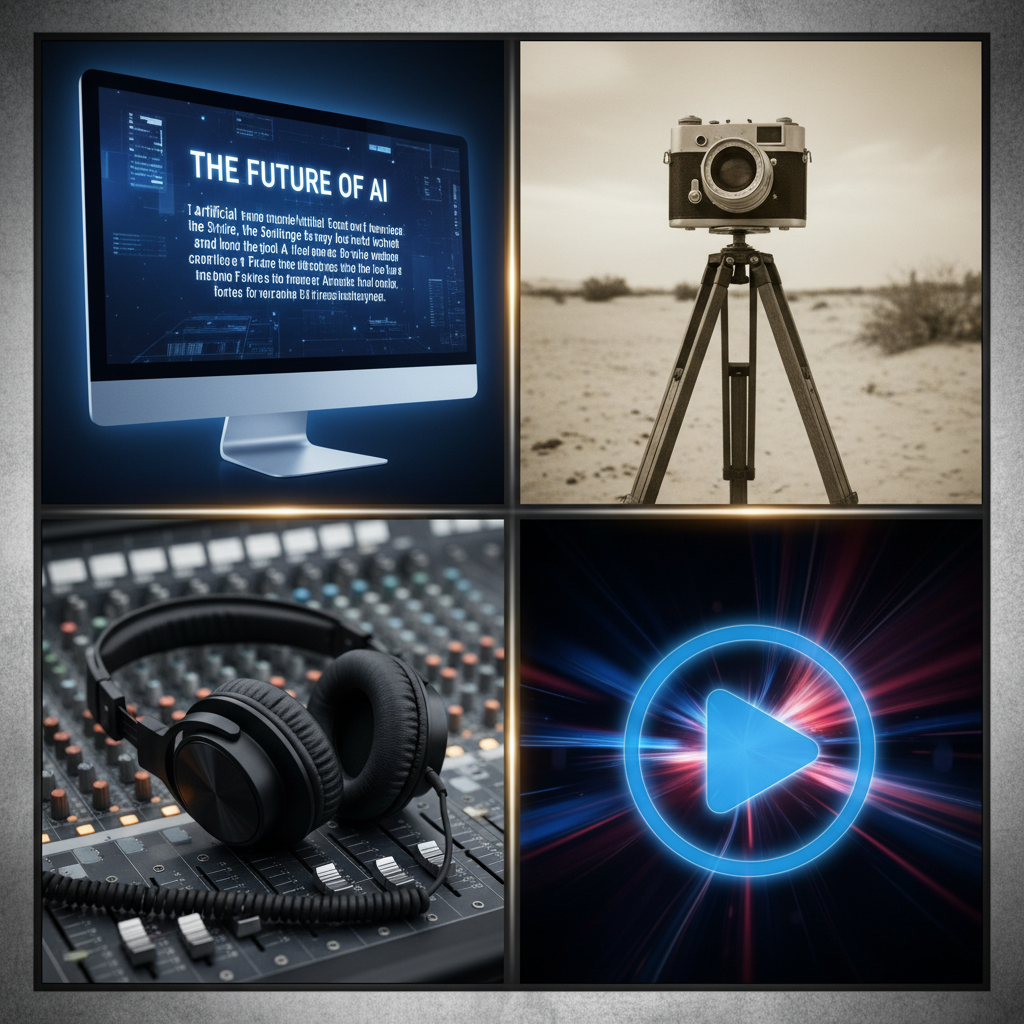 ⚠️ This picture may have spelling mistakes. Trust the words in the lesson.
Keep learning, free
Create a free Syllabax account to unlock practice questions and games for this topic.
Visual Learning Enhanced! 🚀
To help you master this topic, we use Advanced Syllabax AI to generate detailed diagrams and visual models.
Note on Visuals: The AI sometimes makes spelling errors in image labels. Please refer to the lesson text for the correct terminology.