Basic differences (Living & Non-Living Things)
Watch this topic in 60 seconds
Free preview · Lesson 1
Understanding Basic differences (Living & Non-Living Things)
Hello, Young Explorers! Living vs. Non-Living Things!
Have you ever looked around your room or out your window and wondered about all the different things you see? There are so many cool things in our world! Some of them are just like us – they can eat, grow, and move! But some other things are very different; they don't need food, and they stay the same size unless someone changes them. Today, we're going on an adventure to learn the super important difference between Living Things and Non-Living Things!
What are Living Things?
Imagine you have a tiny little puppy. What does that puppy need? What does it do? It needs food, water, and sleep, right? It plays, barks, and runs around. And guess what? That tiny puppy will grow into a big dog! Things that can do these kinds of actions are called Living Things.
Let's look at the special club rules for Living Things:
-
Living Things Need Food and Water to Live and Grow!
Just like you get hungry and thirsty, all living things need food and water. Think of a tiny seed. If you give it water and put it in the sunshine, it will start to grow into a plant! The water and sun are like its food. Or think about a car; it needs gasoline to move, right? Living things need food like a car needs gas – it's their energy! Animals eat plants or other animals, and plants make their own food using sunlight and water. -
Living Things Grow!
Remember that tiny puppy? It grows bigger and bigger! You were once a tiny baby, and now you are a big first grader! Trees start as small saplings and become tall, strong trees. This change, getting bigger and stronger, is called growth. It happens all by itself from the inside out.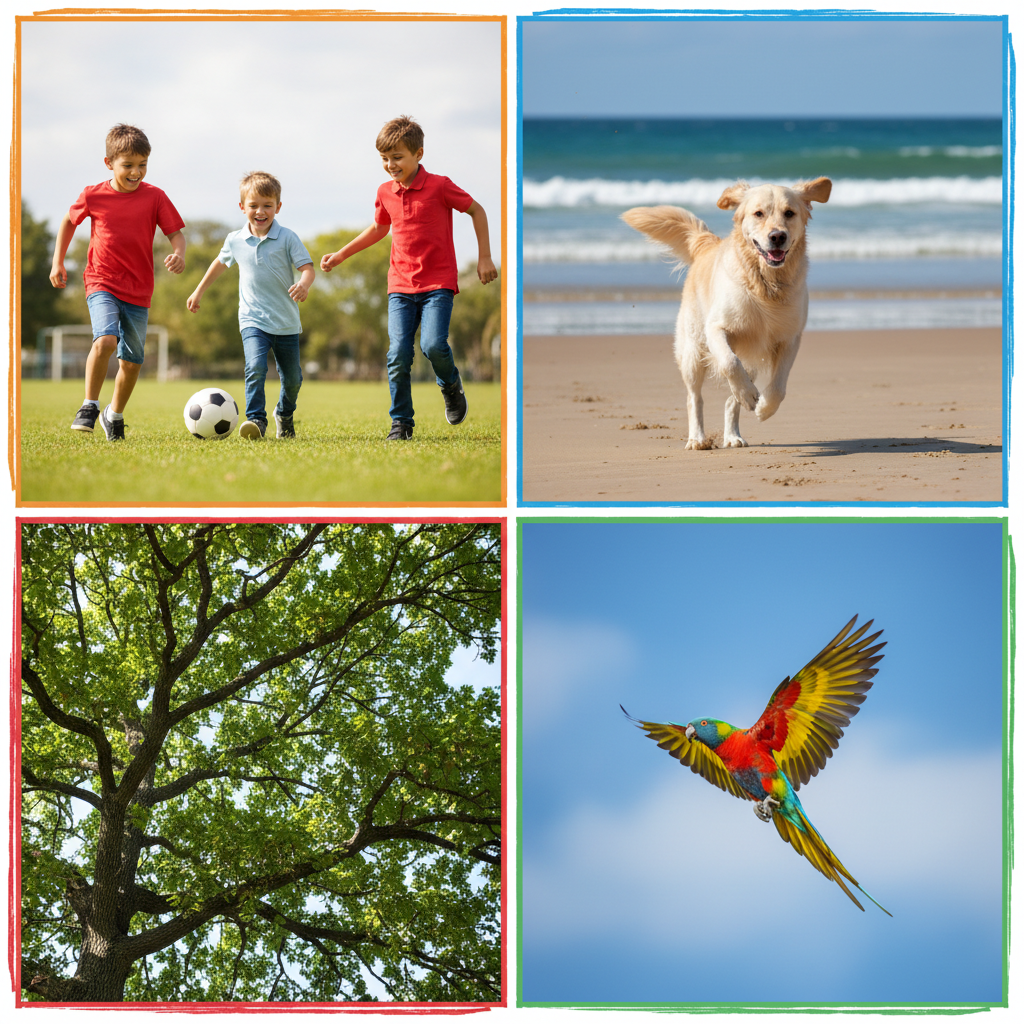 ⚠️ This picture may have spelling mistakes. Trust the words in the lesson.
-
Living Things Can Move on Their Own!
You can walk, run, jump, and play! Birds can fly, fish can swim, and even plants move a little bit – like turning their leaves towards the sun. A toy car might move, but someone has to push it or make it go with batteries. Living things move by themselves when they want to, to find food, or just for fun! -
Living Things Breathe!
Take a deep breath in... and out! You are breathing air right now. This is how your body gets the air it needs. Fish breathe in water using special parts called gills. Plants also 'breathe' in their own way, taking in air through their leaves. All living things need to breathe to stay alive, even if it's not exactly like how we do it. -
Living Things Can Make Babies (Reproduce)!
A mommy cat and a daddy cat can have little kittens. A hen lays eggs, and then baby chicks hatch! You have a mommy and a daddy. This is called reproduction – making new living things just like themselves. It's how families grow and how there are always new plants and animals in the world. -
Living Things Respond to Their Surroundings!
If you touch something hot, you quickly pull your hand away, right? If a dog hears its name, it might wag its tail. If a plant doesn't get enough sunlight, its leaves might start to look sad and droopy. Living things can feel and react to what's happening around them. This is called responding.
What are Non-Living Things?
Now, let's think about your favorite toy car or a rock you found in the park. Does your toy car get hungry? Does the rock grow into a bigger rock all by itself? No! These are Non-Living Things. They don't do any of those special things that living things do.
Here are the simple rules for Non-Living Things:
Non-Living Things Do NOT Need Food or Water.
Your teddy bear doesn't need a snack, and your crayon doesn't get thirsty.Non-Living Things Do NOT Grow on Their Own.
A toy block will always be the same size unless you break it or add another block to it. It doesn't grow bigger from the inside, like a plant or a person.Non-Living Things Cannot Move on Their Own.
A ball only rolls if you kick it. A book stays on the table until someone picks it up. They don't have legs or wings to move themselves around.Non-Living Things Do NOT Breathe.
Your shoe doesn't take deep breaths, and a mountain doesn't need air.Non-Living Things Cannot Make Babies (Reproduce).
One crayon will never turn into two crayons by itself!Non-Living Things Do NOT Feel or Respond.
If you accidentally bump into a table, the table doesn't feel it or say 'ouch!'
A Quick Check for Super Sleuths!
Sometimes things can be tricky! A car moves, but is it living? No, because it needs gasoline (not food) and someone to drive it, and it doesn't grow on its own or make baby cars. A cloud moves and gets bigger, but it's not alive because it doesn't eat, breathe, or make baby clouds. Remember, for something to be truly living, it needs to do most or all of those special club rules all by itself!
Let's Review!
So, everything around us can be put into one of two big groups: Living Things or Non-Living Things. Living things are alive, just like you! They eat, grow, move, breathe, make babies, and respond. Non-living things are not alive; they don't do any of those things on their own. It's like finding the difference between a real animal and a toy animal – one is alive and one is not!
Keep looking around you and see if you can spot all the living and non-living things! You're becoming a super scientist!
Keep learning, free
Create a free Syllabax account to unlock practice questions and games for this topic.
Visual Learning Enhanced! 🚀
To help you master this topic, we use Advanced Syllabax AI to generate detailed diagrams and visual models.
Note on Visuals: The AI sometimes makes spelling errors in image labels. Please refer to the lesson text for the correct terminology.