Introduction to units: cm, m, g, kg, L (Length ,Weight & Capacity)
Watch this topic in 60 seconds
Free preview · Lesson 1
Understanding Introduction to units: cm, m, g, kg, L (Length ,Weight & Capacity)
Welcome, Super Measurers!
Hello, amazing second graders! Today, we're going on an exciting adventure to learn about measuring. Have you ever wondered how tall you are? Or how much your favorite toy weighs? Or how much juice fits in a carton? We use special tools and words to figure these things out! These special words are called **units of measurement**. They help us talk about how long, how heavy, or how much something can hold.
Part 1: Measuring Length - How Long is It?
Let's start with length! Length tells us how long or tall something is. Think about a super long snake, or a tiny ant. They have different lengths, right?
Centimeters (cm): The Tiny Builders
When we want to measure small things, like the tip of your pencil or a ladybug's wing, we use centimeters, which we can shorten to cm. Imagine a tiny Lego brick. If you line up a few Lego bricks end-to-end, that's about how long a centimeter is!
Analogy: A centimeter is like a tiny step. If you take a very, very small step, you've moved about one centimeter!
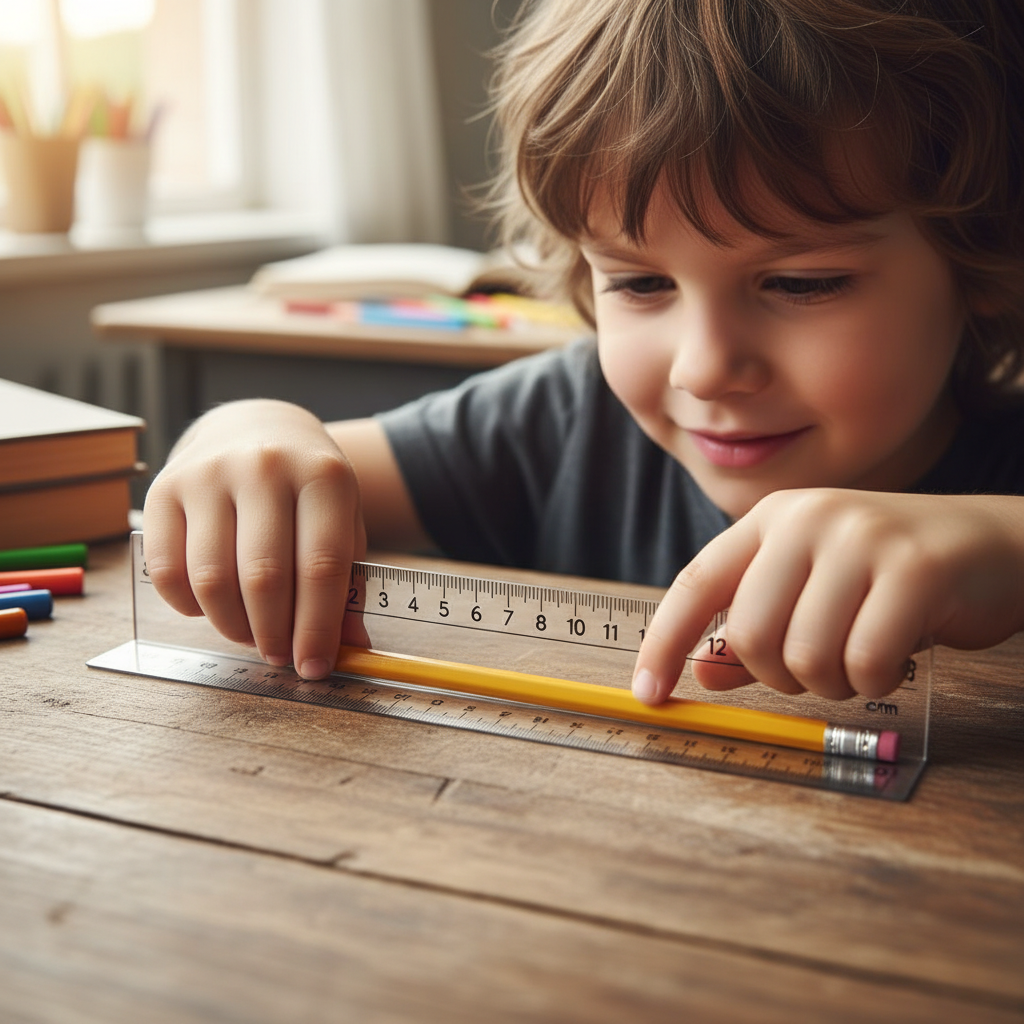
A ruler you might use in school has lots of little lines. Each little line is usually 1 cm long. If you put your finger next to the ruler, you can see how many centimeters long your finger is.
Meters (m): The Big Jumpers
Now, what about bigger things? Like a classroom door, or a playground slide, or even you! For these longer things, we use meters, which we shorten to m.
Analogy: Imagine taking a big, giant leap! That big leap is about one meter. If you lay down three school rulers end-to-end, that's about the length of one meter!
So, a centimeter is for small things, and a meter is for bigger things.
Part 2: Measuring Weight - How Heavy is It?
Next up, let's talk about weight! Weight tells us how heavy or light something is. Think about a fluffy feather and a big rock. The rock is much heavier, right?
Grams (g): The Feather's Friend
For very light things, like a feather, a small coin, or a single grain of rice, we use grams, or g.
Analogy: Imagine holding a single butterfly. That butterfly is very light, maybe only a few grams. A single paperclip is also about 1 gram!
Kilograms (kg): The Heavy Lifter
When things get heavier, like a bag of apples, a small dog, or even a big watermelon, we use kilograms, or kg.
Analogy: Think about carrying your backpack to school. If it's full of books, it might weigh a few kilograms. A bowling ball is a good example of something that weighs around 5 kilograms!
So, grams are for tiny, light things, and kilograms are for heavier things.
Part 3: Measuring Capacity - How Much Does it Hold?
Finally, let's explore capacity! Capacity tells us how much liquid a container can hold. Think about a juice box, a milk jug, or a swimming pool.
Liters (L): The Drink Holder
For holding liquids like water, milk, or juice, we often use liters, or L.
Analogy: Imagine a big bottle of soda or a carton of milk you drink at home. That's usually about 1 liter. If you fill up about four big glasses with water, that's close to 1 liter!
We use liters to measure how much a bottle, a jug, or even a bathtub can hold.

Let's Review Our Super Measuring Tools!
We learned about:
- Length: How long or tall something is.
- Centimeters (cm): For measuring small lengths (like a bug).
- Meters (m): For measuring big lengths (like a room).
- Weight: How heavy or light something is.
- Grams (g): For measuring light weights (like a feather).
- Kilograms (kg): For measuring heavier weights (like a dog).
- Capacity: How much liquid something can hold.
- Liters (L): For measuring liquid amounts (like in a bottle).
You are all becoming amazing measurers!
Keep learning, free
Create a free Syllabax account to unlock practice questions and games for this topic.
Visual Learning Enhanced! 🚀
To help you master this topic, we use Advanced Syllabax AI to generate detailed diagrams and visual models.
Note on Visuals: The AI sometimes makes spelling errors in image labels. Please refer to the lesson text for the correct terminology.