Balanced diet & nutrients[BIOLOGY]
Watch this topic in 60 seconds
Free preview · Lesson 1
Understanding Balanced diet & nutrients[BIOLOGY]
A Balanced Diet: Fueling Your Amazing Body!
Imagine your body is like a super cool, high-tech machine, maybe a race car or a powerful spaceship! Just like these machines need the right kind of fuel to run smoothly, perform at their best, and last a long time, your body also needs the right kind of food. This right kind of food is called a balanced diet.
What is a Balanced Diet?
A balanced diet means eating a variety of foods in the right amounts so that your body gets all the essential nutrients it needs to grow, stay healthy, and have energy. It's not about eating only one or two types of food; it's about eating a mix of different food groups. Think of it like building with LEGOs – you need different shapes and sizes of bricks to build something strong and amazing!
Why is it important? A balanced diet helps you:
- Grow strong: Especially important as you're growing up!
- Have energy: To play, learn, and explore the world.
- Fight off sickness: Keep those pesky germs away.
- Think clearly: Your brain needs good fuel too!
The Main Food Groups: Your Body's Building Blocks and Energy Sources
Our bodies need different types of nutrients from food. These nutrients are like the different tools and materials needed to build and run our body machine. Let's break them down into the main food groups:
1. Carbohydrates: The Energy Givers
Carbohydrates are your body's main source of energy. They are like the gasoline for your race car! When you eat foods rich in carbohydrates, your body breaks them down into a sugar called glucose, which is used for fuel. You need energy for everything you do – running, jumping, thinking, and even breathing!
Analogy: Think of carbohydrates as the electricity that powers your video games or the batteries that make your toys work. Without them, nothing moves!
Examples: Bread, rice, pasta, potatoes, fruits, and sugary snacks (though it's best to get them from healthier sources like whole grains and fruits!).
2. Proteins: The Builders and Repairers
Proteins are the building blocks of your body. They help your body grow and repair itself. Think of proteins as the construction workers and the repair kits for your body machine. They build new cells, repair muscles after you exercise, and are important for your hair, skin, and nails.
Analogy: If your body is a building, proteins are the bricks, cement, and even the handy workers who fix any cracks or damage.
Examples: Meat, fish, eggs, beans, lentils, nuts, and dairy products like milk and cheese.
3. Fats: The Long-Lasting Energy and Protectors
Fats are also a source of energy, but they provide a more long-lasting supply. They are like the reserve fuel tank for your body machine. Fats also help protect your organs, keep you warm, and help your body absorb certain vitamins. It's important to choose healthy fats!
Analogy: Fats are like the insulation that keeps your house warm in winter, and also the shock absorbers on a car that protect the passengers.
Examples: Vegetable oils, nuts, seeds, avocado, and fatty fish. While some fats are healthy, it's good to limit unhealthy fats found in fried foods and sweets.
4. Vitamins and Minerals: The Helpers and Regulators
Vitamins and minerals are like the special tools and computer chips in your body machine. You only need them in small amounts, but they are super important for many different jobs. They help with everything from seeing in the dark (Vitamin A!) to keeping your bones strong (Calcium!) and helping your body use energy.
Analogy: Vitamins and minerals are like the engineers who make sure all the different parts of the machine are working together correctly. They help the engine run efficiently, the lights turn on, and the brakes work!
Examples:
- Vitamin C: Found in oranges, strawberries, and broccoli. Helps fight colds and keeps your skin healthy.
- Calcium: Found in milk, yogurt, and leafy green vegetables. Essential for strong bones and teeth.
- Iron: Found in spinach, red meat, and beans. Helps carry oxygen in your blood.
- Vitamin D: Found in fortified milk, sunlight, and fish. Helps your body use calcium for strong bones.
5. Water: The Essential Fluid
Water is absolutely crucial for life! It makes up a large part of your body and is involved in almost every bodily process. Think of water as the coolant and lubricant for your body machine. It helps transport nutrients, remove waste, keep your body temperature just right, and keeps everything flowing smoothly.
Analogy: Water is like the oil that keeps all the moving parts of a machine from grinding and overheating. It also helps flush out the dirt and grime.
How much to drink? Try to drink plenty of water throughout the day, especially when it's hot or when you're exercising.
6. Fiber: The Gut's Best Friend
Fiber is a type of carbohydrate that your body can't digest, but it's super important for your digestive system. It acts like a broom, sweeping through your intestines and helping to move food along. This keeps your tummy happy and helps prevent constipation.
Analogy: Fiber is like the cleaning crew for your digestive system, making sure everything runs smoothly and nothing gets stuck.
Examples: Found in whole grains (like whole wheat bread and oats), fruits, vegetables, and beans.
Putting It All Together: A Colorful Plate!
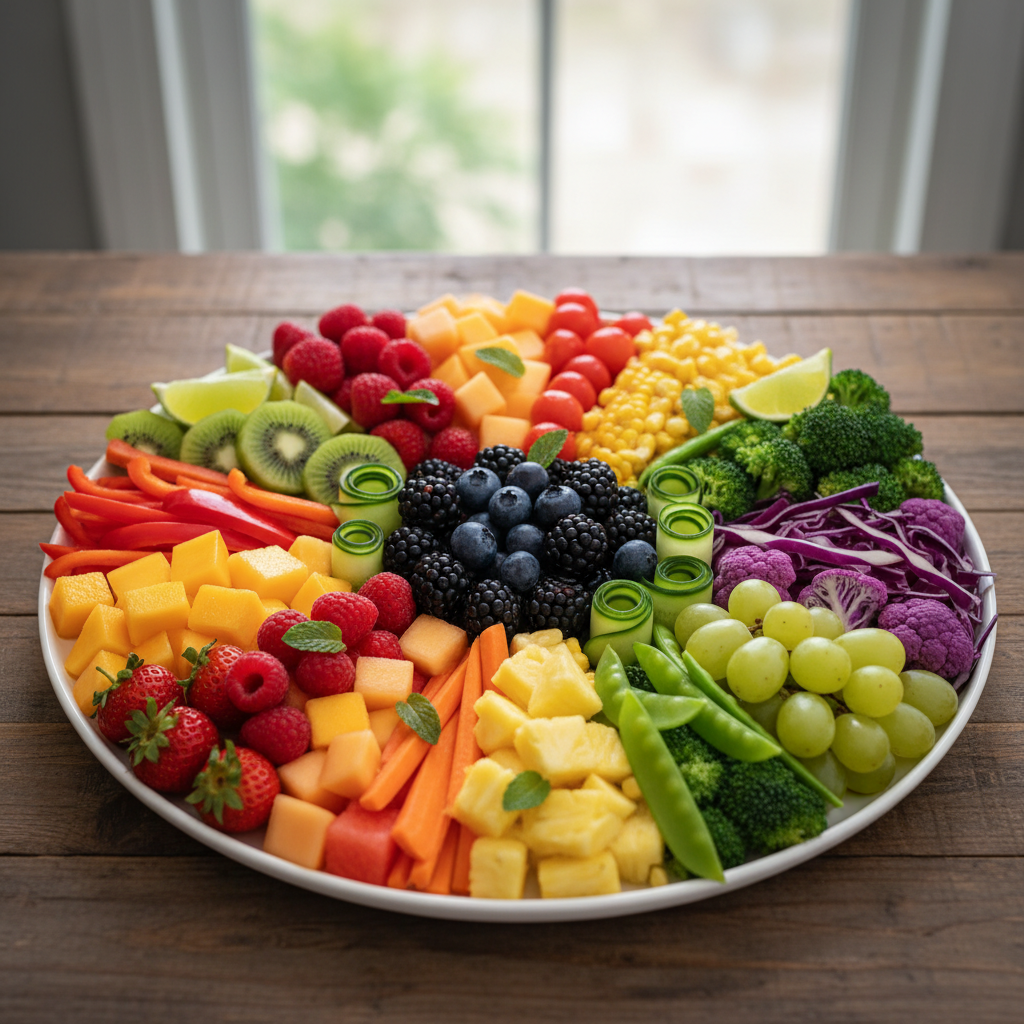
A good way to think about a balanced diet is to aim for a colorful plate at every meal. Different colors often mean different nutrients!
Red foods (like tomatoes, strawberries) often have antioxidants.
Orange/Yellow foods (like carrots, bananas) are often rich in Vitamin A and potassium.
Green foods (like spinach, broccoli) are packed with vitamins and minerals.
Blue/Purple foods (like blueberries, eggplant) contain important antioxidants.
White/Tan foods (like rice, chicken) can provide carbohydrates and protein.
Aim to include a variety from all these groups throughout the day to give your body the best fuel possible. Remember, eating a balanced diet is an adventure in keeping your amazing body machine running at its very best!
Keep learning, free
Create a free Syllabax account to unlock practice questions and games for this topic.
Visual Learning Enhanced! 🚀
To help you master this topic, we use Advanced Syllabax AI to generate detailed diagrams and visual models.
Note on Visuals: The AI sometimes makes spelling errors in image labels. Please refer to the lesson text for the correct terminology.