Learning Journey
Watch this topic in 60 seconds
Free preview · Lesson 1
Understanding Examples: scissors, knife, stapler (Simple Machines)
Amazing Tools: Scissors, Knives, and Staplers (Simple Machines!)
Hello, young scientists! Have you ever wondered how some of the tools we use every day make our lives so much easier? Think about cutting paper, slicing an apple, or putting papers together. These actions seem simple, but they often rely on something super cool called a simple machine!
Imagine you have a big, heavy rock to move. You could try pushing it with just your hands, but that would be very hard work! Now, what if you found a long, strong stick and used it to lift the rock? Suddenly, it's much easier! That stick you used is a simple machine. Simple machines are basic tools that help us do work more easily by changing the direction or amount of force we need to use. They are like superpowers for our muscles!
The Mighty Lever: Meet the Seesaws of Work!
One very common type of simple machine is called a lever. A lever is like a stiff board or a bar that pivots, or turns, around a special point. This special point is called the fulcrum. Think of a seesaw on a playground! The board is the lever, and the part in the middle that it balances on is the fulcrum. When you push down on one side of a seesaw (that's your effort), the other side goes up (that's the load you're moving).
1. Scissors: Two Levers Working Together!
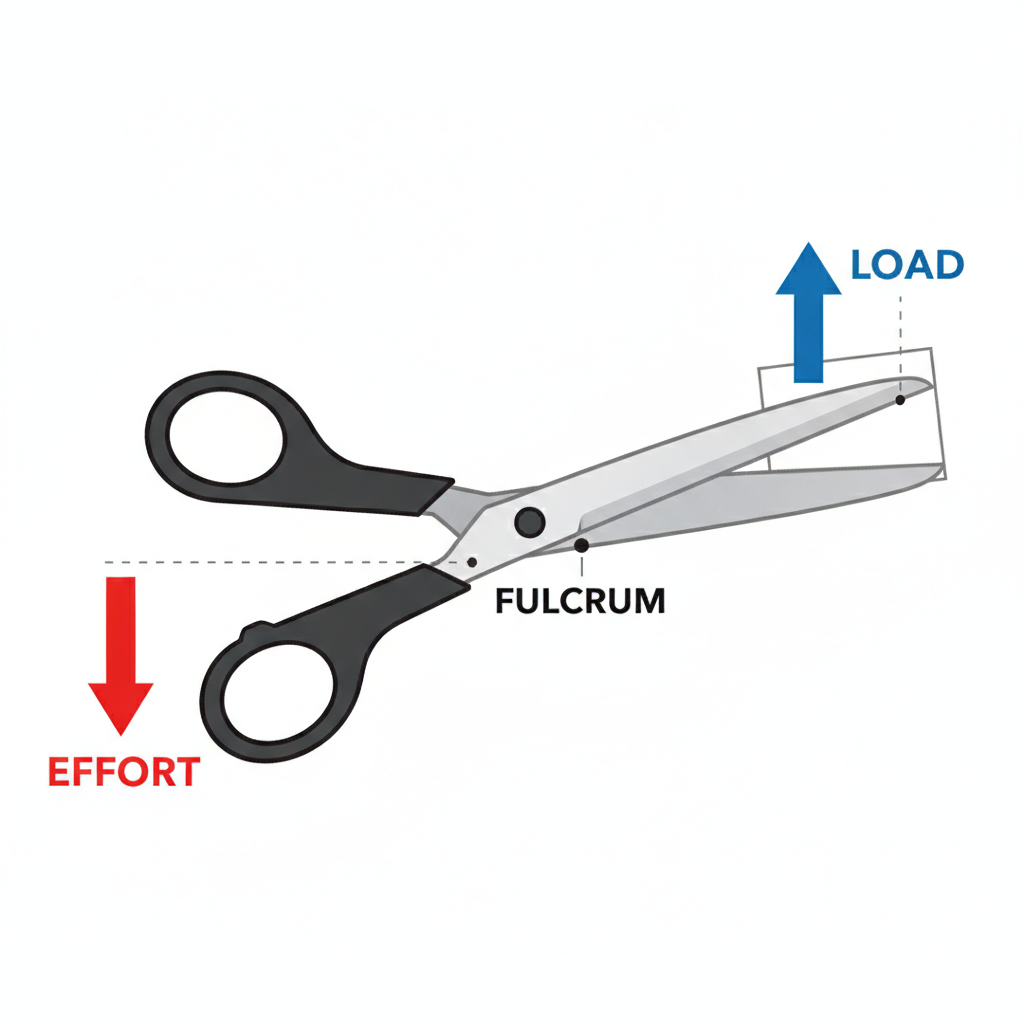
Let's look at a tool you use all the time: scissors! Scissors might look complicated, but they are actually two levers working together in a clever way. Each blade of the scissors is like one side of a seesaw.
- Fulcrum: Where do the two parts of the scissors meet and pivot? Right in the middle, often with a screw! That screw is the fulcrum. It's the point they turn around.
- Effort: Where do you put your fingers and push? In the handles! That's where you apply your effort, or force.
- Load: What are you trying to cut? The paper, fabric, or whatever is between the blades! That's the load.
When you squeeze the handles (your effort), the blades move around the fulcrum and cut the paper (the load) with much more power than if you tried to rip it with just your hands. The blades act like tiny wedges, too, which helps them separate the material. So, scissors are super useful because they combine a few ideas!
The Super Splitter: Introducing the Wedge!
Another fantastic simple machine is called a wedge. A wedge is basically two inclined planes (like ramps) joined together. It has a thick end and a thin, pointy end. Its job is to push things apart or hold things in place. Think of a doorstop – it's a wedge that holds the door open!
2. Knives: Sharp Wedges for Splitting and Slicing!
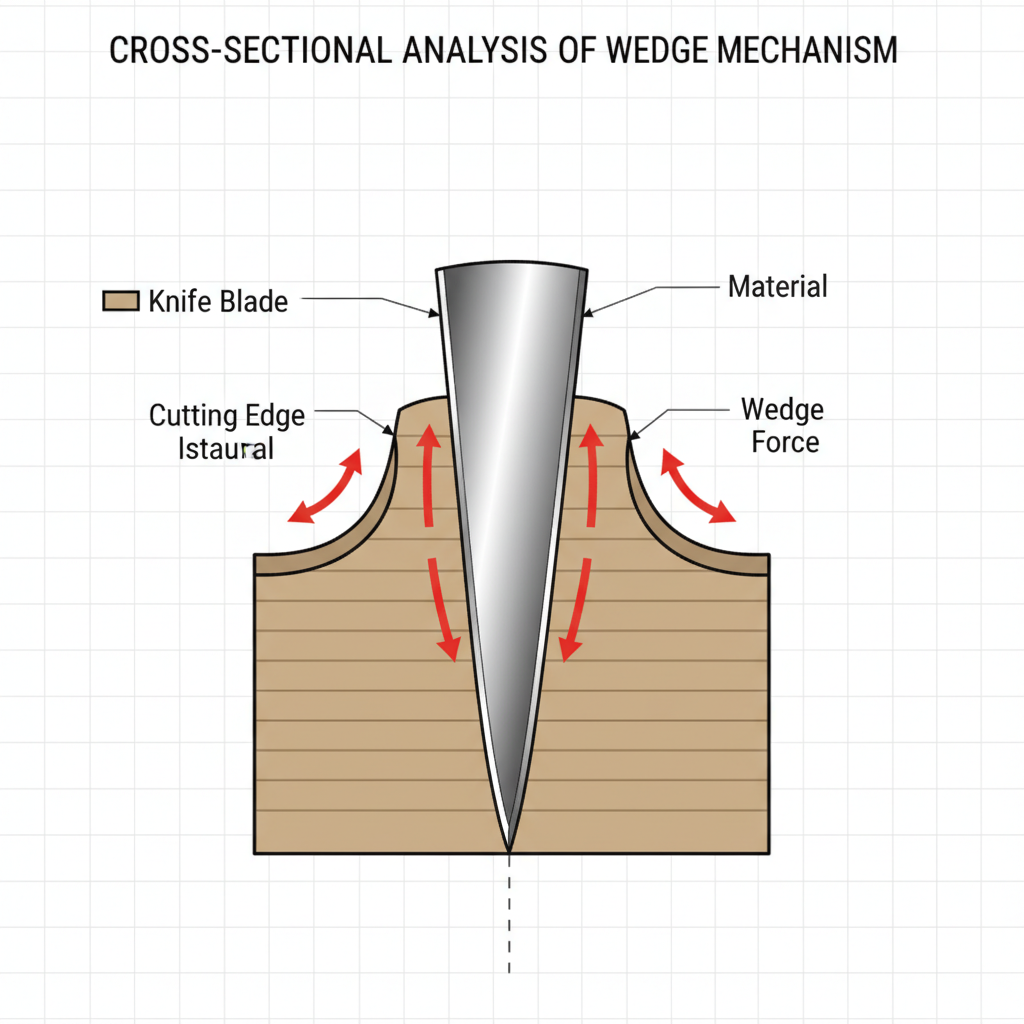
Now let's think about a knife. A knife is a perfect example of a wedge! It's designed to split things apart. Look at the blade of a knife – it gets thinner and thinner until it's very sharp at the edge. That sharp edge is the wedge.
- When you push a knife into an apple, the wedge shape of the blade pushes the apple apart, making it easy to slice.
- The knife doesn't just cut; it forces the material to separate along its sharp edge. It's like having a tiny ramp that helps push things apart with less effort.
Without the wedge shape, trying to cut an apple with a blunt, flat piece of metal would be nearly impossible! The wedge makes the force you apply much more effective at splitting the fruit.
 ⚠️ This picture may have spelling mistakes. Trust the words in the lesson.
Combining Forces: The Stapler!
Some tools are even more amazing because they use more than one simple machine at the same time. A stapler is a great example of this!
3. Staplers: Levers and Wedges Team Up!
When you use a stapler to put papers together, several simple machines are at work:
- Lever: The top part of the stapler, the handle you press down, acts like a lever. When you push down (your effort), it pivots to push the staple through the paper.
- Wedge: The staple itself has pointy ends that act like tiny wedges! These sharp points help to pierce and split the paper, allowing the staple to go through easily. If the staple wasn't pointy, it would just bend or scrunch the paper.
So, the stapler uses the lever action to apply force, and the wedge shape of the staple to penetrate the paper. It's a fantastic team effort of simple machines to get the job done quickly and easily!
Why Simple Machines Matter!
Scissors, knives, and staplers are just a few examples of how simple machines help us every single day. They might seem like ordinary objects, but they are smart inventions that change how we do work. They allow us to cut, slice, and join things that would be very difficult or impossible to do with just our hands. By understanding how these tools work, you're understanding a big part of how the world around us is built to make tasks easier!
Keep learning, free
Create a free Syllabax account to unlock practice questions and games for this topic.
Visual Learning Enhanced! 🚀
To help you master this topic, we use Advanced Syllabax AI to generate detailed diagrams and visual models.
Note on Visuals: The AI sometimes makes spelling errors in image labels. Please refer to the lesson text for the correct terminology.