Grouping Similar Data
Watch this topic in 60 seconds
Free preview · Lesson 1
Understanding Grouping Similar Data
Welcome to the World of Grouping Similar Data!
Hey there, young super-organizers! Have you ever looked at a big pile of toys and wished you could find your favorite action figure or that special Lego brick right away? Or maybe you've tried to count how many red shirts you have, but they were all mixed up with your blue shirts and green shirts?
Guess what? There's a super helpful trick that grown-ups and kids use all the time to make things easier to find, count, and understand. It's called Grouping Similar Data! Don't let the big words scare you, it's actually super simple and something you probably already do every day!
What is "Data"? (It's Easier Than You Think!)
First, let's talk about that word, "data." It sounds fancy, but it just means information or facts. Think about it: the color of your shoes is data. How many friends you have is data. The number of apples in a basket is data. Even the names of your favorite cartoon characters are data! Data is everywhere, all around us, all the time.
What Does "Similar" Mean?
Next, let's look at "similar." When we say things are similar, we mean they are alike or belong together in some way. Like all the red crayons are similar because they are all red. All the square blocks are similar because they are all square. All the dogs you see are similar because they are all, well, dogs!
Putting it Together: Grouping Similar Data!
So, when we say Grouping Similar Data, it simply means putting information or things that are alike, or belong together, into their own special groups! It's like being a super-organizer for everything around you.
Think of These Analogies:
- Your Toy Box: Imagine your toy box is a big mess. You have LEGOs, cars, dolls, and stuffed animals all mixed up. To group similar data, you would put all the LEGOs together in one pile, all the cars in another, all the dolls in another, and all the stuffed animals in their own spot. Now, isn't that much easier to find what you want?
- Your Closet or Dresser: Do you put all your shirts in one drawer, your pants in another, and your socks in a third? Yes! You're grouping similar data (clothes) by their type.
- A Fruit Stand at the Store: When you go to the grocery store, do you see apples, bananas, and oranges all jumbled together in one big bin? No way! All the apples are in one section, all the bananas in another, and all the oranges in yet another. The store groups the fruits to make it easy for you to find exactly what you want.
- Animals at the Zoo: A zoo groups animals by similar features or habitats. You might see all the big cats (lions, tigers) in one area, and all the birds in another. This helps us learn about them better!
The Superpower of Grouping: Why Do We Do It?
Grouping similar data isn't just about being neat; it's about making life much, much easier! It gives us a superpower to:
- Find Things Faster: If all your blue crayons are together, you can grab one in a flash! No more digging around.
- Count Things Easily: If all the red shirts are in one pile, you can quickly count how many you have without getting confused by the other colors.
- Understand Information Better: When you see all the types of birds together, you start to understand what makes a bird a bird, and how different birds are similar. It helps your brain learn and make sense of the world.
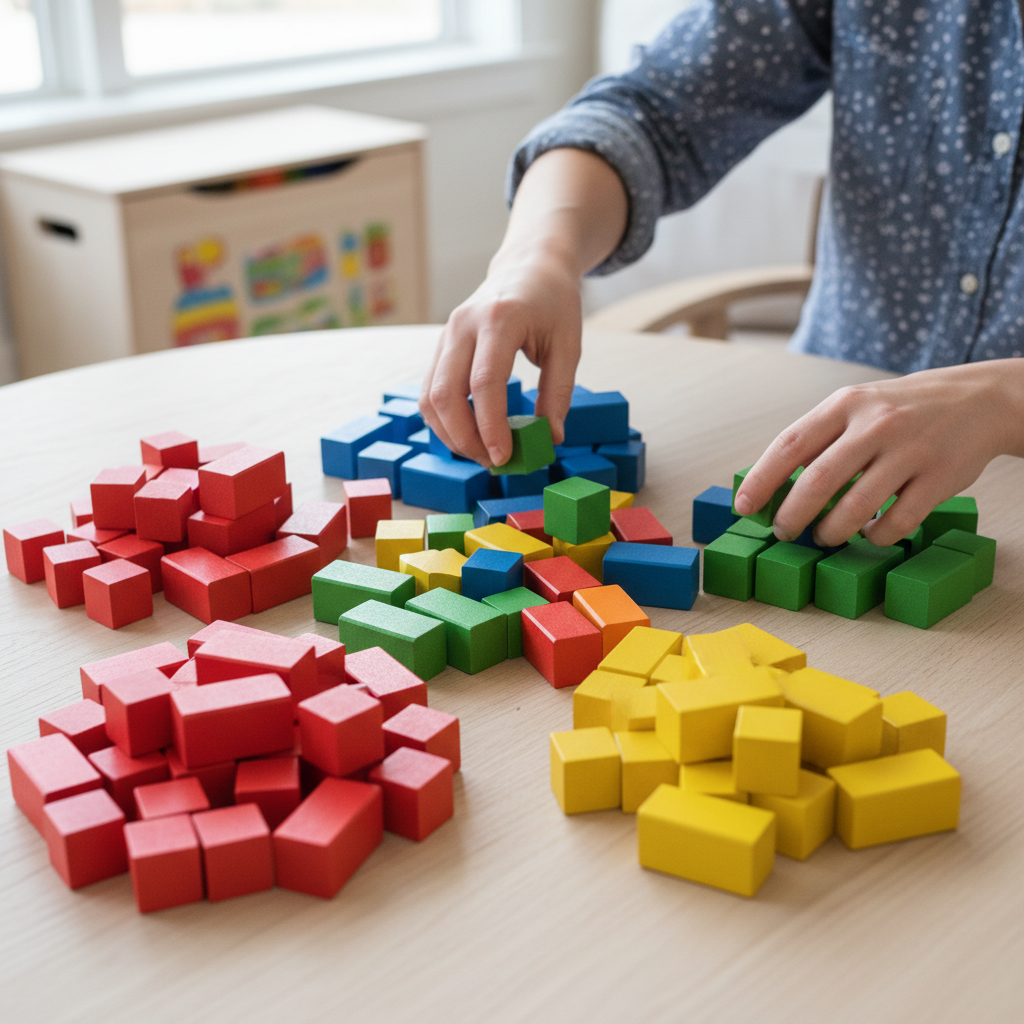 ⚠️ This picture may have spelling mistakes. Trust the words in the lesson.
How Do We Group Data? It's a Simple Plan!
- Look Closely: Pay attention to the things or information you have.
- Find What's Alike: Ask yourself, "What do these things have in common?" Is it their color? Their shape? What they are used for?
- Put Them Together: Once you find what's similar, put those alike things into their own group.
Let's Try Some More Examples!
- School Supplies: Imagine you have a basket with pencils, markers, erasers, and glue sticks. How would you group them? You'd put all the pencils together, all the markers together, all the erasers together, and all the glue sticks together. You're grouping by 'type of supply'!
- Shapes: If you have a pile of toy shapes: squares, circles, and triangles. You'd put all the squares in one group, all the circles in another, and all the triangles in a third. You're grouping by 'shape'!
- Animals on a Farm: If you see pictures of cows, chickens, and pigs, you would group all the cows together, all the chickens together, and all the pigs together. You're grouping by 'type of animal'!
Grouping in Your Everyday Life!
You're already a grouping pro! Think about it:
- When you help put away groceries, you put all the dairy in the fridge, all the fruits in the fruit bowl, and all the pantry items in the cupboard. That's grouping!
- When your teacher asks you to line up by height, you're being grouped by your height.
- When you sort your dirty clothes for laundry (lights and darks), you're grouping similar items.
So, the next time you see a jumble of things, remember your superpower! You can make sense of it all by Grouping Similar Data. It helps you stay organized, find what you need, and understand the world around you so much better!
Keep learning, free
Create a free Syllabax account to unlock practice questions and games for this topic.
Visual Learning Enhanced! 🚀
To help you master this topic, we use Advanced Syllabax AI to generate detailed diagrams and visual models.
Note on Visuals: The AI sometimes makes spelling errors in image labels. Please refer to the lesson text for the correct terminology.