Completing patterns (Logical Reasoning)
Watch this topic in 60 seconds
Free preview · Lesson 1
Understanding Completing patterns (Logical Reasoning)
Completing Patterns: A Fun Detective Game for Your Brain!
Imagine you're a super detective, and your mission is to solve mysteries. In the world of math and logic, patterns are like secret codes that only detectives like you can crack! Today, we're going to learn how to complete these patterns. It's like finishing a puzzle or figuring out what comes next in a song.
What is a Pattern?
A pattern is a set of things – like shapes, numbers, or even sounds – that repeat in a special order. Think about the colors of a rainbow: Red, Orange, Yellow, Green, Blue, Indigo, Violet. That's a pattern! Or how about the days of the week? Monday, Tuesday, Wednesday... what comes next? You know it's Thursday! That's because you recognize the pattern.
Types of Patterns We'll Explore
We'll focus on a few types of patterns that are super common:
- Shape Patterns: These are patterns made with different shapes.
- Number Patterns: These use numbers that follow a specific rule.
- Color Patterns: Like the rainbow, these use repeating colors.
Let's Become Pattern Detectives!
Shape Patterns: Spotting the Sneaky Shapes!
Imagine you have a box of building blocks. You might have a pattern like: Circle, Square, Circle, Square...
What shape do you think comes next? If you said Circle, you're right! The pattern is "Circle, Square" repeating over and over.
Let's try another one. What if the pattern is: Triangle, Star, Circle, Triangle, Star, Circle...
What's the next shape? It's a Triangle! The rule here is "Triangle, Star, Circle" repeating.
Sometimes, the pattern might be a little longer. Look at this:
Square, Circle, Triangle, Square, Circle, Triangle...
The repeating part is "Square, Circle, Triangle". So, after the last Triangle, what comes next? A Square!
Number Patterns: The Number Sequence Secret!
Numbers can also make patterns! These patterns usually follow a rule, like adding or subtracting the same number each time. It's like a secret counting code.
Let's look at this number pattern: 2, 4, 6, 8...
What do you notice about the numbers? They are getting bigger! How much bigger? Let's check:
- From 2 to 4, we added 2 (2 + 2 = 4)
- From 4 to 6, we added 2 (4 + 2 = 6)
- From 6 to 8, we added 2 (6 + 2 = 8)
The rule is to add 2 each time! So, after 8, what number comes next? If you add 2 to 8 (8 + 2), you get 10!
Here's another one: 10, 20, 30, 40...
What's the rule? You're right, we add 10 each time! So, after 40, the next number is 40 + 10 = 50.
Patterns can also go down! Look at:
15, 12, 9, 6...
Are the numbers getting bigger or smaller? They are getting smaller. How much smaller?
- From 15 to 12, we subtracted 3 (15 - 3 = 12)
- From 12 to 9, we subtracted 3 (12 - 3 = 9)
- From 9 to 6, we subtracted 3 (9 - 3 = 6)
The rule is to subtract 3 each time! So, after 6, the next number is 6 - 3 = 3.
Color Patterns: Painting the Town with Patterns!
Remember the rainbow? That's a color pattern. Let's make our own!
Imagine you have crayons: Red, Blue, Green, Red, Blue, Green...
What color comes next? It's Red! The repeating part is "Red, Blue, Green".
Another example: Yellow, Orange, Yellow, Orange...
What color follows Orange? It's Yellow! The rule is "Yellow, Orange" repeating.
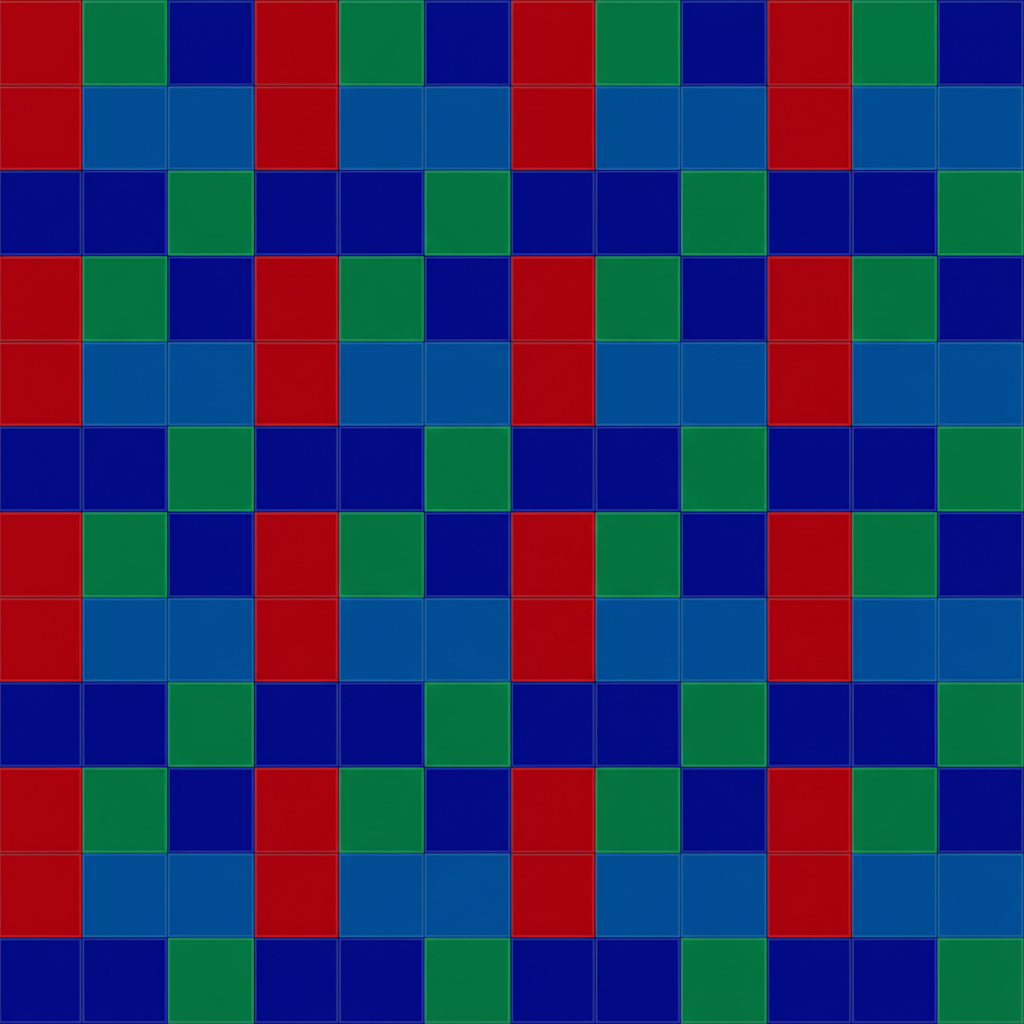 ⚠️ This picture may have spelling mistakes. Trust the words in the lesson.
How to Be a Pattern Master!
Becoming a pattern master is like learning to ride a bike. The more you practice, the easier it gets! Here’s your detective toolkit:
- Look Carefully: Always look at the beginning of the sequence to see what's happening.
- Are the shapes the same, or do they change?
- Are the numbers going up or down? By how much?
- Are the colors repeating?
- Find the Rule: Try to figure out what repeats. This is the "secret code" of the pattern.
- For shapes, what's the group of shapes that repeats?
- For numbers, what do you add or subtract each time?
- For colors, what's the order of colors that keeps repeating?
- Apply the Rule: Once you know the rule, use it to find the next item in the pattern. Imagine you're predicting what happens next in a story!
Why are Patterns Important?
Patterns are everywhere! They help us understand the world around us. When you see a pattern, you can predict what's coming next. This is a super important skill for learning math, science, and even for solving everyday problems. It's like having a superpower for your brain!
Keep learning, free
Create a free Syllabax account to unlock practice questions and games for this topic.
Visual Learning Enhanced! 🚀
To help you master this topic, we use Advanced Syllabax AI to generate detailed diagrams and visual models.
Note on Visuals: The AI sometimes makes spelling errors in image labels. Please refer to the lesson text for the correct terminology.