Sources & types of pollutants[CHEMISTRY]
Watch this topic in 60 seconds
Free preview · Lesson 1
Understanding Sources & types of pollutants[CHEMISTRY]
Understanding Pollution: Where Does It Come From and What Types Exist?
Imagine our beautiful planet, Earth. It's like a giant house that we all share! We live in this house, eat the food it grows, drink the water it provides, and breathe the air it offers. Just like in our own homes, we want to keep our planet clean and healthy so we can all live happily and safely. But sometimes, things get into our environment that don't belong there, and these things can make our planet sick. These unwelcome substances are called pollutants, and the process of them entering and harming the environment is called pollution.
What Exactly is a Pollutant?
Think of a pollutant like a smudge on a clean window. The smudge isn't supposed to be there, and it blocks our view, making things look messy and unclear. In the same way, a pollutant is any substance or energy that is introduced into the environment (like the air, water, or soil) and causes harm or makes it less suitable for living things. It's like adding too much spice to a delicious soup – it can ruin the taste and make it unpleasant!
Where Do Pollutants Come From? (Sources of Pollution)
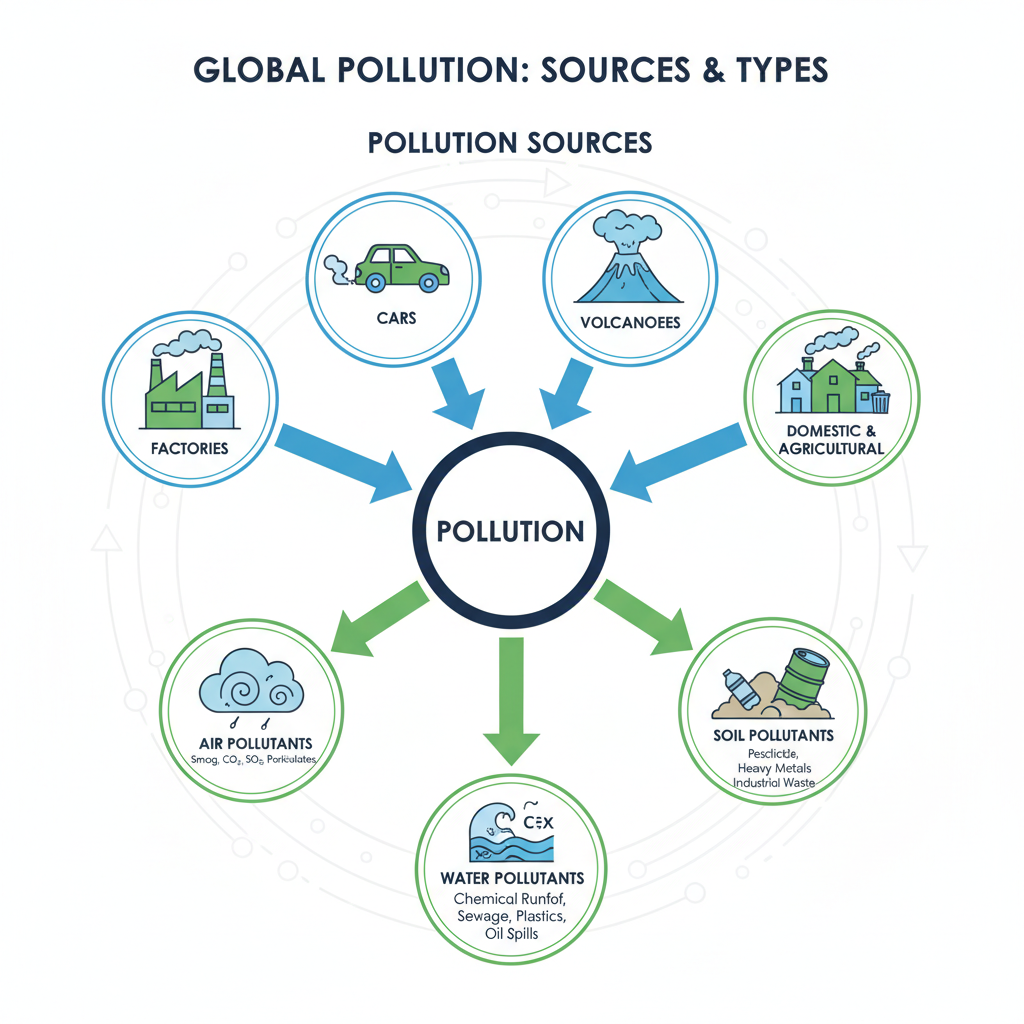
Pollutants don't just appear out of thin air (well, sometimes they do, but we'll get to that!). They come from specific places or activities. We can think of these as the "kitchens" or "workshops" where pollution is made. We generally divide the sources of pollution into two main categories:
1. Natural Sources: Nature's Own Messes
Sometimes, nature itself can create things that act as pollutants. These aren't caused by people. Think of it like a messy artist who creates beautiful art but sometimes spills paint by accident. These natural events, while often amazing, can release substances that might be harmful in large amounts or in the wrong place.
- Volcanoes: When volcanoes erupt, they spew out ash, gases like sulfur dioxide, and other particles into the air. This can make the air quality bad, like a smoky campfire that gets too big.
- Forest Fires (Wildfires): Natural wildfires, caused by lightning, release smoke and tiny particles into the atmosphere. This smoke can travel far and make it hard to breathe, similar to exhaust fumes from a car.
- Dust Storms: Strong winds can pick up large amounts of soil and sand, creating dust storms. These storms can reduce visibility and irritate our lungs, like breathing in dust from a construction site.
- Pollen: While essential for plant reproduction, pollen can be a pollutant for people with allergies, causing sneezing and watery eyes, much like a strong perfume can bother some people.
- Decomposition: When plants and animals die and decompose (rot), they release gases like methane. While natural, too much methane in the atmosphere can be a problem.
2. Human-Made (Anthropogenic) Sources: Our Own Footprints
This is where most of the pollution we talk about comes from. These are sources created by human activities. Think of these as the factories, farms, cars, and homes that produce waste or emissions. These are often the ones we need to focus on controlling.
- Industrial Activities: Factories and power plants often release smoke, chemicals, and waste into the air and water. This is like dumping leftover paint or chemicals down the drain instead of disposing of them properly.
- Transportation: Cars, trucks, airplanes, and ships burn fuel, releasing gases like carbon dioxide and nitrogen oxides into the air. This is like leaving the engine of your car running in a closed garage – it fills the air with fumes.
- Agriculture: The use of fertilizers and pesticides in farming can wash into rivers and lakes, polluting the water. Animal waste from farms can also contribute to pollution. Think of it like over-fertilizing your house plants so much that the excess water washes out onto your floor.
- Waste Disposal: Landfills where we throw our trash can leak harmful liquids (leachate) into the soil and groundwater. Burning trash also releases pollutants into the air. This is like leaving your dirty dishes in the sink for too long, allowing bacteria to grow and spread.
- Household Activities: Cleaning products, aerosols, and even poorly maintained sewage systems can release pollutants. Using too much detergent in your washing machine can create excessive foam that might end up in waterways.
Types of Pollutants: Different Kinds of Messes
Just like there are different kinds of messes in our homes (dust bunnies, spills, clutter), there are different kinds of pollutants. We can categorize them based on what they are and where they end up.
A. Based on What They Are (Chemical Nature)
- Chemical Pollutants: These are substances that are not naturally present in the environment or are present in much higher concentrations due to human activity. Examples include:
- Heavy Metals: Like lead (from old paint or batteries) and mercury (from some industrial processes or old thermometers). These are like toxic little "heavyweights" that can build up in our bodies and cause harm.
- Pesticides and Herbicides: Chemicals used in farming to kill pests or weeds. They can poison beneficial insects and contaminate water. Think of them as "bug spray" or "weed killer" that can get out of control.
- Oils and Greases: Spills from ships or leaks from vehicles. These form a slick on water that harms aquatic life, like trying to swim through a greasy puddle.
- Plastics: Non-biodegradable materials that break down into tiny pieces (microplastics) and pollute our oceans and land. They are like "forever trash" that never really goes away.
- Biological Pollutants: These are living organisms or their waste products that can cause disease or harm.
- Bacteria and Viruses: Often found in sewage or animal waste that contaminates water sources. Think of these as "invisible germs" that can make us sick if we drink contaminated water.
- Algal Blooms: Rapid growth of algae in water caused by excess nutrients (like from fertilizers). Some blooms produce toxins. This is like an "overgrown green carpet" on a lake that can be harmful.
- Physical Pollutants: These are non-chemical substances or energy that can cause harm.
- Sediment: Soil particles washed into rivers and lakes, often from construction sites or erosion. This makes the water cloudy and can smother aquatic habitats. It's like "muddying the water" so fish can't see or breathe properly.
- Thermal Pollution: The release of hot water into rivers or lakes, often from power plants. This can lower the amount of oxygen in the water, harming fish. Imagine putting an ice cube in a warm drink – the fish are like the ice cube, needing cool water to survive.
- Noise Pollution: Excessive, loud noise from sources like traffic or construction. This can stress humans and wildlife. It's like constantly being in a loud concert – it's tiring and annoying.
- Light Pollution: Excessive artificial light at night, which can disrupt ecosystems and human sleep patterns. It's like leaving all the lights on in your house when you're trying to sleep.
- Radioactive Pollutants: Substances that emit harmful radiation.
- Uranium, Plutonium, Radium: Can come from nuclear power plants, mining, or accidents. This is like "invisible, dangerous rays" that can cause serious health problems.
B. Based on Where They End Up (Environmental Compartment)
Pollutants can affect different parts of our environment:
- Air Pollution: Pollutants in the air we breathe. Examples include smog (a mix of smoke and fog), carbon monoxide from cars, and fine particles from burning fuel. It's like having "smoggy glasses" that make the world hazy and hard to see clearly.
- Water Pollution: Pollutants in our rivers, lakes, oceans, and groundwater. Examples include sewage, industrial waste, oil spills, and plastic debris. This is like "dirty bathwater" that we can't drink or swim in.
- Soil Pollution: Pollutants in the ground, often from pesticides, industrial waste, or improper waste disposal. This can make it hard for plants to grow and can contaminate our food. It's like "poisoned garden soil" where nothing healthy can thrive.
- Noise Pollution: As mentioned above, excessive sound.
- Light Pollution: As mentioned above, excessive artificial light.
Why Should We Care?
Pollution isn't just about making things look dirty. It has real consequences for our health, the health of animals and plants, and the planet's ability to support life. When we understand where pollutants come from and what types exist, we can take better steps to prevent them and keep our shared home, planet Earth, clean and healthy for everyone!
 ⚠️ This picture may have spelling mistakes. Trust the words in the lesson.
Keep learning, free
Create a free Syllabax account to unlock practice questions and games for this topic.
Visual Learning Enhanced! 🚀
To help you master this topic, we use Advanced Syllabax AI to generate detailed diagrams and visual models.
Note on Visuals: The AI sometimes makes spelling errors in image labels. Please refer to the lesson text for the correct terminology.