Traditional vs alternative energy[PHYSICS]
Watch this topic in 60 seconds
Free preview · Lesson 1
Understanding Traditional vs alternative energy[PHYSICS]
Traditional vs. Alternative Energy: Powering Our World (Grade 10 Physics)
Imagine your body needs fuel to run, think, and play. Energy is just like that fuel, but for our entire world! Every light bulb, every computer, every car, and every factory needs a constant supply of energy to work. But where does this energy come from? For a long time, humanity has relied on certain 'traditional' sources, but as we learn more about our planet, we're discovering 'alternative' ways to power our lives. Let's explore these two major categories of energy sources.
1. What is Energy and Why is it Important?
In physics, energy is simply the ability to do work. It's what makes things happen! Without energy, nothing would move, change, or even exist in the way we know it. From the smallest cell in your body to the biggest factory, everything requires energy. Think of energy as the universal currency for making things happen.
2. Traditional Energy Sources: The Old Reliables (But with a Catch!)
Traditional energy sources have been our primary power providers for centuries. They've fueled our industrial revolutions and built our modern world. However, they come with significant drawbacks, particularly because most of them are non-renewable. This means they exist in limited quantities and take millions of years to form, so once we use them up, they're gone!
2.1. Fossil Fuels: Nature's Slow-Cooked Energy
Fossil fuels are the most common type of traditional energy. They include coal, oil (petroleum), and natural gas. These fuels were formed over millions of years from the buried remains of ancient plants and animals. Under immense heat and pressure deep within the Earth, these organic materials transformed into the energy-rich substances we extract today.
How They Work:
When fossil fuels are burned (combusted), they release a large amount of heat. This heat is typically used to boil water, creating high-pressure steam. This steam then pushes against large fan-like blades called turbines, making them spin. The spinning turbines are connected to generators, which convert the mechanical energy of the spinning into electrical energy. This electricity is then sent through power lines to homes and businesses.
The Good (Pros):
- Reliable: We can generate electricity 24/7, regardless of weather conditions.
- High Energy Density: A small amount of fossil fuel contains a lot of energy.
- Established Infrastructure: We have existing power plants, pipelines, and transportation networks built around fossil fuels.
The Bad (Cons):
- Non-Renewable: Finite supply; they will eventually run out.
- Pollution: Burning fossil fuels releases greenhouse gases (like carbon dioxide), which contribute to climate change and global warming. They also release pollutants that cause acid rain and respiratory problems.
- Environmental Damage: Extraction methods like mining and drilling can harm ecosystems.
- Political Instability: Dependence on specific regions for oil can lead to international conflicts.
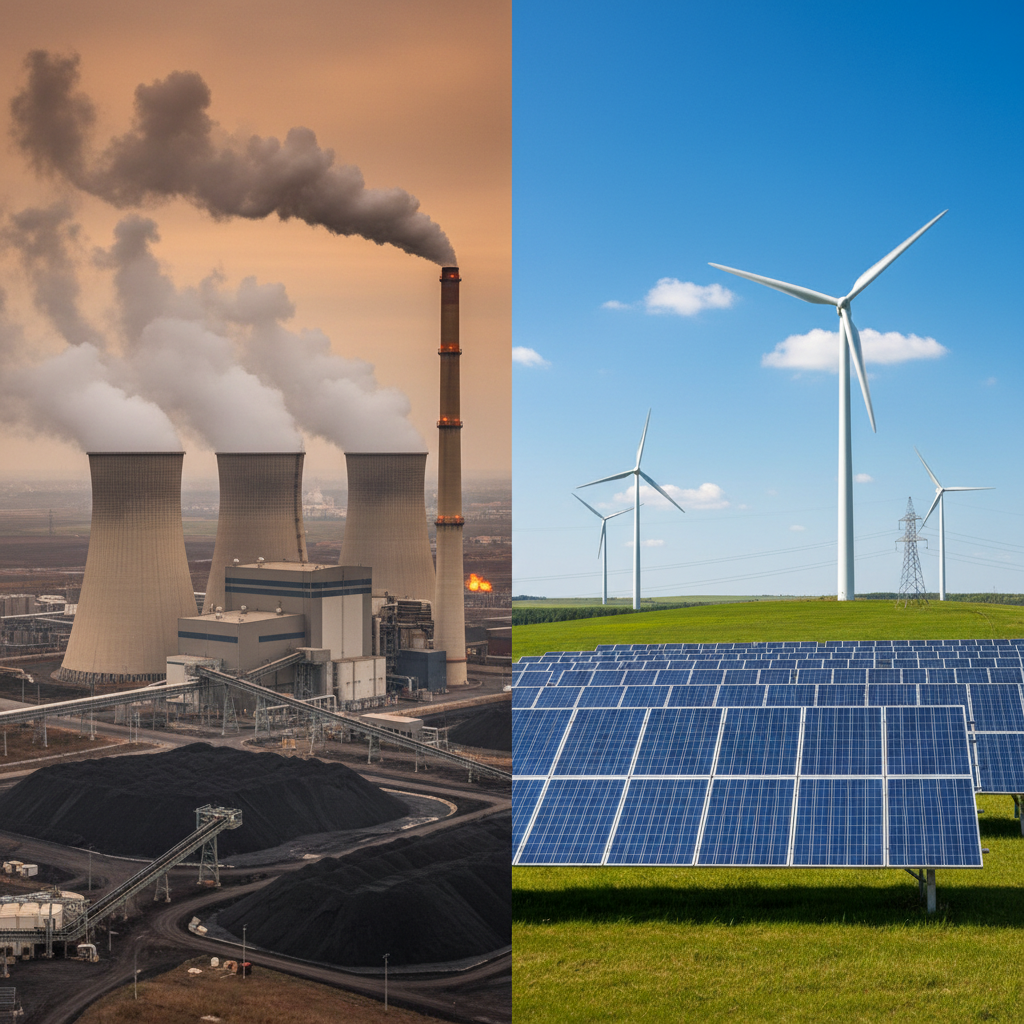
An illustration comparing a traditional power plant (left) with various alternative energy sources (right), highlighting the shift towards cleaner energy production.
2.2. Nuclear Energy: Splitting Atoms for Power
Nuclear energy is another significant traditional source, but it's different from fossil fuels. Instead of burning, it uses a process called nuclear fission, where the nucleus of a heavy atom (like uranium) is split into two or more smaller nuclei. This splitting releases an enormous amount of energy in the form of heat.
How It Works:
The heat generated by fission is used to boil water, creating steam, which then turns turbines connected to generators, just like with fossil fuels. The key difference is the heat source.The Good (Pros):
- Very Powerful: A small amount of nuclear fuel produces a vast amount of electricity.
- Low Greenhouse Gas Emissions: Nuclear power plants produce almost no greenhouse gases during operation.
- Reliable: Provides continuous power, not dependent on weather.
The Bad (Cons):
- Radioactive Waste: Produces highly dangerous radioactive waste that remains hazardous for thousands of years and is difficult to store safely.
- Safety Concerns: Though rare, accidents (like Chernobyl or Fukushima) can be catastrophic, releasing radiation and impacting vast areas.
- High Initial Cost: Building nuclear power plants is extremely expensive and complex.
- Security Risks: Nuclear materials could potentially be used to create weapons.
3. Alternative Energy Sources: The Future's Green Power
Alternative energy sources, often called renewable energy, are those that replenish naturally over a relatively short period. They harness natural processes like sunlight, wind, and flowing water, meaning they won't run out. This makes them a more sustainable option for powering our planet.
3.1. Solar Energy: Harnessing the Sun's Power
Solar energy captures energy directly from the sun's rays. It's one of the most abundant energy sources on Earth.
How It Works:
There are two main ways:- Photovoltaic (PV) Cells (Solar Panels): These special cells convert sunlight directly into electricity. Think of them as tiny factories that take sunlight as input and spit out electricity.
- Solar Thermal: This involves using the sun's heat to warm water for homes or to create steam to turn turbines for electricity generation.
The Good (Pros):
- Clean: Produces no pollution or greenhouse gases during operation.
- Renewable: The sun's energy is virtually endless.
- Abundant: Available almost everywhere on Earth.
- Decentralized: Can be installed on rooftops, allowing individuals to generate their own power.
The Bad (Cons):
- Intermittent: Only works when the sun is shining (no power at night or on very cloudy days).
- Initial Cost: Solar panel installation can be expensive upfront.
- Space Requirements: Large-scale solar farms require significant land area.
- Efficiency: The amount of electricity generated depends on weather and panel efficiency.
3.2. Wind Energy: The Power of Moving Air
Wind energy harnesses the kinetic energy (energy of motion) of wind to generate electricity.
How It Works:
Giant wind turbines, often grouped in 'wind farms,' have large blades that are pushed by the wind. This rotational motion spins a generator, producing electricity. It's like a sophisticated version of a child's pinwheel, but on a massive scale.The Good (Pros):
- Clean: No pollution or greenhouse gases during operation.
- Renewable: Wind is a natural, endless phenomenon.
- Cost-Effective: Once installed, the 'fuel' (wind) is free.
The Bad (Cons):
- Intermittent: Only works when the wind blows (no wind, no power).
- Visual and Noise Impact: Wind farms can be considered an eyesore and produce some noise.
- Impact on Wildlife: Can pose a threat to birds and bats.
- Space Requirements: Requires large areas for wind farms.
3.3. Hydroelectric Energy: Power from Falling Water
Hydroelectric energy (or hydropower) uses the energy of moving water, usually from rivers or dams, to generate electricity.
How It Works:
A dam is built across a river, creating a reservoir of water. When water is released, it falls from a height through pipes called penstocks, spinning turbines connected to generators. The potential energy of the water held high in the reservoir is converted to kinetic energy as it falls, and then to electrical energy.The Good (Pros):
- Clean: No pollution or greenhouse gases during operation.
- Reliable: Can be controlled by releasing water as needed, making it a stable power source.
- Multipurpose: Dams can also provide flood control and water supply.
The Bad (Cons):
- Environmental Impact: Damming rivers can significantly alter ecosystems, flood land, and disrupt fish migration.
- High Initial Cost: Building large dams is very expensive and takes many years.
- Dependent on Water: Susceptible to droughts, which can reduce power output.
3.4. Geothermal Energy: Earth's Inner Heat
Geothermal energy harnesses the heat from within the Earth's core. In certain areas, this heat comes close to the surface, creating hot springs, geysers, and reservoirs of hot water and steam.
How It Works:
Deep wells are drilled to access underground reservoirs of hot water and steam. This steam or superheated water is then used directly to turn turbines and generate electricity, or for heating buildings directly.The Good (Pros):
- Clean: Very low emissions during operation.
- Reliable: Available 24/7, not dependent on weather.
- Efficient: Can be very efficient for heating and cooling buildings directly.
The Bad (Cons):
- Geographically Limited: Only viable in areas with specific geological conditions (volcanic regions).
- High Drilling Costs: Drilling deep wells is expensive.
- Potential for Minor Emissions: Some geothermal plants can release small amounts of greenhouse gases (like hydrogen sulfide) from underground.
3.5. Biomass Energy: Energy from Organic Matter
Biomass energy uses organic material from plants and animals (like wood, agricultural waste, animal manure, and even garbage) as fuel.
How It Works:
Biomass can be burned directly to produce heat, which can then generate steam to turn turbines. It can also be converted into liquid biofuels (like ethanol or biodiesel) or biogas (like methane) through processes like fermentation or anaerobic digestion.The Good (Pros):
- Renewable: Can be replenished as new plants grow.
- Waste Utilization: Uses agricultural, forestry, and municipal waste, reducing landfill waste.
- Carbon Neutral (Potentially): The CO2 released when biomass is burned can be reabsorbed by new growing plants, theoretically making it carbon neutral over its life cycle.
The Bad (Cons):
- Emissions: Burning biomass still releases greenhouse gases and air pollutants, though often less than fossil fuels.
- Land Use: Growing energy crops for biomass can compete with food production and require significant land.
- Sustainability Concerns: If not managed sustainably, can lead to deforestation or soil depletion.
4. The Big Picture: Why the Shift to Alternatives?
For decades, traditional energy sources like fossil fuels have been the backbone of our power supply. They are powerful and have an established infrastructure. However, their finite nature and significant environmental impact, particularly their contribution to climate change, mean we cannot rely on them forever.
Alternative energy sources offer a cleaner, more sustainable path forward. While they have their own challenges (intermittency, initial cost, geographical limitations), ongoing research and technological advancements are making them more efficient and affordable. The world is gradually shifting towards these renewables to reduce our carbon footprint, protect our planet, and ensure a stable energy supply for future generations.
Conclusion
Understanding the differences between traditional and alternative energy sources is crucial for being an informed citizen in today's world. Both types have played and continue to play vital roles, but the future clearly points towards a greater reliance on renewable, clean energy. By embracing these alternatives and practicing energy conservation, we can work towards a more sustainable and healthier planet for everyone.
Keep learning, free
Create a free Syllabax account to unlock practice questions and games for this topic.
Visual Learning Enhanced! 🚀
To help you master this topic, we use Advanced Syllabax AI to generate detailed diagrams and visual models.
Note on Visuals: The AI sometimes makes spelling errors in image labels. Please refer to the lesson text for the correct terminology.