Expansion & contraction (basic) (PHYSICS)
Watch this topic in 60 seconds
Free preview · Lesson 1
Understanding Expansion & contraction (basic) (PHYSICS)
Expansion and Contraction: Things Change Size!
Have you ever noticed how things can sometimes get bigger or smaller? Maybe a balloon gets bigger when you blow air into it, or a puddle dries up and disappears. These changes happen because of a simple but very important science concept: expansion and contraction. In physics, these terms describe how the size of matter (like solids, liquids, and gases) can change, usually when its temperature changes.
What is Expansion?
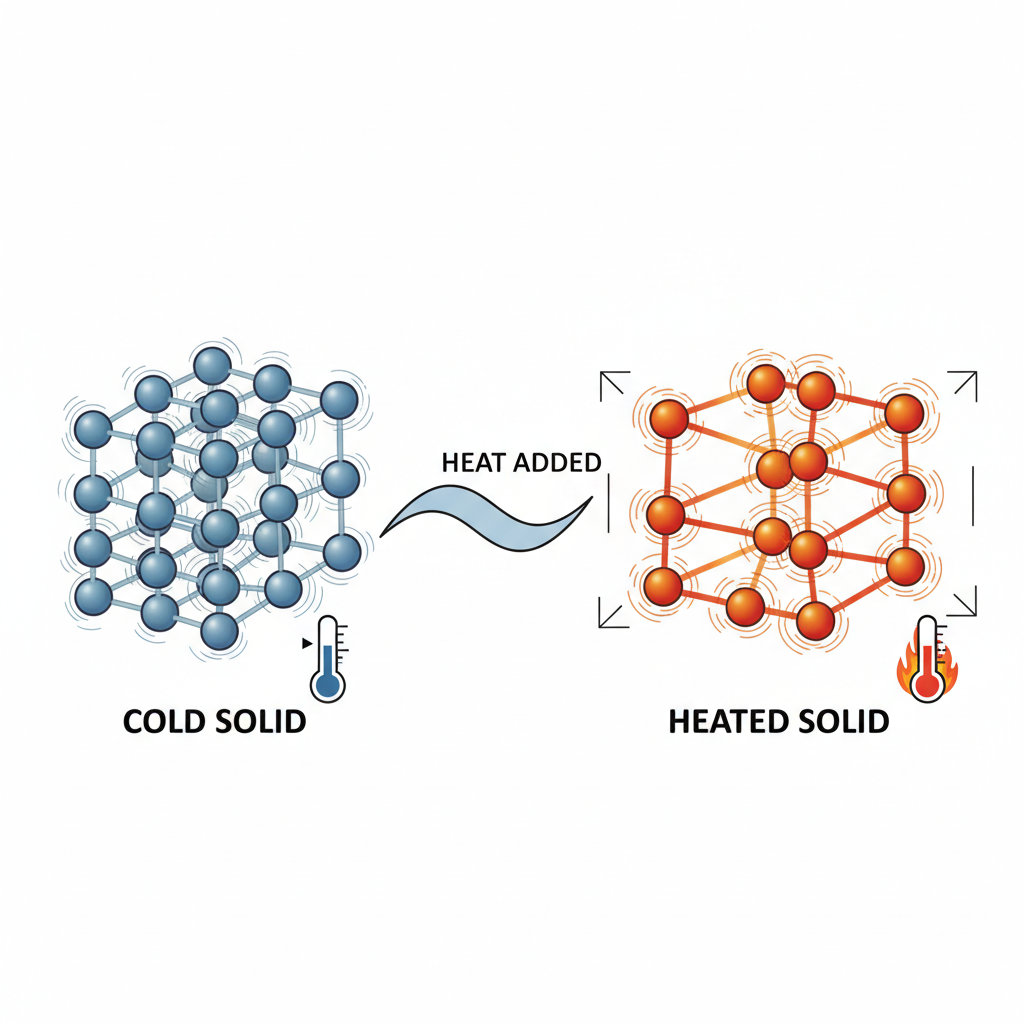
Expansion is when something gets bigger. Think about what happens to a metal spoon when you leave it in a hot cup of tea. After a while, the spoon feels warmer, and in a tiny, tiny way, it actually gets a little bit longer and wider! This is because when most things get hotter, their tiny particles (atoms and molecules) start to move around more. They bump into each other more, and this makes them spread out, causing the whole object to take up more space.
The Particle Dance Party!
Imagine the tiny particles inside an object are like little kids at a party. When the music (heat) is slow, they just shuffle around a bit. But when the music gets fast and loud (it gets hot!), the kids start dancing, jumping, and running around, bumping into each other and taking up more space on the dance floor. This makes the whole party area (the object) get bigger!
Analogy: A Stretched Rubber Band
Think of a rubber band. When it's relaxed, it's a certain size. If you stretch it, you're pulling its parts further apart, making it bigger. Heating up an object is like giving its particles more energy to 'stretch' and move apart from each other.
Real-World Example: Hot Air Balloons
Hot air balloons are a fantastic example of expansion. When the air inside the balloon is heated, the air particles spread out and become less dense. This makes the air (and the balloon) rise because it's lighter than the cooler air outside.
What is Contraction?
Contraction is the opposite of expansion. It's when something gets smaller. When most things get colder, their tiny particles slow down. They don't bump into each other as much and they huddle closer together. This makes the whole object take up less space.
The Slow-Motion Particles
Going back to our party analogy, imagine the music (heat) gets turned down very low. The kids start to get tired. They stop dancing wildly and just move slowly, maybe standing closer together to stay warm. When the particles slow down and get closer, the object they make up gets smaller.
Analogy: A Cold, Shrunken Sweater
Have you ever accidentally put a wool sweater in a hot dryer, and it came out much smaller? That's contraction! The heat caused the wool fibers to tighten up. Similarly, when things get cold, their particles pull closer together, making the object shrink.
Real-World Example: Bridges and Sidewalks
Engineers have to think about expansion and contraction when building things like bridges and sidewalks. On hot summer days, metal and concrete expand. If there wasn't room for this expansion, the bridge or sidewalk could buckle and break! That's why you see gaps (called expansion joints) in bridges and sidewalks. These gaps allow the material to expand without causing damage. In winter, when it gets cold, the material contracts, and the gaps get wider.
Why Does This Happen? Temperature is Key!
The main thing that causes expansion and contraction is a change in temperature.
- Heating Up (Increasing Temperature): Usually causes expansion (getting bigger).
- Cooling Down (Decreasing Temperature): Usually causes contraction (getting smaller).
Think of temperature as a measure of how much energy the tiny particles inside an object have. More heat means more energy, more movement, and more space. Less heat means less energy, less movement, and less space.
Different States of Matter Behave Differently
While the basic idea is the same, how solids, liquids, and gases expand and contract can be a little different:
Solids
Solids, like metal or wood, expand and contract, but usually not by a huge amount. Their particles are already packed quite closely together, so they don't have a lot of room to move far apart. You can see this in the bridge example.
Liquids
Liquids, like water or juice, generally expand more than solids when heated. Their particles are not held as tightly as in solids, so they have more freedom to move and spread out. When water boils, it turns into steam (a gas), which takes up much more space!
Gases
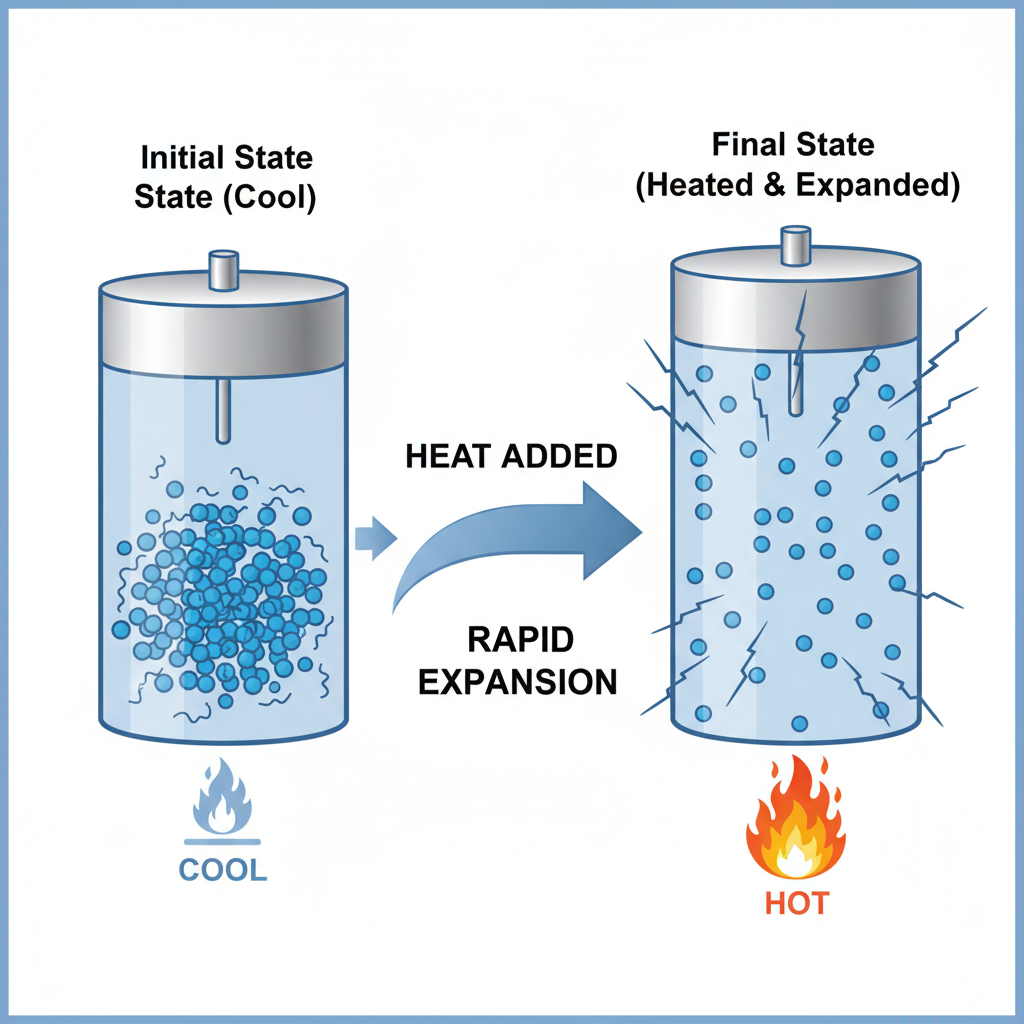
Gases, like the air around us, expand the most! Their particles are already very far apart and move around very quickly. When you heat a gas, its particles zoom around even faster and spread out even more. This is why a balloon expands when you blow hot air into it, or why a room might feel warmer if you open a heater vent.
 ⚠️ This picture may have spelling mistakes. Trust the words in the lesson.
A Special Case: Water!
Water is a bit unusual. When it cools down from a high temperature, it contracts like most liquids. However, when water gets very cold, close to freezing (0°C or 32°F), something special happens. As it cools further towards freezing, it starts to expand instead of contracting! This is why ice floats on water – it's less dense because it has expanded. This expansion is crucial for life on Earth, as it prevents lakes and rivers from freezing solid from the bottom up.
Summary
Expansion and contraction are fundamental concepts in physics that explain how the size of matter can change. This change is most often caused by changes in temperature, leading particles within the matter to move more (expand) or less (contract), altering the overall volume.
Keep learning, free
Create a free Syllabax account to unlock practice questions and games for this topic.
Visual Learning Enhanced! 🚀
To help you master this topic, we use Advanced Syllabax AI to generate detailed diagrams and visual models.
Note on Visuals: The AI sometimes makes spelling errors in image labels. Please refer to the lesson text for the correct terminology.