Water purification[CHEMISTRY]
Watch this topic in 60 seconds
Free preview · Lesson 1
Understanding Water purification[CHEMISTRY]
The Magical Journey of Water: From Murky to Crystal Clear! (Water Purification)
Imagine you have a glass of water that looks a bit like muddy puddle soup. It might have tiny bits of dirt, maybe even some invisible germs, and it probably doesn't smell or taste very good. Our mission today is to become water detectives and learn how we can turn that murky water into the pure, refreshing drink we love! This is called water purification, and it's like giving water a super spa treatment to make it clean and safe to drink.
Why Do We Need Clean Water?
Think about your body like a busy city. Water is like the essential delivery trucks that bring nutrients to all the buildings (your cells) and take away trash. If the water is dirty, those delivery trucks are carrying harmful stuff, which can make your city (your body) sick! Dirty water can cause diseases. That's why cleaning water, especially for drinking, is super important for keeping us healthy.
The "Not-So-Clean" Water Ingredients
What makes water dirty? Lots of things! Let's break it down:
- Sediment: These are the visible bits like sand, mud, and tiny pieces of leaves. Think of them like the clutter on your desk that you can easily see and sweep away.
- Dissolved Solids: These are substances that have dissolved into the water, like salt or minerals. Imagine stirring sugar into tea; the sugar disappears, but it's still there, making the tea sweet. Dissolved solids are like that, but sometimes they can be harmful minerals or chemicals.
- Microorganisms: These are tiny living things like bacteria and viruses that are too small to see without a microscope. They are like invisible ninjas that can make you very sick if you drink them.
- Chemicals: Sometimes, pollution from factories or farms can add harmful chemicals to water. These are like unwanted guests that can spoil the whole party.
Water Purification: A Multi-Step Adventure!
Purifying water isn't just one step; it's often a journey with several stages, each designed to tackle a different type of impurity. Let's explore the most common steps:
Step 1: Screening (The Big Net)
The first thing we do is try to catch the biggest troublemakers. Imagine you're trying to scoop ice cream, but there are big chunks of fruit in it. You'd probably use a spoon with holes to let the ice cream through but catch the fruit chunks. Screening is like using a big net with large holes to catch leaves, sticks, and other large debris from the water. It's the first line of defense!
Step 2: Sedimentation (Letting Things Settle Down)
After screening, the water still has smaller bits of dirt and mud floating around. Sedimentation is like letting a muddy puddle sit undisturbed. What happens? The heavier dirt particles slowly sink to the bottom, leaving clearer water on top. In water treatment plants, they use large tanks where the water sits still for a while. The heavier sediment falls to the bottom, and we can then take the clearer water from the top. Think of it like waiting for the dust to settle after a sneeze!
Step 3: Coagulation and Flocculation (Sticking Together!)
Now, the water might look clearer, but there are still very tiny particles, too small to settle on their own. Coagulation and flocculation are like magic tricks to make these tiny particles clump together. We add special chemicals called coagulants (like a special kind of glue). These chemicals make the tiny particles stick to each other. Then, we gently stir the water. This gentle stirring helps these little clumps stick together even more, forming bigger, heavier clumps called flocs. Imagine tiny dust bunnies that you can't see easily. When you lightly brush them together, they form a bigger, more visible dust bunny. That's flocculation!
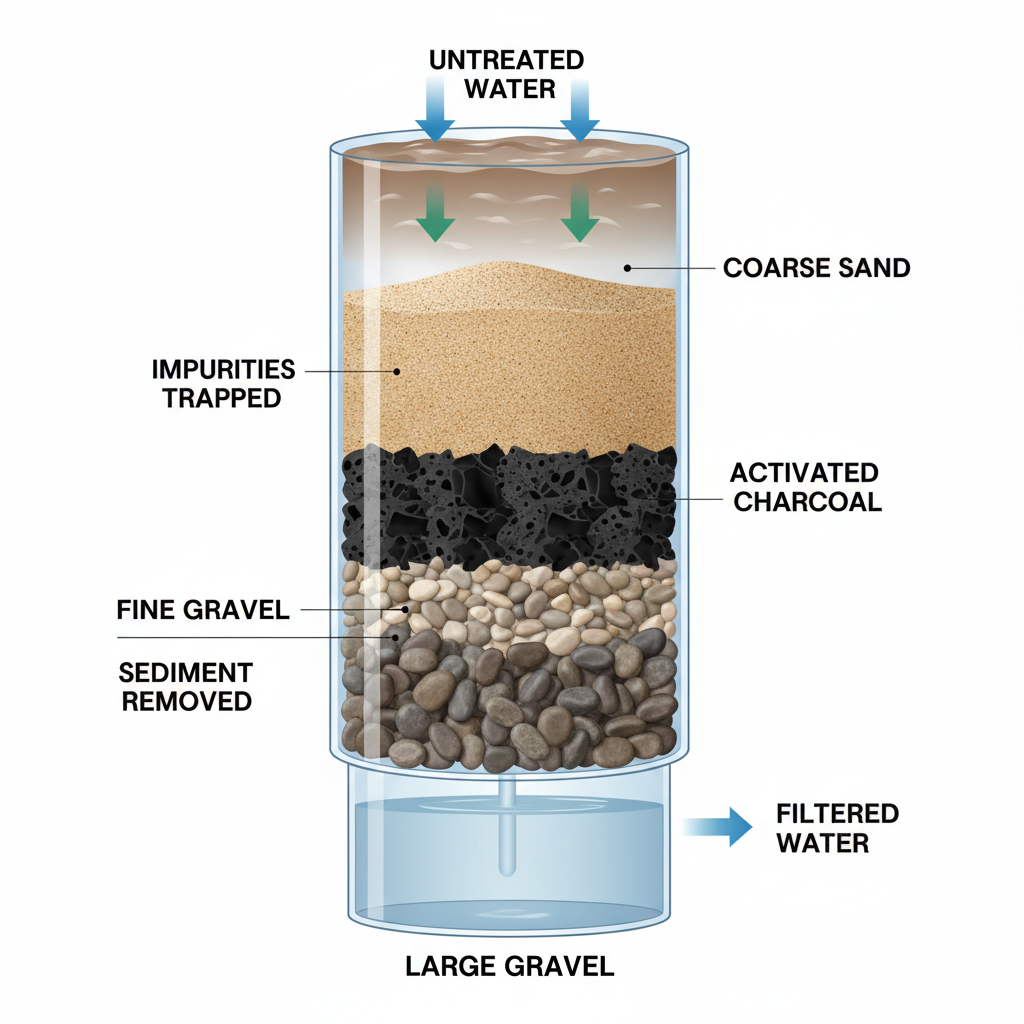
Step 4: Filtration (The Super Sieve)
The flocs are bigger now, but they still need to be removed. Filtration is like using a super-powered sieve or a fancy coffee filter. Water is passed through layers of different materials, like sand, gravel, and charcoal. These layers act like tiny obstacles, catching the remaining sediment and the bigger flocs. The charcoal is especially cool because it can also absorb some of the dissolved impurities and chemicals that cause bad tastes and smells. It's like a sponge for the water's bad flavors!
Step 5: Disinfection (Killing the Invisible Germs!)
Even after all these steps, there might still be some harmful microorganisms (germs) hiding in the water. Disinfection is the final, crucial step to make sure the water is safe to drink. This is like giving the water a special zap to kill any remaining invisible nasties. Common methods include:
- Chlorination: Adding a small amount of chlorine, a chemical that effectively kills bacteria and viruses. It's like using a disinfectant spray for the water.
- Ozonation: Using ozone gas (a form of oxygen) to kill microorganisms. It's a powerful cleaner.
- UV Treatment: Exposing the water to ultraviolet (UV) light. This light damages the germs' ability to reproduce, making them harmless. Think of it like shining a special germ-busting flashlight on the water.
What About Dissolved Stuff?
Filtration with charcoal can remove some dissolved impurities, but what if we need to remove things like salt from seawater? That requires more advanced techniques like:
- Distillation: This is like boiling water and collecting the steam. When water boils, it turns into steam (water vapor), leaving the dissolved salts and minerals behind. The steam is then cooled down and turns back into pure water. It's like making pure water by evaporation and condensation.
- Reverse Osmosis: This uses a special membrane (like a super-fine filter) that allows water molecules to pass through but blocks larger dissolved molecules like salt. It's like a bouncer at a club, letting only the water molecules in!
Summary: The Water Purification Recipe
So, to recap, water purification is a process that makes water safe and clean to drink. It usually involves:
- Screening: Removing big debris.
- Sedimentation: Letting heavy particles sink.
- Coagulation & Flocculation: Clumping tiny particles together.
- Filtration: Passing water through layers to catch remaining impurities.
- Disinfection: Killing harmful germs.
Each step plays a vital role in transforming murky, potentially unsafe water into the clear, life-giving liquid we rely on every day. It's a fascinating chemical and physical process that keeps us healthy and happy!
Keep learning, free
Create a free Syllabax account to unlock practice questions and games for this topic.
Visual Learning Enhanced! 🚀
To help you master this topic, we use Advanced Syllabax AI to generate detailed diagrams and visual models.
Note on Visuals: The AI sometimes makes spelling errors in image labels. Please refer to the lesson text for the correct terminology.