Separation techniques: handpicking, sieving, filtration (CHEMISTRY)
Watch this topic in 60 seconds
Free preview · Lesson 1
Understanding Separation techniques: handpicking, sieving, filtration (CHEMISTRY)
Separation Techniques: Handpicking, Sieving, and Filtration
Welcome, young scientists! Today, we're going on an exciting journey into the world of chemistry to learn about how we can separate different things that have been mixed together. Imagine you have a box of toys, and some of them are LEGOs and some are marbles. How would you get just the LEGOs out? You'd probably pick them out one by one, right? That's a separation technique! In science, we have special names and methods for doing this, and we'll explore three basic ones: handpicking, sieving, and filtration.
What Does it Mean to Separate Mixtures?
Before we dive into the techniques, let's understand what a mixture is. A mixture is when two or more substances are combined, but they haven't chemically changed. Think about a salad: you have lettuce, tomatoes, cucumbers, and maybe some croutons. All these ingredients are mixed together, but they are still lettuce, tomatoes, cucumbers, and croutons. They haven't turned into something new. Separating a mixture means getting the individual parts back. This is useful because sometimes we need pure substances, or we want to remove unwanted parts.
Technique 1: Handpicking
Handpicking is the simplest separation technique, and you probably use it all the time without even realizing it!
How it Works:
Handpicking involves manually picking out the desired components from a mixture. It works best when the components of the mixture are:
- Different in size: Like picking out big raisins from a bowl of small rice.
- Different in color: Like picking out the red candies from a bag of mixed-color candies.
- Different in shape: Like picking out pebbles from a pile of sand.
- Different in texture: Like picking out smooth marbles from rough gravel.
Analogy Time!
Imagine your mom is making a fruit salad, and she accidentally dropped a few cherry pits into the chopped apples and bananas. She would likely handpick the cherry pits out because they are different in size and shape from the fruit pieces. Or, think about sorting your LEGOs by color. You pick out all the red ones, then all the blue ones, and so on. You are using handpicking!
When is Handpicking Useful?
Handpicking is great for separating larger items from smaller ones, or for removing unwanted impurities. For example:
- Farmers might handpick stones and weeds from harvested grains.
- You might handpick the seeds from a watermelon before eating it.
- Someone sorting recycling might handpick plastic bottles from paper.
Technique 2: Sieving
Sieving is like using a special net or strainer to separate things based on their size. Have you ever seen someone bake a cake and sift the flour? That's sieving!
How it Works:
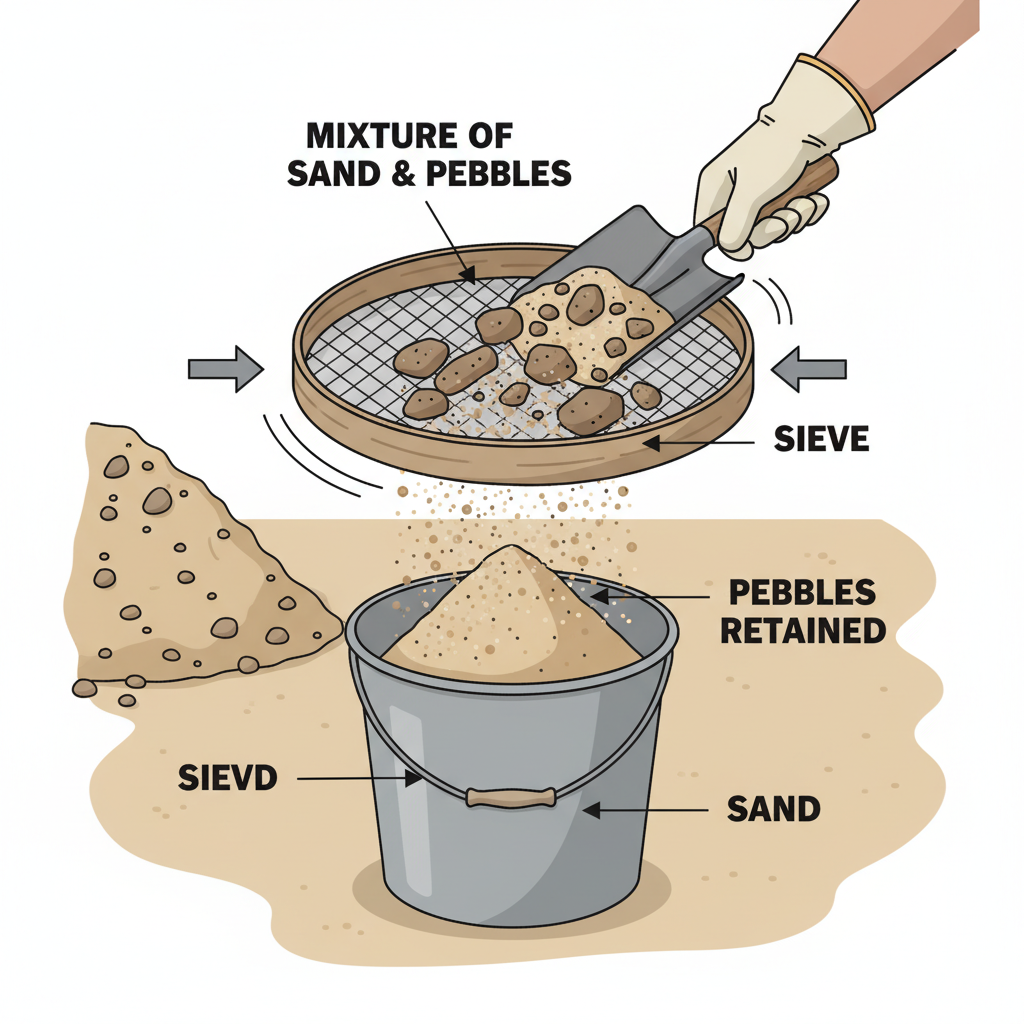
Sieving uses a sieve, which is a tool with tiny holes. When you pour a mixture through a sieve:
- The smaller particles fall through the holes.
- The larger particles stay on top of the sieve and don't fall through.
This technique is perfect for mixtures where the components have significantly different sizes, but are still too numerous or small to handpick easily.
Analogy Time!
Think about a playground sandbox. Sometimes, there are small rocks mixed in with the sand. If you had a sieve (like a sand shovel with holes), you could scoop up the sand and rocks, shake it, and the sand would fall through the holes, leaving the rocks behind. It's like a magic filter for size!
Another example: Imagine you're making homemade pasta. You mix flour and maybe some dried herbs. You need to make sure there are no lumps in the flour. You pour the flour through a sieve. The fine flour passes through, but any clumps of flour get caught on top. This ensures your pasta dough is smooth.
When is Sieving Useful?
- In construction: Sieving sand to remove large pebbles and debris.
- In cooking: Sifting flour to remove lumps and aerate it.
- In agriculture: Sieving soil to remove stones before planting.
 ⚠️ This picture may have spelling mistakes. Trust the words in the lesson.
Technique 3: Filtration
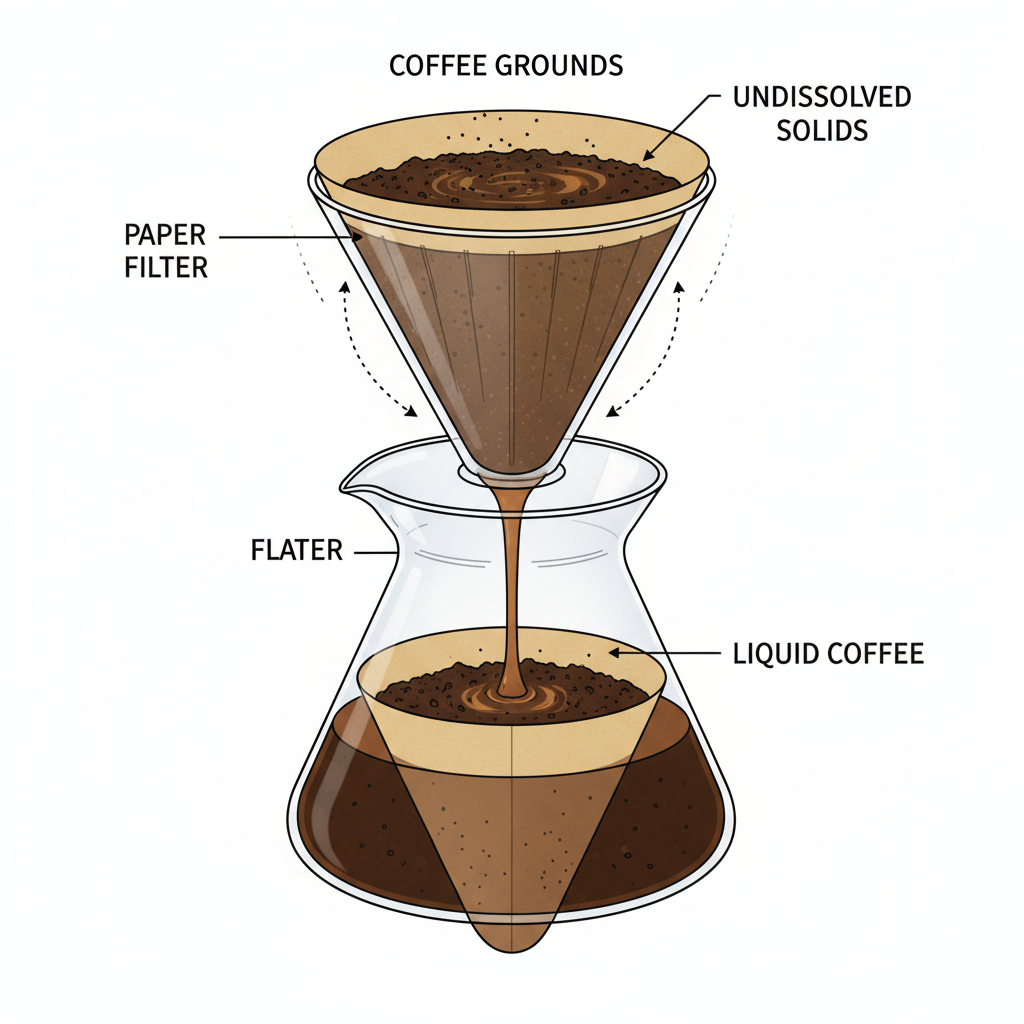
Filtration is a technique used to separate solid particles from a liquid (or sometimes a gas) by passing the mixture through a filter. A filter is a material that allows the liquid to pass through but catches the solid particles.
How it Works:
You pour the mixture into a filter. The liquid part (called the filtrate) passes through the filter paper or screen. The solid part (called the residue) gets stuck on the filter. It's like a very fine sieve that catches even tiny solid bits.
Analogy Time!
Think about making coffee. You use a coffee filter. The hot water (liquid) passes through the coffee grounds (solid) and the filter paper. The water carries the coffee flavor with it, and you get a nice cup of coffee. The coffee grounds are the solid particles that are separated and left behind in the filter. The liquid coffee that drips through is the filtrate.
Another example: Imagine you are cleaning dirty pond water. You might pour it through a cloth. The water (liquid) passes through the cloth, but leaves behind bits of leaves, mud, and small bugs (solid particles). The cloth acts as the filter!
When is Filtration Useful?
- Making coffee or tea.
- Purifying water in water treatment plants.
- In laboratories: Separating a solid chemical from a liquid solution.
- Cleaning air: Air filters in your home or car catch dust and other small particles.
 ⚠️ This picture may have spelling mistakes. Trust the words in the lesson.
Let's Review!
We've learned about three ways to separate mixtures:
- Handpicking: Picking out components by hand, best for large, visible differences in size, color, or shape.
- Sieving: Using a sieve with holes to separate based on size, great for many small particles.
- Filtration: Using a filter to separate solids from liquids or gases.
These techniques are fundamental in chemistry and help us understand how to work with and purify different substances!
Keep learning, free
Create a free Syllabax account to unlock practice questions and games for this topic.
Visual Learning Enhanced! 🚀
To help you master this topic, we use Advanced Syllabax AI to generate detailed diagrams and visual models.
Note on Visuals: The AI sometimes makes spelling errors in image labels. Please refer to the lesson text for the correct terminology.