What is Data?
Watch this topic in 60 seconds
Free preview · Lesson 1
Understanding What is Data?
What is Data? A Kid-Friendly Guide!
Hey there, young explorers! Have you ever wondered how we know so many things about the world around us? How do we know what our favorite color is? Or how tall we are? Or how many friends we have? The answer is simple: Data!
What in the World is Data?
Imagine you're baking a yummy chocolate chip cookie. What do you need? You need flour, sugar, chocolate chips, butter, and eggs, right? These are all your ingredients. Well, data is like the ingredients for understanding things!
Data is just a fancy word for information or facts. It's all the little pieces of knowledge we collect about anything and everything. It could be numbers, words, pictures, sounds, or even how things feel!
Let's Look at Some Examples of Data You Already Know!
- Your favorite color: Is it blue? Red? Green? That's a piece of data about you!
- How many pets you have: Do you have 1 dog, 2 cats, or no pets? That number is data!
- How tall you are: When you stand against a wall and someone marks your height, that measurement is data.
- The number of apples in a basket: If you count 5 apples, the number '5' is data.
- The sound a bird makes: Chirp, chirp! That sound can be recorded and become data.
- A picture of your family: The photo itself is a piece of data, showing faces and places.
See? Data is everywhere! It's like finding clues when you're playing a detective game. Each clue helps you figure out the big mystery. Data helps us understand the big picture of the world.
Think of data as tiny building blocks. When you put many building blocks together, you can build a tall tower, a cool house, or even a giant castle! In the same way, when we collect many pieces of data, we can build a better understanding of something.
 ⚠️ This picture may have spelling mistakes. Trust the words in the lesson.
Why is Data Important?
So, we know what data is, but why do we care? Data is super important because it helps us make smart choices and learn new things!
- Making Decisions: Imagine you want to know if more kids in your class like pizza or tacos. If you ask everyone and count their answers, you're collecting data! If 15 kids say pizza and 5 say tacos, the data tells you that most kids like pizza. This helps you decide what to order for the class party!
- Solving Problems: If a teacher notices that many students are getting stuck on a math problem, that's data! The teacher can then use this data to teach that topic again in a different way, helping everyone understand better.
- Learning About the World: Scientists collect data about weather patterns to predict if it will rain tomorrow. Doctors collect data about how many people get sick to understand how to keep us healthy. All these facts (data!) help them do their jobs better.
Data helps us answer questions like: How many sunny days did we have last month? What is the most popular fruit in our school? How fast can a cheetah run? Without data, we'd just be guessing!
Where Do We Find Data? Everywhere!
You don't need a special lab coat or a fancy computer to find data. Data is all around you!
- At Home: The number of socks in your drawer, the time you eat dinner, the number of books on your shelf.
- At School: The number of students in your class, the scores on your spelling test, the different colors of crayons in your box.
- Outside: The different types of birds you see, the temperature outside, how many cars drive by in an hour.
Different Kinds of Data (Keeping it Simple!)
Just like there are different types of ingredients for a cookie (some are wet, some are dry), there are different kinds of data:
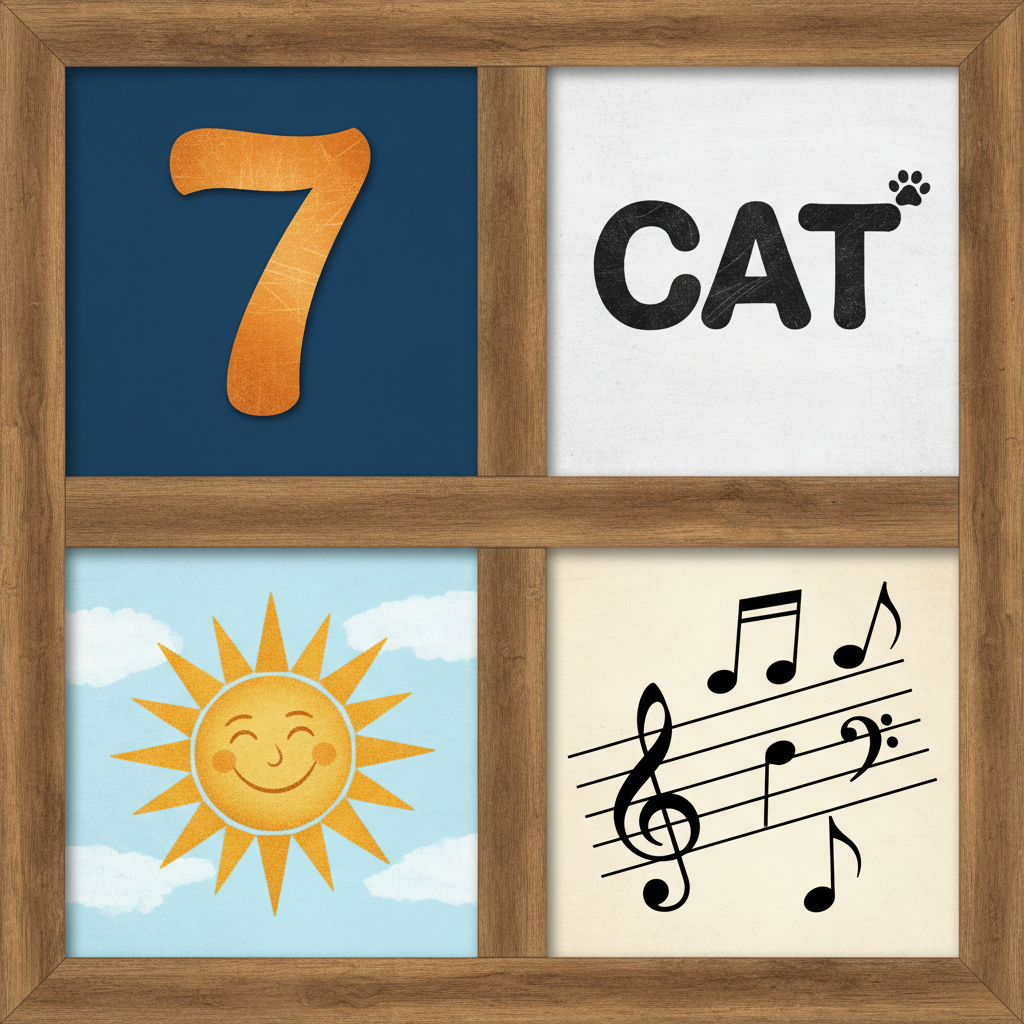
- Numbers: This is data that counts things or measures things. Like '3' apples, '5' feet tall, or '10' toys.
- Words/Descriptions: This is data that tells you about something. Like 'red' apple, 'fluffy' cat, or 'happy' feeling.
- Pictures/Sounds: These can also be data! A photo of a flower shows what it looks like. A recording of a dog barking tells you what it sounds like.
It's like telling a story. Some parts of the story are numbers (e.g., 'three little pigs'), and some parts are descriptive words (e.g., 'the big, bad wolf'). All of it together helps us understand the full story!
Collecting and Using Data
How do we get data? We collect it!
- Counting: If you want to know how many blue cars pass your window, you count them!
- Measuring: If you want to know how long your desk is, you use a ruler to measure it.
- Asking Questions: If you want to know what your friends like to play, you ask them!
- Observing: Watching what happens, like seeing if birds like certain kinds of seeds more than others.
Once we collect data, we can use it to create charts or graphs. These help us see patterns and understand the information even better! Like when you make a bar graph to show how many kids like different colors, it's easier to see which color is most popular.
Data Helps Us Learn and Grow!
So, remember, data is just a helpful word for all the facts and information we gather. It's like finding ingredients, solving clues, or building with blocks. Data helps us understand the world, make good choices, and learn new things every single day. Keep your eyes and ears open, because you are collecting and using data all the time!
Keep learning, free
Create a free Syllabax account to unlock practice questions and games for this topic.
Visual Learning Enhanced! 🚀
To help you master this topic, we use Advanced Syllabax AI to generate detailed diagrams and visual models.
Note on Visuals: The AI sometimes makes spelling errors in image labels. Please refer to the lesson text for the correct terminology.