Computer Careers: Exploring Options
Watch this topic in 60 seconds
Free preview · Lesson 1
Understanding Computer Careers: Exploring Options
Computer Careers: Exploring Your Future!
Hey 5th graders! Have you ever wondered who makes your favorite video games? Or who keeps your family's computer safe from online "germs"? Or who helps make sure websites like YouTube work perfectly? Well, these are all jobs, super cool jobs, that involve computers! We call them computer careers.
Imagine a big city, bustling with people, cars, and buildings. Just like a city needs different people to keep it running – builders, doctors, teachers, police officers – the world of computers also needs many different kinds of experts. Each expert has a special job to do with computers!
What Exactly IS a Computer?
Before we dive into careers, let's quickly remember what a computer is. Think of it like a super-smart helper! It's a machine that can follow instructions really, really fast. It can store information, do math, show pictures, and connect you to people all over the world. From the tablet you play games on, to the big machines that help send rockets to space, they're all computers working hard.
Computers are everywhere! They're in our schools, our homes, our cars, and even our pockets! They help doctors, farmers, artists, and even chefs. They make our lives easier, more fun, and help us learn new things. That's why jobs involving computers are so important and exciting!
Meet the Computer Career Superheroes!
Let's meet some of the cool people who work with computers every day. Each one is like a different kind of superhero, using their computer powers to make the world a better place!
1. The "Idea Builders": Software Developers (or Programmers)
 ⚠️ This picture may have spelling mistakes. Trust the words in the lesson.
Imagine you want to build a magnificent treehouse. You'd need a plan, right? You'd draw blueprints and write down instructions for how to put all the wood and nails together. That's a bit like what a Software Developer does!
Software developers, also called programmers, are the architects and builders of the digital world. They write special instructions, called "code," that tell computers exactly what to do. They create the apps on your phone, the video games you love to play, the websites you visit, and even the "brains" inside smart devices like your parents' smart speaker.
Analogy: Think of them like authors writing a book. Instead of words for people to read, they write instructions (code) for computers to follow. Or like a chef creating a recipe – they put together ingredients (code) to make a delicious digital dish (an app or game)!
2. The "Digital Detectives & Guards": Cybersecurity Experts
Have you ever heard stories about pirates trying to steal treasure? Or supervillains trying to sneak into a secret hideout? In the computer world, there are also "bad guys" called hackers who try to sneak into computers and steal important information or cause trouble. That's where Cybersecurity Experts come in!
These heroes are like digital police officers or secret agents. Their job is to protect computers, networks, and all the information stored on them from these "bad guys." They build strong "walls" and "locks" (security systems) around digital information to keep it safe. They also investigate when something goes wrong, trying to figure out how to stop it from happening again.
Analogy: Imagine them as superheroes who guard a city from supervillains, making sure everyone and everything is safe. Or like a security guard protecting a valuable museum exhibit from thieves.
3. The "Computer Doctors": IT Support Specialists
Has your computer ever crashed? Or maybe the internet stopped working? It can be super frustrating, right? When computers get "sick" or stop working properly, who do you call? An IT Support Specialist!
These friendly experts are like doctors or mechanics for computers. When you have a problem, they're the ones who help you fix it. They know how to troubleshoot (which means finding and fixing problems) hardware (the physical parts of a computer) and software (the programs). They might help you connect a printer, get your email working again, or figure out why your game isn't loading.
Analogy: They are like the helpful person at the library who shows you how to use the computers, or the kind mechanic who fixes your family's car when it breaks down. They make sure everyone can use their technology without too much trouble.
4. The "Information Organizers": Data Scientists/Analysts
Imagine you have a giant pile of LEGO bricks. Some are red, some are blue, some are big, some are small. If you wanted to build a specific rocket, you'd need to sort through them, count how many of each you have, and figure out which ones fit together best, right? That's what Data Scientists and Data Analysts do, but with information!
Every day, an enormous amount of information (called "data") is collected. Think about how many videos are watched on YouTube, or how many products are sold online, or even how many steps people walk with their smartwatches! Data scientists look at all this information to find patterns, answer important questions, and help make smart decisions. They might figure out what games kids like most, or what kind of movie to recommend next, or how to make a city's traffic flow better.
Analogy: They are like detectives finding clues in a huge mystery to solve a puzzle. Or like a super-organized librarian who knows exactly where to find every book and can tell you interesting facts just by looking at the library's records.
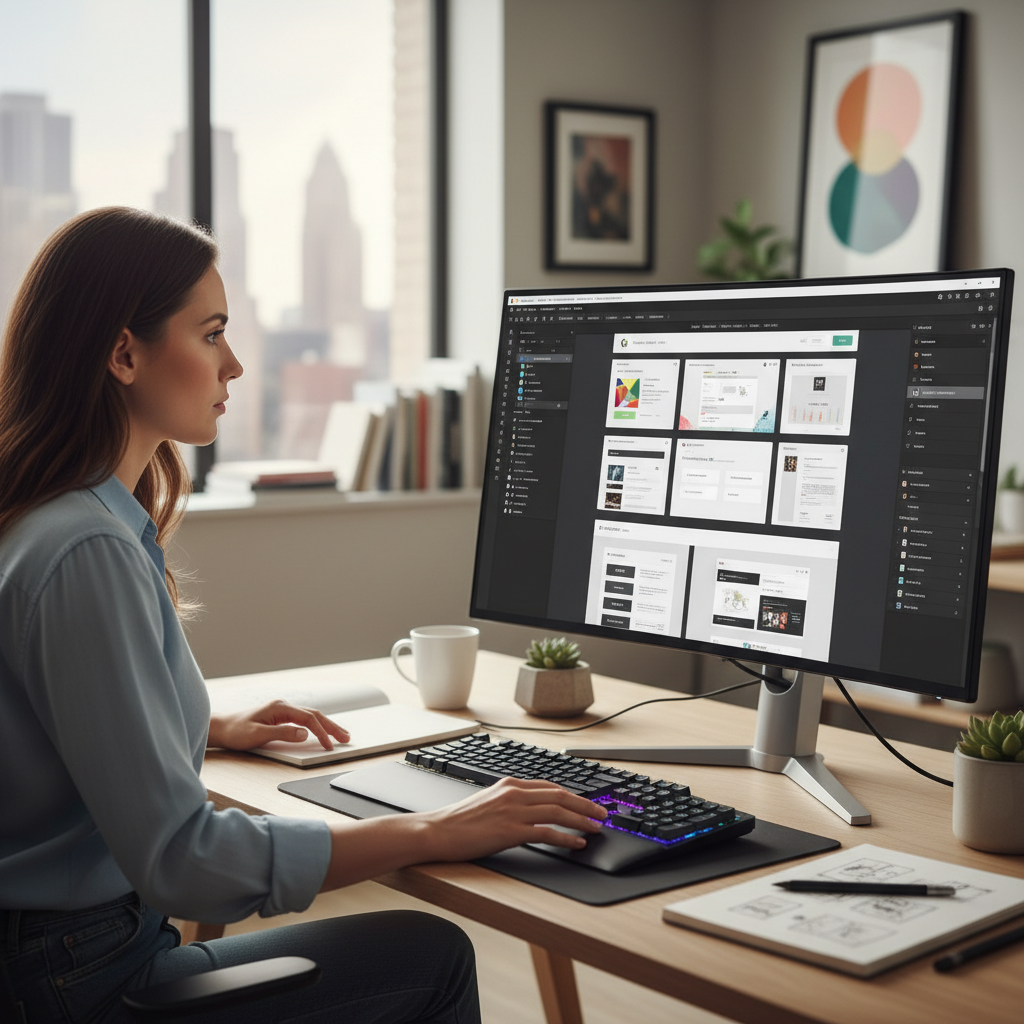
5. The "Digital Artists & Storytellers": Web Designers
 ⚠️ This picture may have spelling mistakes. Trust the words in the lesson.
When you visit a website, what makes you want to stay and explore? Is it easy to find what you're looking for? Does it look cool and interesting? That's thanks to a Web Designer!
Web designers are like the interior decorators and storytellers of the internet. They focus on how a website looks and feels. They choose colors, fonts, pictures, and decide where everything should go on a page so that it's attractive and easy for people to use. They want to make sure your experience on a website is fun and helpful, not confusing or boring.
Analogy: Think of them like an artist creating a beautiful painting, or an architect designing a building that is not only strong but also beautiful and easy to navigate. They make sure the "house" (website) is welcoming and functional.
Skills You Need for Computer Careers (Even Now!)
No matter which computer career sounds most exciting to you, there are some awesome skills that will help you prepare, even when you're in 5th grade:
- Curiosity: Ask "How does that work?" all the time!
- Problem-Solving: When something doesn't work, try to figure out why and how to fix it. This is like solving a puzzle!
- Creativity: Computers aren't just for math; they're for creating new things too!
- Teamwork: Many computer projects are built by teams of people working together.
- Patience: Sometimes computers don't do what you want right away, and it takes time to figure things out.
The Future is Full of Computer Careers!
The world of computers is always growing and changing, like a rapidly growing garden! This means there will always be new and exciting jobs in the future that we can't even imagine yet. Learning about computers now is like getting a special "key" that can unlock many doors to incredible adventures and careers!
So, next time you play a game, visit a website, or see an app, remember the computer career superheroes who helped make it happen. Maybe one day, you'll be one of them!
Keep learning, free
Create a free Syllabax account to unlock practice questions and games for this topic.
Visual Learning Enhanced! 🚀
To help you master this topic, we use Advanced Syllabax AI to generate detailed diagrams and visual models.
Note on Visuals: The AI sometimes makes spelling errors in image labels. Please refer to the lesson text for the correct terminology.