Learning Journey
Watch this topic in 60 seconds
Free preview · Lesson 1
Understanding Recycling and reuse (basic) (Materials)
Understanding Recycling and Reuse: Giving Materials a Second Chance!
Hello, young Earth helpers! Have you ever wondered what happens to your juice box after you finish drinking, or that empty cereal box after breakfast? Most of the time, we just toss them into the trash can. But where does that trash actually go? And is there a better way to deal with it?
Everything around us, from your toy car to the clothes you wear, is made from 'materials.' A material is simply what something is made of! When we throw things away, they usually end up in a huge place called a landfill. Imagine a giant, super-sized garbage dump where all our trash gets buried. Landfills take up a lot of space, and some materials, like plastic, can take hundreds or even thousands of years to break down. That's much, much longer than you or even your great-grandparents will live!
But guess what? We have some amazing superpowers called Recycling and Reuse that can help us keep our planet cleaner and healthier. Let's explore them!
What is Recycling? (It's Like Magic!)
Recycling is a super cool way to take old, used materials and turn them into brand-new things. Think of it like this: imagine you have a big box of LEGOs. Once you build a spaceship, you can take it apart and use the very same LEGO pieces to build a castle, or even a robot! Recycling is very similar. Instead of just throwing away a plastic bottle or a cardboard box, we can send them to a special place where they get cleaned, broken down, and then used to make something totally new!
For example, a used plastic bottle could become part of a new playground slide, or old newspapers could become new paper bags for your groceries. It's like giving materials a second chance at life!
Here's how the recycling journey usually works in simple steps:
- Collect: We put our recyclable items (like plastic bottles, paper, glass jars, metal cans) into special recycling bins at home or school.
- Sort: These bins are taken to a recycling center. Here, machines and people work together to separate the different materials – paper with paper, plastic with plastic, and so on.
- Process: Each material gets cleaned, crushed, shredded, or melted down. For example, plastic bottles are usually shredded into tiny flakes, and glass bottles are crushed into small pieces called 'cullet.'
- Make New Things: These processed materials are then sent to factories where they are used as ingredients to make brand-new products!
What Kinds of Materials Can We Recycle?
- Paper: Think of old newspapers, magazines, cardboard boxes (like for cereal or shipping), and school papers. They can become new paper towels, toilet paper, egg cartons, or even more cardboard!
- Plastics: Like water bottles, milk jugs, and some food containers. Look for the recycling symbol (usually a triangle made of three chasing arrows) with a number inside (usually 1 or 2 are commonly recycled). These can become park benches, new bottles, or parts of toys.
- Glass: Jars and bottles for food or drinks. They can be melted down and turned into brand-new glass jars, bottles, or even decorative glass tiles.
- Metals: Aluminum cans (like for soda) and steel cans (like for canned vegetables or soup). These can become parts of bicycles, new cans, or even parts of cars!
Why is Recycling So Important?
Recycling isn't just a cool trick; it's incredibly helpful for our Earth in many ways:
- Saves Natural Resources: Imagine you're baking cookies. If you can find a way to reuse some of your ingredients, you don't need to buy as much new flour, sugar, or eggs, right? It's similar with recycling! When we recycle paper, we don't need to cut down as many trees. When we recycle plastic, we don't need to dig up as much oil from the ground. When we recycle metal, we don't need to mine as much metal from the earth. We're giving these precious materials a second chance and saving what nature provides!
- Saves Energy: Making things from scratch (using brand-new materials) takes a lot of energy. Think about cooking a whole meal from raw ingredients versus just reheating leftovers in the microwave. Reheating takes much less energy! It's the same with recycling. Making a new aluminum can from an old one uses much less energy than making it from raw metal. This means we use less electricity, which often comes from burning fuels that can pollute the air.
- Reduces Pollution and Landfills: If we recycle more, less trash goes to those big landfills. This means less land is taken up by garbage, and there's less smelly waste piling up. Also, making things from recycled materials often creates less pollution in the air and water compared to making them from brand-new materials. It helps keep our Earth cleaner, just like putting your toys away keeps your room tidy!
What is Reuse? (Even Simpler!)
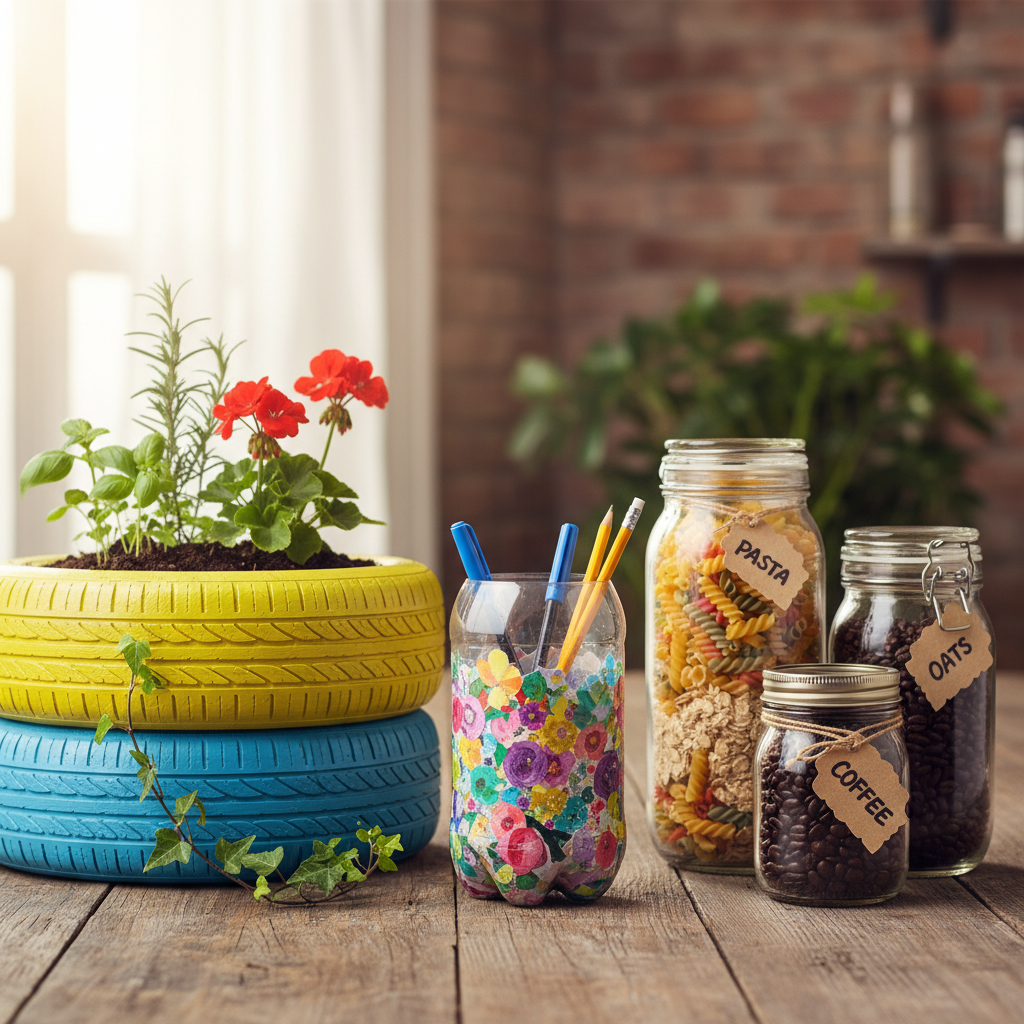
Reuse is even simpler than recycling, and it's super powerful! It means using something again for the same purpose, or even for a different, creative purpose, instead of throwing it away. Think of it like this: if you finish a big box of cereal, instead of tossing it, you might use it to store your art supplies, or make a cool robot costume! You're 'reusing' the box.
When you reuse something, you're giving it a longer life right away, without any special machines, factories, or complicated processes. It's like finding a new job for something old!
 ⚠️ This picture may have spelling mistakes. Trust the words in the lesson.
Creative Ways to Reuse:
- Using empty plastic yogurt cups or butter containers to hold crayons, beads, or small toys.
- Bringing your own reusable water bottle to school instead of buying a new plastic one every day. This saves money and plastic!
- Using old clothes as cleaning rags instead of throwing them out, or donating clothes you've outgrown to others.
- Turning a glass jar into a pretty vase for flowers, a piggy bank, or a container for homemade gifts.
- Using old cardboard tubes (from paper towels or toilet paper) for craft projects.
- Donating toys, books, or sports equipment you no longer use so other kids can enjoy them.
Why is Reuse So Awesome?
Reuse is fantastic because:
- Extends Life: It makes items last longer, so they don't become trash as quickly. The longer something is used, the less need there is for new things to be made.
- Saves Money: You don't have to buy new things if you can reuse something you already have. This saves money for your family and yours!
- Reduces Waste IMMEDIATELY: It stops something from becoming trash right now, which is even better than recycling because it skips the whole energy-using processing part!
The 3 Rs: Reduce, Reuse, Recycle (The Superpower Order!)
These three words are like superpowers for helping our planet! They are often called the '3 Rs,' and they work best when we use them in a specific order:
- Reduce: This is the MOST important step! It means making less trash in the first place. Think about whether you really, truly need something before you buy it. Can you borrow it instead? Can you fix something old instead of buying new? If you reduce how much you use, there's less to reuse or recycle!
- Reuse: Use things again and again before throwing them away. Give items a second life!
- Recycle: If you can't reduce how much you use, and you can't find a way to reuse an item, then recycle it to give its materials a new life.
How You Can Be an Earth Superhero!
Even as a 4th grader, you can make a huge difference! Here are some ways you can help:
- Look for the Recycling Symbol: That triangle of three chasing arrows often tells you if an item is recyclable.
- Ask and Learn: Ask your parents what you can recycle at home and help them sort items into the right bins.
- Get Creative with Reuse: Before throwing something out, stop and think: can I use this again for something else?
- Turn Off Lights: Save energy by turning off lights when you leave a room, and unplugging chargers when they're not in use.
- Choose Wisely: Encourage your family to choose products with less packaging.
- Be a Role Model: Show your friends and family how easy and important it is to Reduce, Reuse, and Recycle!
Recycling and reuse are powerful ways to take care of our amazing planet. By giving materials a second chance, we save precious resources, conserve energy, and keep our Earth cleaner and healthier for everyone. Every little bit we do makes a big difference!
Keep learning, free
Create a free Syllabax account to unlock practice questions and games for this topic.
Visual Learning Enhanced! 🚀
To help you master this topic, we use Advanced Syllabax AI to generate detailed diagrams and visual models.
Note on Visuals: The AI sometimes makes spelling errors in image labels. Please refer to the lesson text for the correct terminology.