Learning Journey
Watch this topic in 60 seconds
Free preview · Lesson 1
Understanding Repeated addition concept (Multiplication)
Understanding Repeated Addition: The Secret Door to Multiplication!
Hello, super mathematicians! Get ready to unlock a fantastic new way to solve problems. We're going on an adventure to discover the magical connection between adding the same number over and over again and a powerful new tool called multiplication. Think of it like learning a secret code that makes adding big groups super fast!
What is Repeated Addition?
Imagine you have a bunch of friends, and each friend has the same number of toys. Instead of counting each toy one by one, we can use repeated addition. It means we add the same number multiple times.
Analogy: Building with Blocks!
Let's say you have 3 towers, and each tower has 4 blocks.
- Tower 1 has 4 blocks.
- Tower 2 has 4 blocks.
- Tower 3 has 4 blocks.
To find the total number of blocks, we can add them up: 4 + 4 + 4. This is repeated addition because we are adding the number 4, three times.
Connecting Repeated Addition to Multiplication
Multiplication is like a shortcut for repeated addition. Instead of writing 4 + 4 + 4, we can use a symbol called 'times' (represented by 'x').
Look at our block towers again. We have 3 towers, and each tower has 4 blocks. We can write this as:
3 groups of 4 blocks
In multiplication language, this becomes:
3 x 4
The first number (3) tells us how many groups we have (the number of towers).
The second number (4) tells us how many are in each group (the number of blocks in each tower).
So, 3 x 4 means "3 groups of 4" or "4 added together 3 times".
Let's calculate it:
Repeated Addition: 4 + 4 + 4 = 12
Multiplication: 3 x 4 = 12
See? They give us the same answer! Multiplication just gets us there faster!
More Fun Analogies!
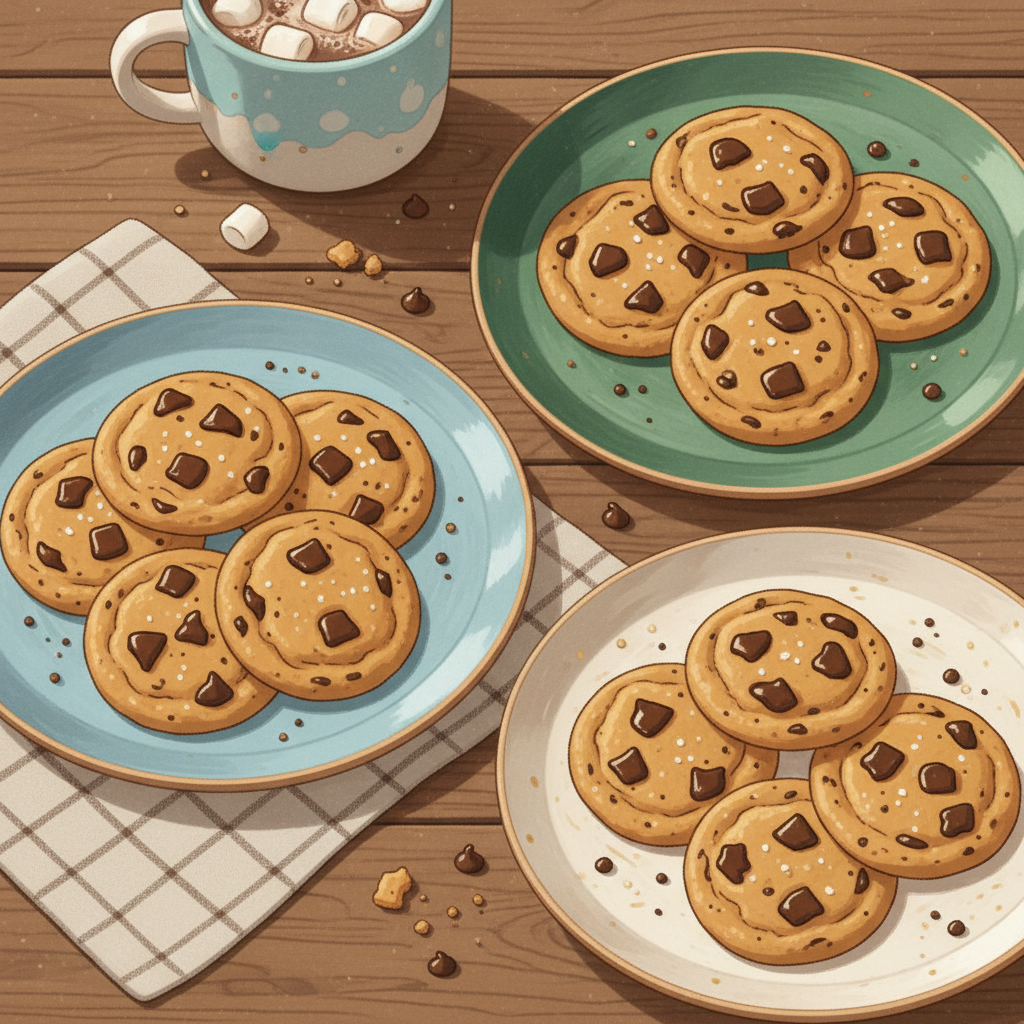
Analogy: Cookies on Plates!
Imagine you're baking cookies for a party. You put 5 cookies on each plate, and you have 3 plates.
Repeated Addition: 5 cookies on plate 1 + 5 cookies on plate 2 + 5 cookies on plate 3 = 5 + 5 + 5 = 15 cookies.
Multiplication: You have 3 plates (groups), and each plate has 5 cookies (in each group). So, it's 3 groups of 5. This is written as 3 x 5.
3 x 5 = 15 cookies.
 ⚠️ This picture may have spelling mistakes. Trust the words in the lesson.
Analogy: Wheels on Cars!
Think about cars. Most cars have 4 wheels. If you see 2 cars parked next to each other, how many wheels are there in total?
Repeated Addition: Each car has 4 wheels, so for 2 cars, it's 4 + 4 = 8 wheels.
Multiplication: You have 2 cars (groups), and each car has 4 wheels (in each group). So, it's 2 groups of 4. This is written as 2 x 4.
2 x 4 = 8 wheels.
Why is this important?
Learning repeated addition helps you understand what multiplication really means. It's not just random numbers and symbols; it's about putting equal groups together. When you see a multiplication problem, you can always think of it as adding the same number multiple times.
Let's Summarize!
Multiplication is a faster way to do repeated addition.
The multiplication sentence, like 3 x 4, tells you:
- The first number (3) is the number of groups.
- The second number (4) is the number of items in each group.
- It means adding the second number (4) as many times as the first number (3) says.
So, 3 x 4 is the same as 4 + 4 + 4.
It's like having a super-speed button for adding equal groups!
Keep practicing, and you'll become a multiplication master in no time!
Keep learning, free
Create a free Syllabax account to unlock practice questions and games for this topic.
Visual Learning Enhanced! 🚀
To help you master this topic, we use Advanced Syllabax AI to generate detailed diagrams and visual models.
Note on Visuals: The AI sometimes makes spelling errors in image labels. Please refer to the lesson text for the correct terminology.