Learning Journey
Watch this topic in 60 seconds
Free preview · Lesson 1
Understanding Basic properties (Matter Around Us)
Exploring the Amazing World of Matter!
Hey there, young explorers! Have you ever looked around your room and wondered what everything is made of? Or perhaps you've played with different toys and noticed how some are hard, others are soft, and some can even be poured? Well, you're already thinking like a scientist! Today, we're going on an exciting adventure to understand something super important called 'Matter'.
What is Matter? Everything Around Us!
Let's start with a big secret: Matter is everything around you! Yes, EVERYTHING! Your bed, your toys, the food you eat, the clothes you wear, the air you breathe, and even YOU are made of matter. Think of it like this: if you can touch it, see it, or feel it (even if it's invisible like air!), it's most likely matter.
So, what makes something 'matter'? Scientists say that for something to be matter, it needs two very important things:
- It takes up space: Imagine you have a toy box. If you put a toy car inside, that car takes up some of the space in the box, right? It can't be in the same exact spot as another toy at the same time. That's what we mean by 'taking up space'. Scientists call the amount of space something takes up its 'volume'. Even something tiny, like a grain of sand, takes up its own little bit of space!
- It has mass: This is a fancy way of saying it has 'stuff' in it, or it has 'weight'. Imagine holding a feather in one hand and a rock in the other. Which one feels heavier? The rock, of course! That's because the rock has more mass (more 'stuff') than the feather. Mass is like how much 'material' is packed into something. We use a scale to measure mass, just like when you weigh yourself at the doctor's office.
So, if something takes up space AND has mass, it's matter! Pretty cool, huh?
How Do We Describe Matter? Meet 'Properties'!
Now that we know what matter is, how do we talk about it? How do we tell one piece of matter from another? We use something called 'properties'. Properties are like the special features or characteristics that help us describe and identify different kinds of matter. Think of it like describing your best friend – you might say they have brown hair, a happy smile, and love to tell jokes. Those are your friend's 'properties'! Let's look at some important properties of matter:
1. Color
This is probably the easiest one! Is it red, blue, green, yellow? Just like your box of crayons, different objects have different colors. A banana is yellow, grass is green, and the sky can be blue!
2. Shape
Does it look like a square, a circle, a triangle, or maybe something wiggly? A ball is round, a book is usually rectangular, and a star is, well, star-shaped! This property tells us about the outline or form of the matter.
3. Size
Is it big, small, tiny, or huge? Size tells us how large or small something is. A giant whale is much bigger than a tiny fish, and your classroom is much bigger than your lunchbox.
4. Texture
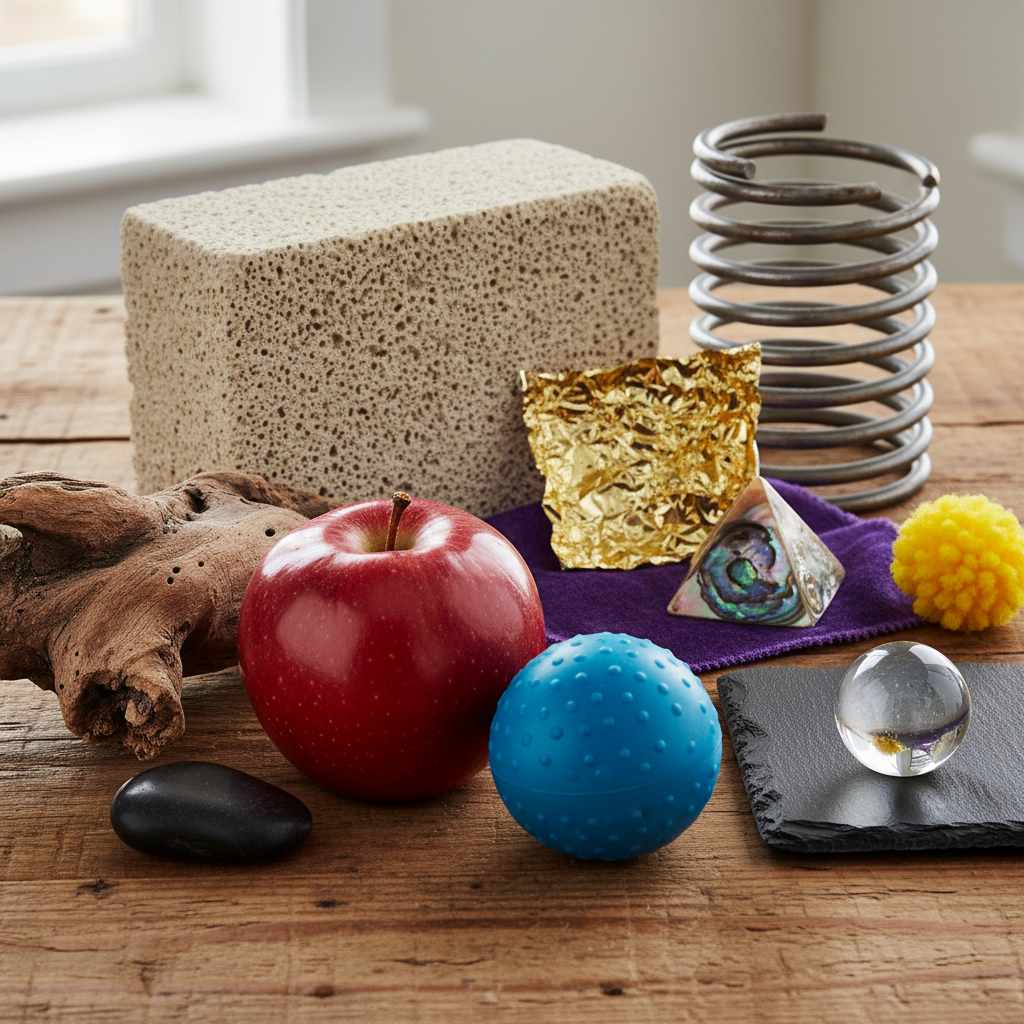
How does it feel when you touch it? Is it smooth like a polished stone? Rough like sandpaper? Soft like a fluffy blanket? Or hard like a brick? Texture is all about how the surface of matter feels to your fingers.
5. Hardness
Can you easily change its shape? Is it difficult to break or scratch? A diamond is very hard, which is why it's used in tools to cut other things. A marshmallow, on the other hand, is very soft and easy to squish.
6. Smell (Odor)
What does it smell like? Does it have a sweet smell like a flower, a tangy smell like an orange, or no smell at all? Not all matter has a noticeable smell, but many things do!
7. Temperature
Is it hot or cold? This property tells us how much heat energy the matter has. A warm cup of hot chocolate has a higher temperature than a cold glass of ice water.
8. How it interacts with water (Sinking or Floating)
Does it sink to the bottom or float on top when you put it in water? A heavy rock usually sinks, while a light cork or a wooden block will float. This property is really about how dense the object is compared to water.
Matter's Different Disguises: Solids, Liquids, and Gases (A Quick Peek!)
You'll learn much more about these later, but it's good to know that matter can appear in different forms, often called 'states'. No matter the state, it always has properties!
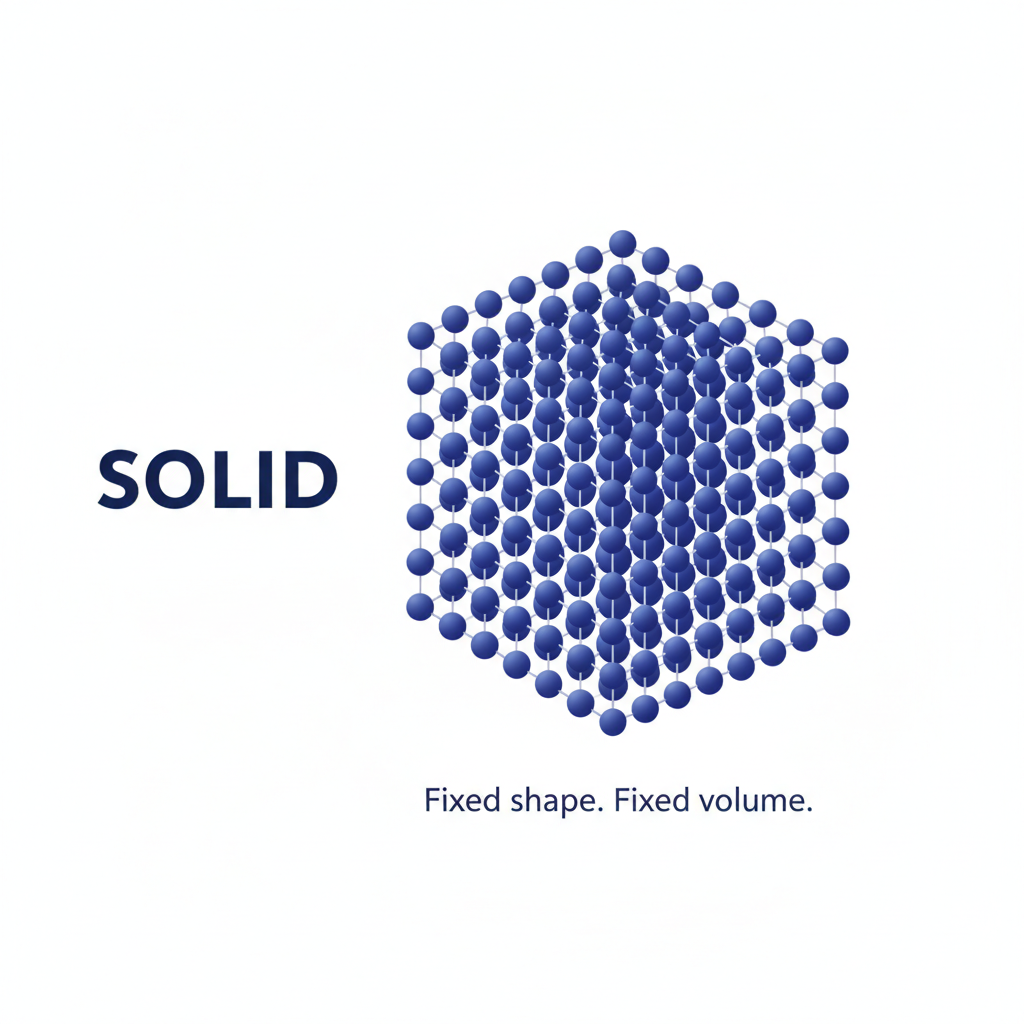
- Solids: Think of a LEGO brick, a table, or an ice cube. Solids keep their own shape and size. They don't easily change unless you push, pull, or cut them. They feel firm and definite.
- Liquids: Imagine water, juice, or milk. Liquids don't have their own fixed shape; they take the shape of whatever container they are in! You can pour them, and they flow. If you spill juice, it spreads out.
- Gases: Think about the air in a balloon or the steam rising from a hot cup of tea. Gases don't have a fixed shape OR a fixed size. They spread out to fill every bit of space in their container. You usually can't see them, but they are definitely there and are matter!
Why are Properties Important?
Understanding the properties of matter helps us in so many ways! For example:
- If you want to build a house, you wouldn't use jelly, right? You'd use strong, hard materials like wood and bricks because you know their properties make them good for building.
- When you pick out your clothes, you might choose soft cotton for a comfy shirt and waterproof fabric for a raincoat. You're using your knowledge of their properties!
- Knowing that water is a liquid helps us pour it into a cup to drink, and knowing that air (a gas) fills space helps us inflate a ball for playtime.
Time to Recap!
You've learned so much today! Remember, matter is everywhere and everything. It always takes up space and has mass. And we use wonderful 'properties' like color, shape, size, texture, and more to describe all the different kinds of matter we see, touch, and interact with every single day!
Keep exploring and observing the amazing matter around you!
Keep learning, free
Create a free Syllabax account to unlock practice questions and games for this topic.
Visual Learning Enhanced! 🚀
To help you master this topic, we use Advanced Syllabax AI to generate detailed diagrams and visual models.
Note on Visuals: The AI sometimes makes spelling errors in image labels. Please refer to the lesson text for the correct terminology.