Coding–decoding (simple) (Logical Reasoning)
Watch this topic in 60 seconds
Free preview · Lesson 1
Understanding Coding–decoding (simple) (Logical Reasoning)
Decoding Secrets: A Fun Journey into Coding and Decoding!
Hello, young detectives! Have you ever received a secret message that only you and your best friend could understand? Or maybe you've seen secret codes in movies or books? That's exactly what we're going to explore today – the exciting world of Coding and Decoding! It's like being a super-spy, cracking codes and sending hidden messages.
What is Coding?
Imagine you have a special way of writing that only your closest friends understand. That's like coding! Coding is the process of converting information (like words, numbers, or ideas) into a secret code. It's like putting a message into a special box with a lock, and only someone with the right key can open it.
Think of it like this:
- Secret Language: If you and your friend decide that 'apple' means 'playtime' and 'banana' means 'snack time', you've created a simple code. You're coding your message!
- Picture Codes: Sometimes, instead of letters, we use pictures. If you decide that a smiley face 😊 means 'happy' and a sad face 😞 means 'sad', you're coding emotions into pictures.
- Number Codes: You might have a code where '1' means 'A', '2' means 'B', and so on. So, the word 'CAT' could be coded as '3-1-20'.
Coding is all about making information hidden or changed so that only those who know the 'secret rule' can understand it. It's like disguising a message!
What is Decoding?
Now, what happens when you receive one of these secret coded messages? That's where Decoding comes in! Decoding is the opposite of coding. It's the process of taking a secret code and turning it back into the original, understandable information. It's like finding the key to open that special box and read the message inside.
Let's use our previous examples:
- Secret Language: If your friend sends you a message saying, "Let's have a banana!", and you know your code where 'banana' means 'snack time', you decode the message to understand that they want a snack.
- Picture Codes: If you see a message with 😊, you decode it to mean 'happy'.
- Number Codes: If you get the coded message '3-1-20', and you know the number-to-letter rule (1=A, 2=B, 3=C...), you decode it to spell 'CAT'.
Decoding is like being a detective, using clues (the secret rule) to solve the mystery of the coded message.
Why Do We Use Codes?
Codes are not just for spies in movies! People use codes for many reasons:
- To Keep Secrets: To send private messages that others can't understand.
- To Be Creative: To make games and puzzles more fun!
- To Simplify Things: Sometimes, a code can make a long message shorter or easier to represent.
Simple Coding and Decoding Examples
Let's look at some common ways to code and decode:
1. The 'Next Letter' Code
This is one of the simplest codes. The rule is: replace each letter with the letter that comes *after* it in the alphabet.
Example:
Let's code the word "DOG" using this rule.
- The letter after 'D' is 'E'.
- The letter after 'O' is 'P'.
- The letter after 'G' is 'H'.
So, "DOG" becomes "EPH" when coded!
Now, let's decode "EPH". We need to do the opposite: find the letter that comes *before* each letter in the alphabet.
- The letter before 'E' is 'D'.
- The letter before 'P' is 'O'.
- The letter before 'H' is 'G'.
So, "EPH" decodes back to "DOG". See? It's like a secret handshake for letters!
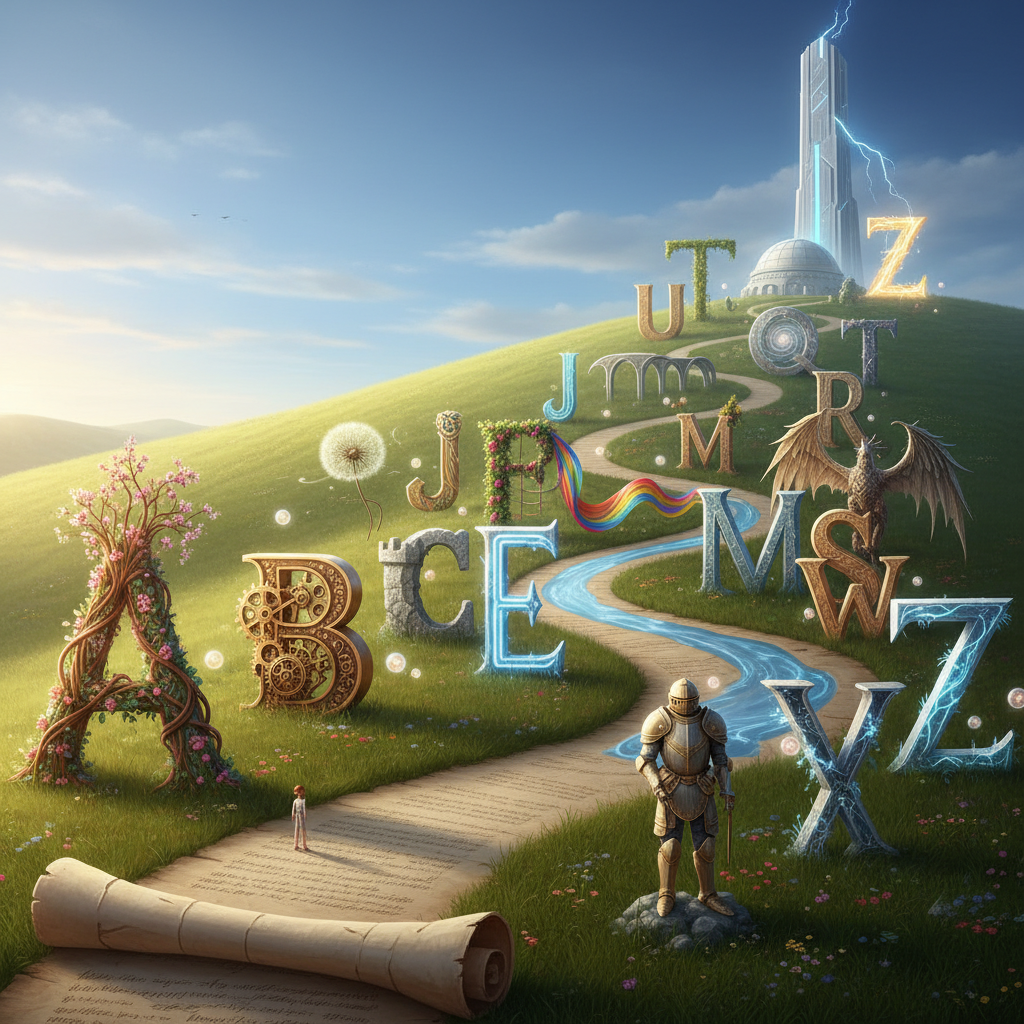 ⚠️ This picture may have spelling mistakes. Trust the words in the lesson.
2. The 'Previous Letter' Code
This is the opposite of the 'Next Letter' code. The rule is: replace each letter with the letter that comes *before* it in the alphabet.
Example:
Let's code the word "CAT" using this rule.
- The letter before 'C' is 'B'.
- The letter before 'A' is 'Z' (because after Z comes A, so before A is Z!).
- The letter before 'T' is 'S'.
So, "CAT" becomes "BZS" when coded!
Now, let's decode "BZS". We do the opposite: find the letter that comes *after* each letter.
- The letter after 'B' is 'C'.
- The letter after 'Z' is 'A'.
- The letter after 'S' is 'T'.
So, "BZS" decodes back to "CAT". This is like a secret knock!
3. The 'Number Shift' Code (Caesar Cipher - Simple Version)
This code is similar to the 'Next Letter' code, but we think about it in terms of numbers. We assign each letter a number (A=1, B=2, C=3, ... Z=26). Then, we shift that number by a certain amount.
Example: Let's code the word "SUN" by shifting each letter's number *forward* by 3.
- 'S' is the 19th letter. 19 + 3 = 22. The 22nd letter is 'V'.
- 'U' is the 21st letter. 21 + 3 = 24. The 24th letter is 'X'.
- 'N' is the 14th letter. 14 + 3 = 17. The 17th letter is 'Q'.
So, "SUN" coded with a +3 shift is "VXQ".
To decode "VXQ", we do the opposite: we shift each letter's number *back* by 3.
- 'V' is the 22nd letter. 22 - 3 = 19. The 19th letter is 'S'.
- 'X' is the 24th letter. 24 - 3 = 21. The 21st letter is 'U'.
- 'Q' is the 17th letter. 17 - 3 = 14. The 14th letter is 'N'.
So, "VXQ" decodes back to "SUN". This is like a secret handshake with a number twist!
4. Symbol Codes
Sometimes, instead of letters or numbers, we use symbols! Each symbol represents a letter or a word.
Example:
Let's say we have this code:
- ⭐ = A
- 🔴 = B
- 🔵 = C
- 🔺 = D
If you receive the message: 🔴 🔵 🔺
You decode it by looking at your key:
- 🔴 = B
- 🔵 = C
- 🔺 = D
The message spells "BCD"!
Be a Coding and Decoding Star!
Coding and decoding are all about patterns and following rules. The key to decoding is to figure out the secret rule that was used for coding. Once you know the rule, decoding becomes a fun puzzle!
So, the next time you see a secret message, remember: there's a code, and there's a way to break it. You are now ready to be a master code-breaker!
Keep learning, free
Create a free Syllabax account to unlock practice questions and games for this topic.
Visual Learning Enhanced! 🚀
To help you master this topic, we use Advanced Syllabax AI to generate detailed diagrams and visual models.
Note on Visuals: The AI sometimes makes spelling errors in image labels. Please refer to the lesson text for the correct terminology.