Kinds of plants: herbs, shrubs, climbers, creepers (Plants)
Watch this topic in 60 seconds
Free preview · Lesson 1
Understanding Kinds of plants: herbs, shrubs, climbers, creepers (Plants)
Exploring the Wonderful World of Plants: Herbs, Shrubs, Climbers, and Creepers!
Hello, young explorers! Have you ever looked closely at the plants around you? From the tiny grass blades to the tall trees, plants are everywhere! Just like how you have different types of toys (some for building, some for playing outside), plants also come in many different kinds. Today, we're going on an adventure to discover four special types of plants: Herbs, Shrubs, Climbers, and Creepers!
Why do we sort plants? Imagine your toy box! If all your toys were mixed up, it would be hard to find what you want, right? But if you sort them into categories like "building blocks," "stuffed animals," and "cars," it's much easier to find things. In the same way, scientists sort plants to understand them better. Let's dig in!
1. Herbs: The Gentle Giants (but actually, the Smallest!)
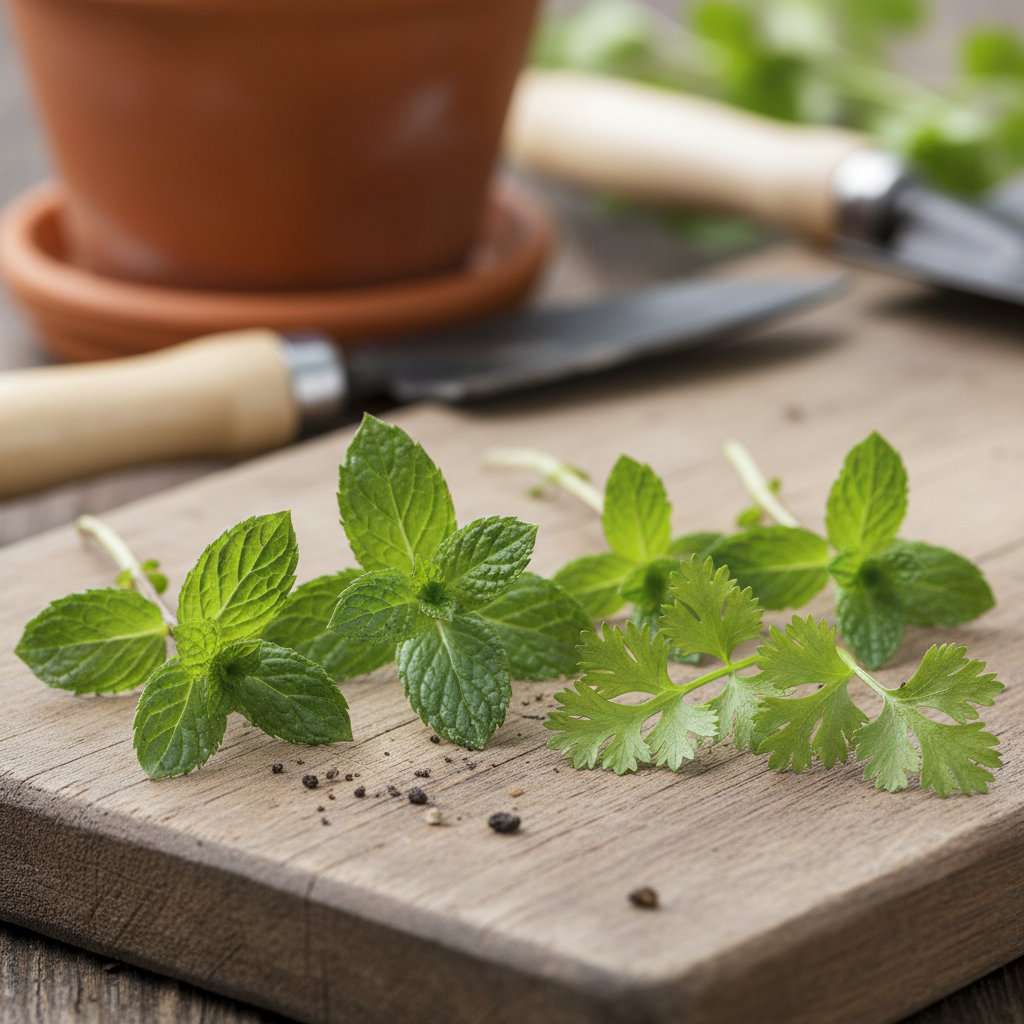
Imagine a very tiny, soft, green plant that you can easily pluck with your fingers. That's usually an herb! Herbs are like the "babies" of the plant world. They are small plants with very soft, green, and flexible stems. Their stems are not woody like tree branches; you can bend them easily without them breaking. Most herbs don't live for a very long time, maybe just a few months or a year.
Think of it like this: If you try to snap a twig from a big tree, it's hard, right? But if you try to snap a celery stick, it's easy! Herbs are like that easy-to-snap celery stick.
Examples of Herbs:
- Mint: Used to make refreshing drinks and add flavor to food.
- Coriander (Cilantro): Often sprinkled on dishes to make them tasty.
- Spinach: A leafy green vegetable that's very good for you!
- Basil: Smells wonderful and is used in many foods, especially Italian dishes.
Herbs are super useful! Many of them are medicines, or we eat them as vegetables, or use them to add flavor to our food.
2. Shrubs: The Bushy Buddies
Now, let's meet the "teenagers" of the plant world – Shrubs! Shrubs are bigger than herbs but smaller than tall trees. They have woody stems, but these stems are not as thick or strong as tree trunks. What makes shrubs special is that their branches start growing very close to the ground, giving them a bushy appearance. They often look like a big, green ball or a dense clump of branches.
Think of it like this: Imagine a small group of friends all wearing green clothes, standing very close together. That's how a shrub looks – many branches starting from the ground, making it bushy and full.
Examples of Shrubs:
- Rose Bush: Everyone knows roses! They grow on a shrub with thorny, woody stems.
- Hibiscus: These plants have beautiful, big flowers and are very bushy.
- Jasmine: Known for its sweet-smelling flowers, it also grows as a shrub.
- Lemon Plant: Many fruit plants like lemon and orange grow as shrubs when they are young, and even when older they retain the bushy growth habit.
Shrubs often live longer than herbs, sometimes for many years. They are great for gardens because they can be shaped and provide lots of flowers and greenery.
3. Climbers: The Reach-for-the-Sky Plants
Next up are the Climbers! These plants have a bit of a challenge – their stems are very weak and cannot stand upright on their own. It's like trying to stand up a noodle – it just flops over! So, what do climbers do? They are super smart! They find help. Climbers grow by "climbing" on something strong for support, like a wall, a fence, another plant, or even a stick you put in the ground for them.
Think of it like this: Imagine you want to reach a cookie jar on a high shelf. You can't reach it on your own, right? So, you use a stool or ask an adult for help. Climbers are like that – they use "stools" (supports) to grow tall!
They have special parts like tendrils (little curling "fingers") or roots that help them grip onto surfaces and pull themselves up. Once they find support, they can grow quite tall!
Examples of Climbers:
- Money Plant: A very popular houseplant with heart-shaped leaves that loves to climb.
- Pea Plant: The plant that gives us peas uses tendrils to climb up supports.
- Grape Vine: This plant produces delicious grapes and needs strong support to grow its heavy fruit.
- Cucumber Plant: Many cucumber varieties are climbers and need a trellis to grow well.
4. Creepers: The Ground Huggers
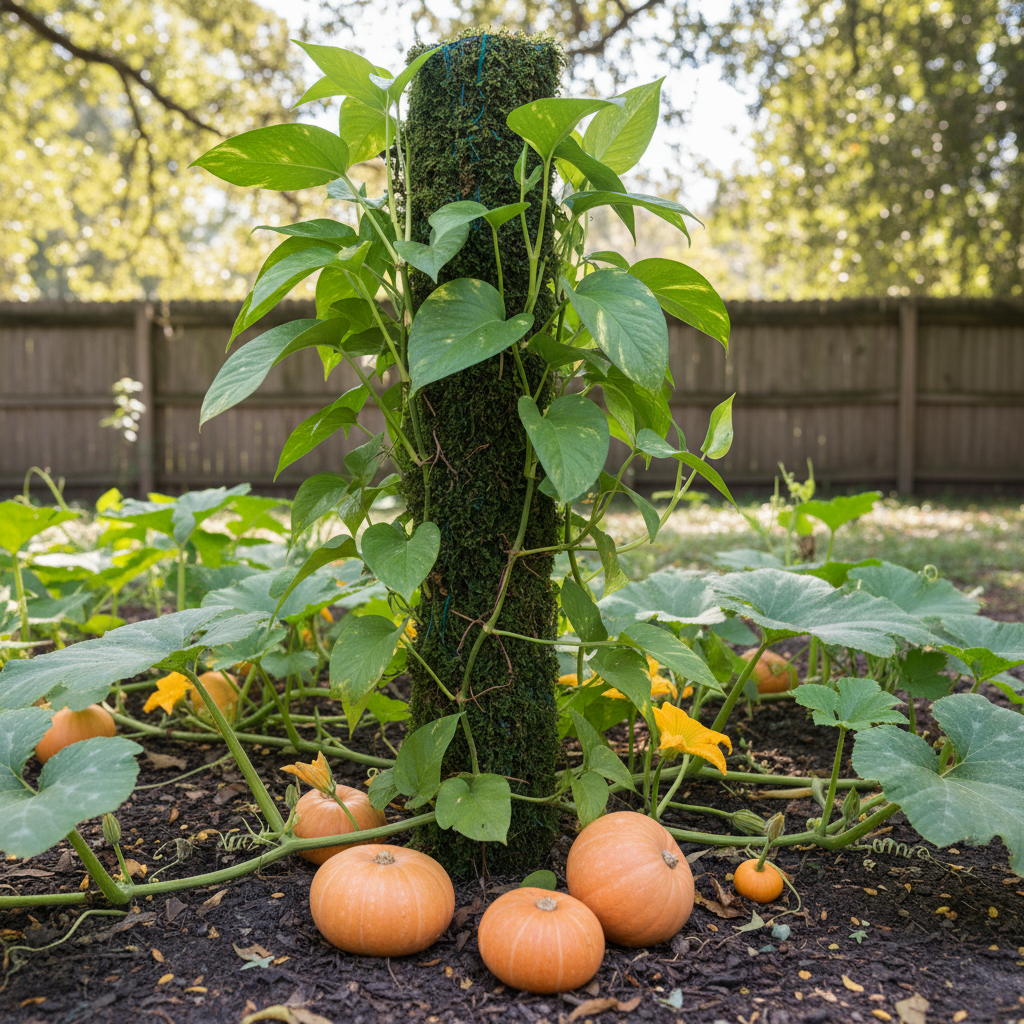
Finally, we have the Creepers! Like climbers, creepers also have weak stems that cannot stand upright. But instead of climbing up, creepers prefer to spread out and "creep" along the ground. They are like plants that love to give the earth a big hug!
Think of it like this: Imagine you're very tired after a long day of playing. Do you want to stand up straight? Probably not! You might just want to lie down on the floor and spread out. Creepers are a bit like that – they love to lie down and spread their branches and leaves along the ground.
Many creepers produce big, heavy fruits. If these plants tried to climb, their weak stems wouldn't be able to hold up the weight of the fruit, and they would break! So, it's much safer for them to grow their fruits close to the ground.
Examples of Creepers:
- Pumpkin Plant: Pumpkins are heavy, so the plant creeps along the ground.
- Watermelon Plant: Another big, heavy fruit that grows on a creeper.
- Sweet Potato Plant: The sweet potato grows underground, and its plant creeps along the surface.
- Strawberry Plant: While smaller, strawberry plants also spread out along the ground.
Let's Recap Our Plant Adventure!
We've learned about four fascinating kinds of plants today:
- Herbs: Smallest, soft, green stems, don't live long (like mint, spinach).
- Shrubs: Medium-sized, woody stems, bushy, branches from the ground (like rose, hibiscus).
- Climbers: Weak stems, need support to grow upwards (like money plant, pea plant).
- Creepers: Weak stems, grow along the ground, often with heavy fruits (like pumpkin, watermelon).
Isn't it amazing how diverse and clever plants are? Each kind has found a unique way to grow and thrive in our world. Next time you see a plant, try to guess what kind it is!
Keep learning, free
Create a free Syllabax account to unlock practice questions and games for this topic.
Visual Learning Enhanced! 🚀
To help you master this topic, we use Advanced Syllabax AI to generate detailed diagrams and visual models.
Note on Visuals: The AI sometimes makes spelling errors in image labels. Please refer to the lesson text for the correct terminology.