Specialized cells[BIOLOGY]
Watch this topic in 60 seconds
Free preview · Lesson 1
Understanding Specialized cells[BIOLOGY]
Specialized Cells: The Body's Superheroes!
Imagine your body is a bustling city. Just like a city needs different workers with different jobs – police officers to keep order, firefighters to put out fires, builders to construct buildings, and chefs to cook delicious food – your body also needs different types of cells to do specific jobs. These are called **specialized cells**.
Think of a regular, unspecialized cell like a general-purpose tool, like a Swiss Army knife. It can do a lot of things, but it's not the *best* at any single one. Specialized cells, on the other hand, are like a chef's knife, a surgeon's scalpel, or a construction worker's hammer. They are perfectly designed and equipped to do one very important job really, really well. This makes our bodies incredibly efficient and allows us to do amazing things!
What Makes a Cell Specialized?
Cells become specialized through a process called **differentiation**. This is like a young apprentice learning a trade. Initially, all cells in a developing organism (like a baby) are similar. But as they grow and develop, they receive signals that tell them what their specific job will be. Once they get this 'job assignment,' they change their shape, internal structure, and even the tools (molecules) they make to become experts at their task.
This specialization happens because different parts of the cell's DNA (the instruction manual inside each cell) are switched on or off. It's like having a giant cookbook, but only opening the pages relevant to the dish you're making. A muscle cell might switch on the instructions for making proteins that allow it to contract, while a nerve cell switches on instructions for sending electrical signals.
Meet Some of the Body's Superheroes (Specialized Cells)!
1. Red Blood Cells: The Oxygen Delivery Trucks
Imagine a busy city highway. Red blood cells are like the delivery trucks on this highway, carrying a precious cargo: **oxygen**. Oxygen is essential for all our body's cells to get energy, just like fuel is needed for cars to run. Red blood cells are perfectly shaped for this job. They are:
- Disc-shaped and flexible: This allows them to squeeze through even the tiniest blood vessels, like a flexible truck easily navigating narrow streets.
- Lacking a nucleus: This is a big sacrifice! By getting rid of their nucleus (the cell's 'control center'), they make more space inside to carry even more oxygen. It's like a delivery truck removing seats to fit more cargo.
- Filled with hemoglobin: This is a special protein that acts like a magnet for oxygen, grabbing onto it tightly so it can be transported around the body.
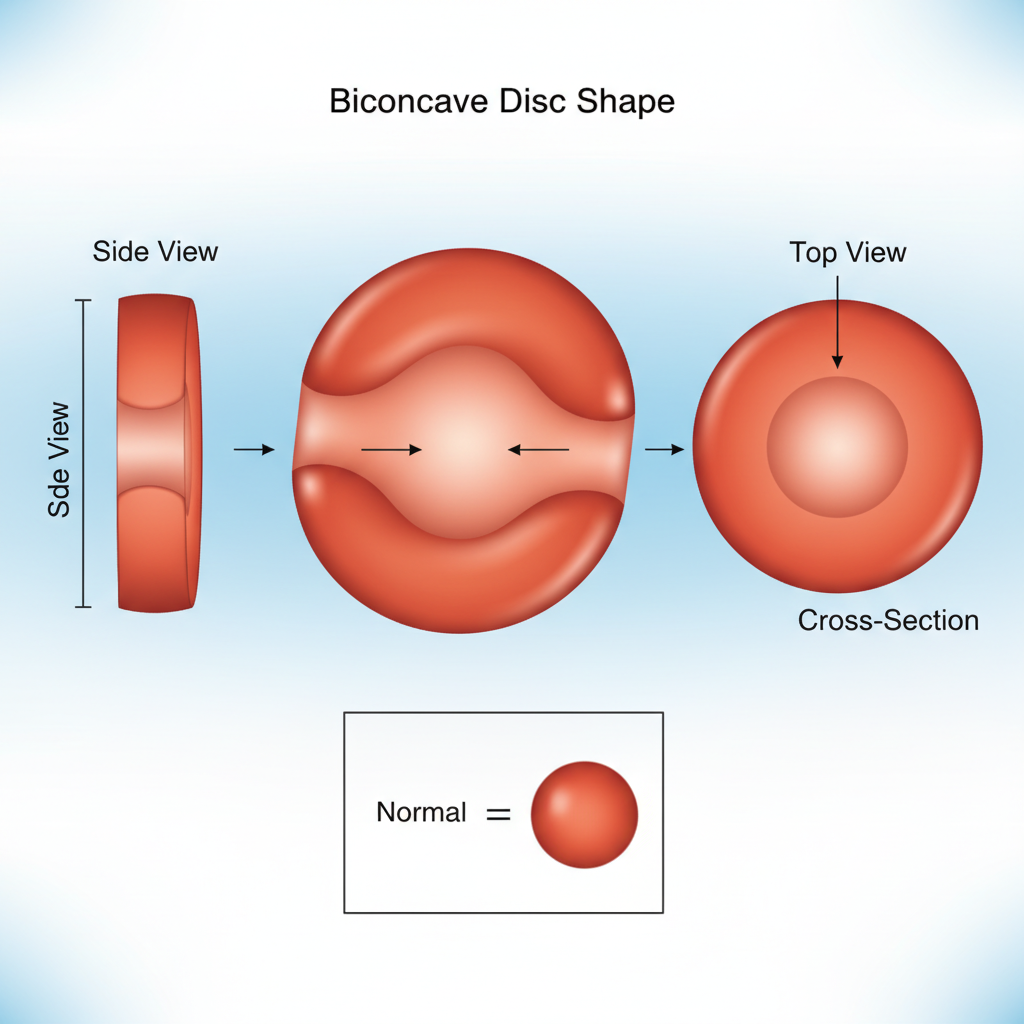 ⚠️ This picture may have spelling mistakes. Trust the words in the lesson.
2. Nerve Cells (Neurons): The Information Superhighway Messengers
Have you ever touched something hot and instantly pulled your hand away? That incredibly fast reaction is thanks to nerve cells! They are like the communication network of your body, sending messages at lightning speed. They are structured to be amazing messengers:
- Long and thin: They have a main body and long extensions (like wires) that can reach far distances to connect with other nerve cells or muscles. This allows a message from your toe to travel all the way to your brain.
- Branching ends: Their ends branch out like the roots of a tree, allowing them to pass messages to many other cells.
- Specialized for electrical and chemical signals: They can convert information into electrical impulses and then release chemical signals to pass the message along. Think of it as sending an electric beep and then releasing a special puff of smoke to tell the next person what's happening.
3. Muscle Cells: The Body's Movers and Shakers
Without muscle cells, you wouldn't be able to walk, talk, eat, or even blink! These cells are the powerhouses responsible for movement. They are built for contraction:
- Elongated and packed with proteins: They are long and slender, like tiny ropes. These ropes are made of special proteins (actin and myosin) that can slide past each other, causing the cell to shorten and thicken – this is contraction!
- Ability to contract and relax: They are like tiny springs that can be stretched and then pulled back strongly.
- Work in groups: Muscle cells work together in tissues to generate enough force for movement.
4. Skin Cells (Epithelial Cells): The Body's Protective Shield
Your skin is your body's first line of defense against the outside world. Skin cells are like the bricks in a strong, protective wall:
- Tightly packed: They fit together very closely, with very little space between them, forming a barrier. This is like tightly laid bricks with mortar holding them in place.
- Flat and tough: Many skin cells are flattened and have tough outer layers, making them resistant to damage, drying out, and germs.
- Constantly replaced: The outer layers of skin cells are always shedding and being replaced by new cells from underneath, ensuring your shield is always strong.
5. Root Hair Cells (Plant Cells): The Water and Nutrient Sponges
While we've focused on animal cells, plants also have specialized cells! In plants, root hair cells are crucial for survival. They are like tiny straws extending from plant roots:
- Long, thin extensions: These extensions vastly increase the surface area of the root, allowing the plant to absorb as much water and dissolved nutrients as possible from the soil. Imagine a sponge with many tiny threads sticking out – it can soak up much more liquid than a smooth surface.
- Thin walls: Their cell walls are very thin, making it easy for water and nutrients to pass through into the cell.
Why is Specialization Important?
Specialization allows organisms to be more complex and efficient. Imagine if every cell in your body had to do everything – digestion, movement, thinking, fighting germs. It would be incredibly slow and ineffective! By having specialized cells, each performing its unique function perfectly, our bodies (and those of other complex organisms) can:
- Perform complex tasks: Like seeing, hearing, running, and learning.
- Be more efficient: Energy and resources are used wisely.
- Adapt to different environments: Different specializations allow organisms to thrive in various conditions.
So, the next time you take a deep breath, remember the incredible teamwork of your red blood cells delivering oxygen, your nerve cells sending signals, your muscle cells allowing you to move, and all the other specialized cells working tirelessly to keep you alive and well. They are the true superheroes of your body!
Keep learning, free
Create a free Syllabax account to unlock practice questions and games for this topic.
Visual Learning Enhanced! 🚀
To help you master this topic, we use Advanced Syllabax AI to generate detailed diagrams and visual models.
Note on Visuals: The AI sometimes makes spelling errors in image labels. Please refer to the lesson text for the correct terminology.