Learning Journey
Free preview · Lesson 1
Understanding Day and night (simple idea) (Light Around Us)
Hello, Young Explorers! Understanding Day and Night!
Welcome, amazing first graders! Have you ever wondered why sometimes it's super bright outside, and other times it's dark and we see the moon and twinkling stars? That's what we call DAY and NIGHT! It's one of the coolest things our Earth does every single day.
What is Day?
Think about when you wake up in the morning. What's the first thing you usually notice? Light! The sun is shining brightly, isn't it? Day is the time when our part of the Earth is lit up by the Sun. The Sun is like a giant, super-duper flashlight far, far away in space, shining its light and warmth all over us!
- During the day, the sky is usually blue, and we see clouds.
- We go to school, play outside, eat lunch, and do lots of fun activities!
- The Sun makes everything feel warm and cozy.
Imagine you have a toy car, and you shine a flashlight on it. The part of the car that the light hits is bright, right? That's just like our Earth during the day!
What is Night?
Now, think about what happens when it gets dark outside. The bright Sun goes away (or seems to!), and the sky turns a dark color, like deep blue or black. This is night! Night is the time when our part of the Earth is facing away from the Sun, so it's dark.
- During the night, we can often see the beautiful Moon and lots of tiny, twinkling stars.
- It gets cooler outside because the Sun's warm light isn't reaching us directly.
- This is when we usually eat dinner, get ready for bed, and sleep so our bodies can rest and grow!
Using our toy car and flashlight analogy again: when you turn the toy car away from the flashlight, that side becomes dark. That's what happens to our Earth at night!
Why Do We Have Day and Night? The Earth's Awesome Spin!
Here's the super secret why we have day and night: Our Earth is always spinning! It spins and spins, just like a top or a basketball on your finger. But it spins very slowly and smoothly, so we don't even feel it!
Let's pretend you are the Earth, and your friend is the Sun, holding a flashlight. If you stand in one place and slowly spin around, what happens?
- When your face is pointing towards your friend's flashlight, you feel the light – that's like DAY for you!
- As you keep spinning, your back will face your friend's flashlight. Now, your face is in the dark! – that's like NIGHT for you!
Our Earth does this exact same thing every single day! It spins on an imaginary line called an 'axis' (you can imagine it like a skewer going right through the middle of an apple). As it spins, different parts of the Earth get to face the Sun's light.
Take a look at this picture to see how the Earth spins! 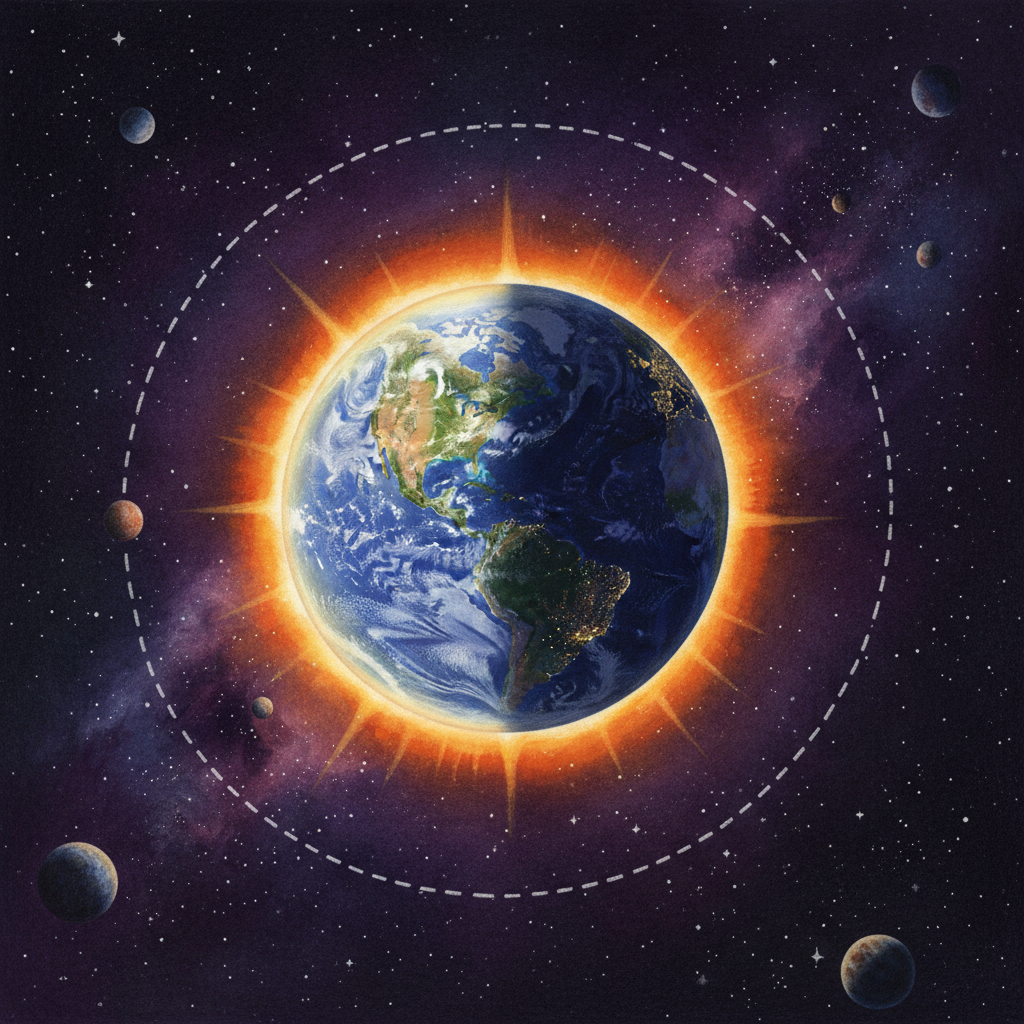 ⚠️ This picture may have spelling mistakes. Trust the words in the lesson.
The Spinning Earth and the Stationary Sun
The Sun stays in its place, shining its light. It's the Earth that is always moving! Because the Earth is always spinning, every part of it eventually gets its turn to face the Sun (daytime) and then turn away from the Sun (nighttime). This happens over and over again, like a never-ending dance!
This whole spin, from one day through one night and back to day again, takes about 24 hours. That's why we have about 12 hours of day and 12 hours of night, though it can change a little bit depending on the time of year.
Here’s another helpful picture showing the Earth’s rotation: 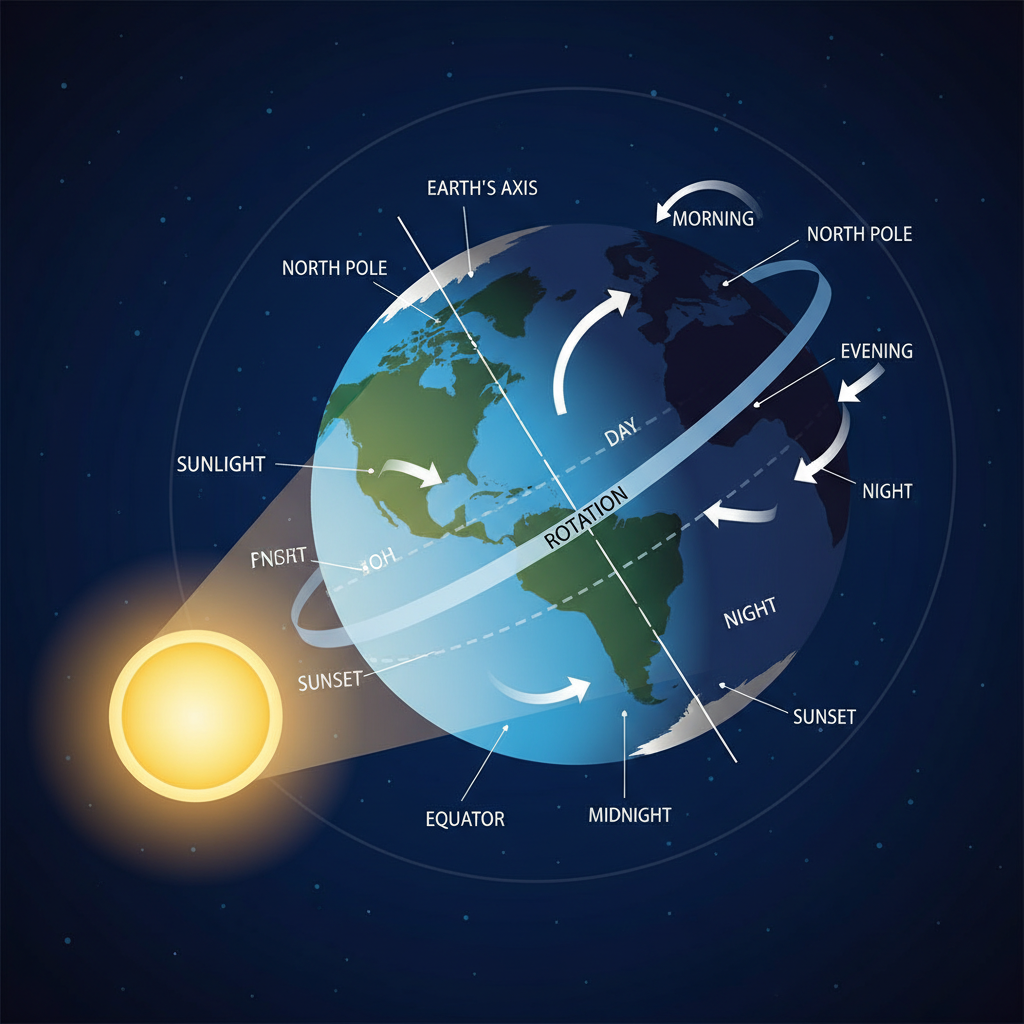 ⚠️ This picture may have spelling mistakes. Trust the words in the lesson.
Amazing Facts About Day and Night!
- The Sun's Light is Key: Without the Sun, our Earth would always be dark and cold. The Sun gives us light and warmth, which is super important for plants, animals, and us!
- Moon and Stars: We see the Moon and stars at night because the Sun's bright light isn't in the way. They are always there, even during the day, but the Sun is so bright we can't see them!
- Always Happening: Right now, while it's daytime where you are, it's nighttime somewhere else on Earth! And while you're sleeping, other kids on the other side of the world are waking up to their day!
Conclusion: A Daily Dance!
So, remember, day and night are like a constant, beautiful dance performed by our amazing Earth! It spins and spins, showing one side to the Sun for day, and turning the other side away for night. Now you know the secret behind the brightest mornings and the darkest nights! Isn't that cool?
Keep learning, free
Create a free Syllabax account to unlock practice questions and games for this topic.
Visual Learning Enhanced! 🚀
To help you master this topic, we use Advanced Syllabax AI to generate detailed diagrams and visual models.
Note on Visuals: The AI sometimes makes spelling errors in image labels. Please refer to the lesson text for the correct terminology.