Cube & Dice (top–front–side relationships) – Non-Verbal Reasoning
Watch this topic in 60 seconds
Free preview · Lesson 1
Cube & Dice (top–front–side relationships) – Non-Verbal Reasoning (Foundational)
Cube & Dice: Top, Front, Side Relationships!
Hey there, future puzzle masters! Today, we're diving into the world of cubes and dice, and how their different sides relate to each other. This is all about Non-Verbal Reasoning, which means using images and patterns to solve problems. Let's get started!
What is a Cube?
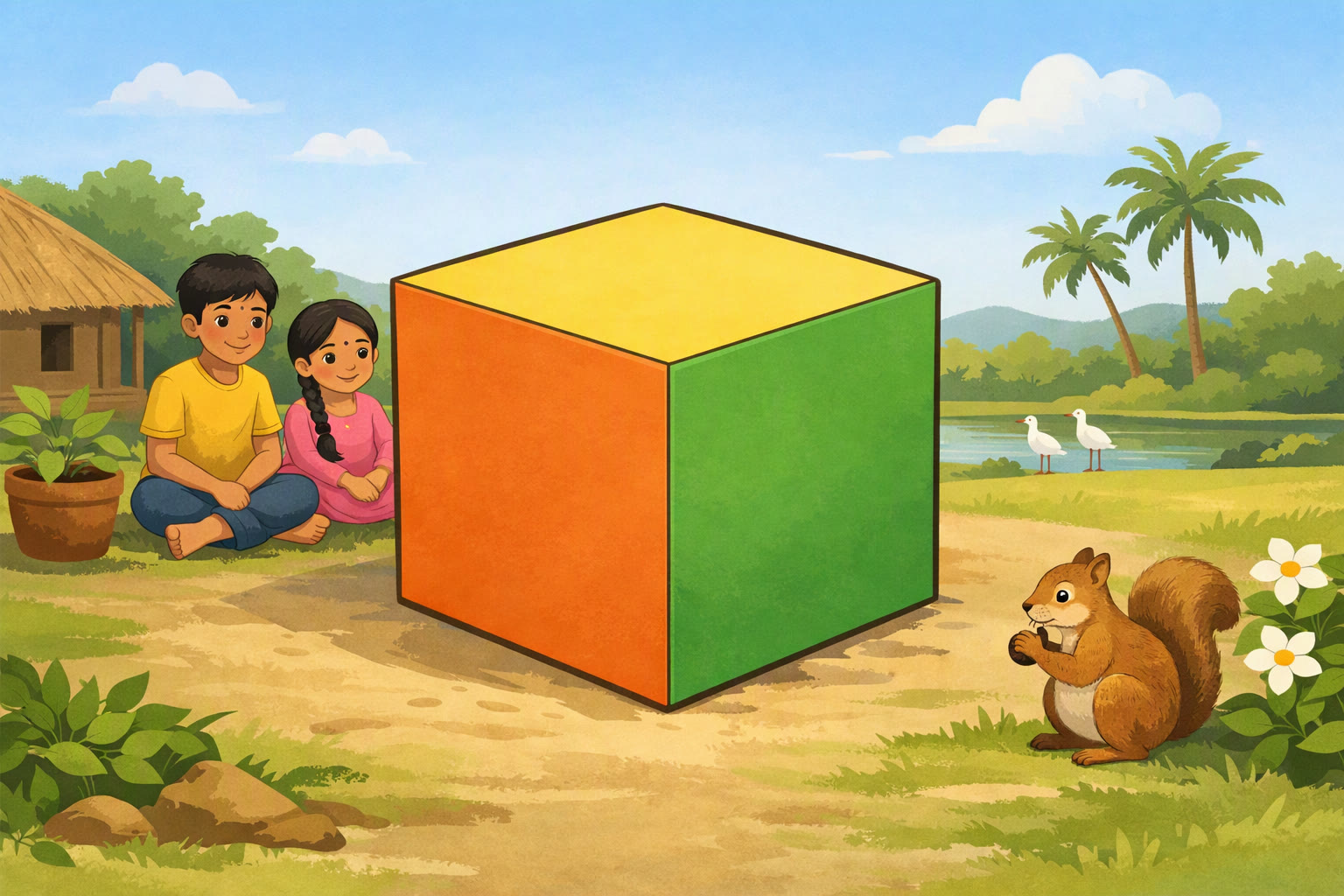
- A cube is a 3D shape with six equal square faces. Think of it like a perfectly fair die!
- Each square face is a side of the cube.
- We'll be looking at how the top, front, and side faces connect.
Understanding Dice
- A die (or dice, if there's more than one) is a special kind of cube.
- Each face of a standard die has a different number of dots (1 to 6).
- The important thing to remember is that opposite faces of a standard die always add up to 7. So, 1 is always opposite 6, 2 is always opposite 5, and 3 is always opposite 4.
Top, Front, and Side Relationships
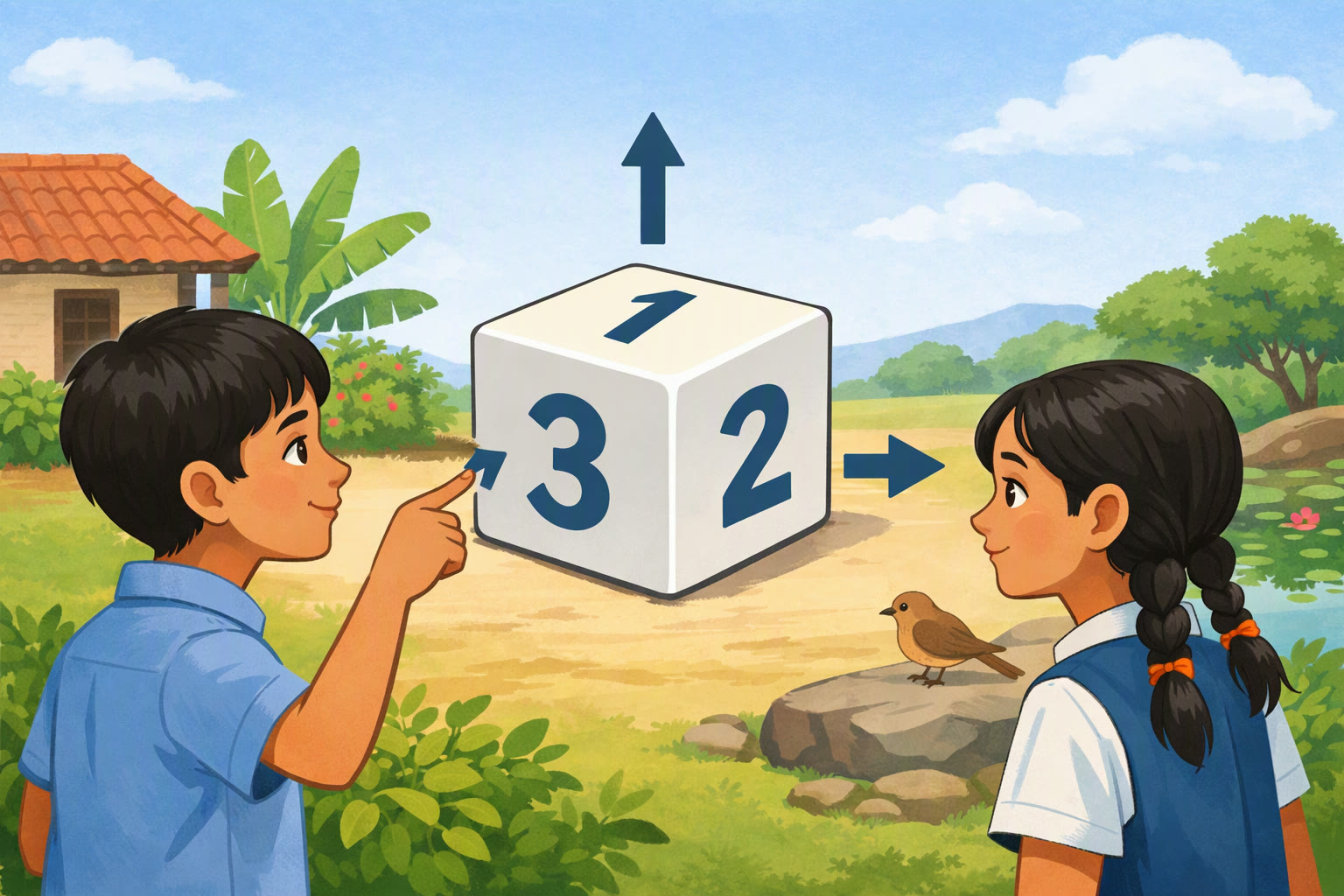
When we look at a picture of a cube or die, we can usually only see three faces at a time: the top, the front, and one side. Understanding how these faces are connected is key to solving these puzzles.
- Top: The face you see on the very top.
- Front: The face that is directly facing you.
- Side: The face that is to the left or right of the front face.
Solving Simple Problems
Let's say you see a die with the number 1 on top and the number 2 on the front. What number cannot be on the side? The answer is 6. Why? Because 6 is opposite 1.
Important Tips
- Visualize the cube in your mind.
- Remember that opposite faces never share an edge.
- Look for clues about how the faces are related.
Keep practicing, and you'll become a cube and dice master in no time!
Keep learning, free
Create a free Syllabax account to unlock practice questions and games for this topic.
Visual Learning Enhanced! 🚀
To help you master this topic, we use Advanced Syllabax AI to generate detailed diagrams and visual models.
Note on Visuals: The AI sometimes makes spelling errors in image labels. Please refer to the lesson text for the correct terminology.