Operations on fractions (Fractions)
Watch this topic in 60 seconds
Free preview · Lesson 1
Understanding Operations on fractions (Fractions)
Understanding Fractions: Operations for 7th Graders (Foundational)
Hello, future math whizzes! Today, we're diving deep into the world of fractions. Don't let them scare you; fractions are just a way of talking about parts of a whole. Think of them like pieces of a delicious pizza! If you cut a pizza into 8 equal slices and take 3, you have 3/8 of the pizza. Simple, right?
What is a Fraction? The Basics!
A fraction has two main parts:
- Numerator (Top Number): This tells you how many pieces you HAVE or are considering. (Like how many pizza slices you took).
- Denominator (Bottom Number): This tells you how many EQUAL pieces the whole thing is divided into. (Like the total number of slices the pizza was cut into).
So, in 3/8, '3' is the numerator, and '8' is the denominator. The line between them just means 'divided by'.
Types of Fractions (Quick Review):
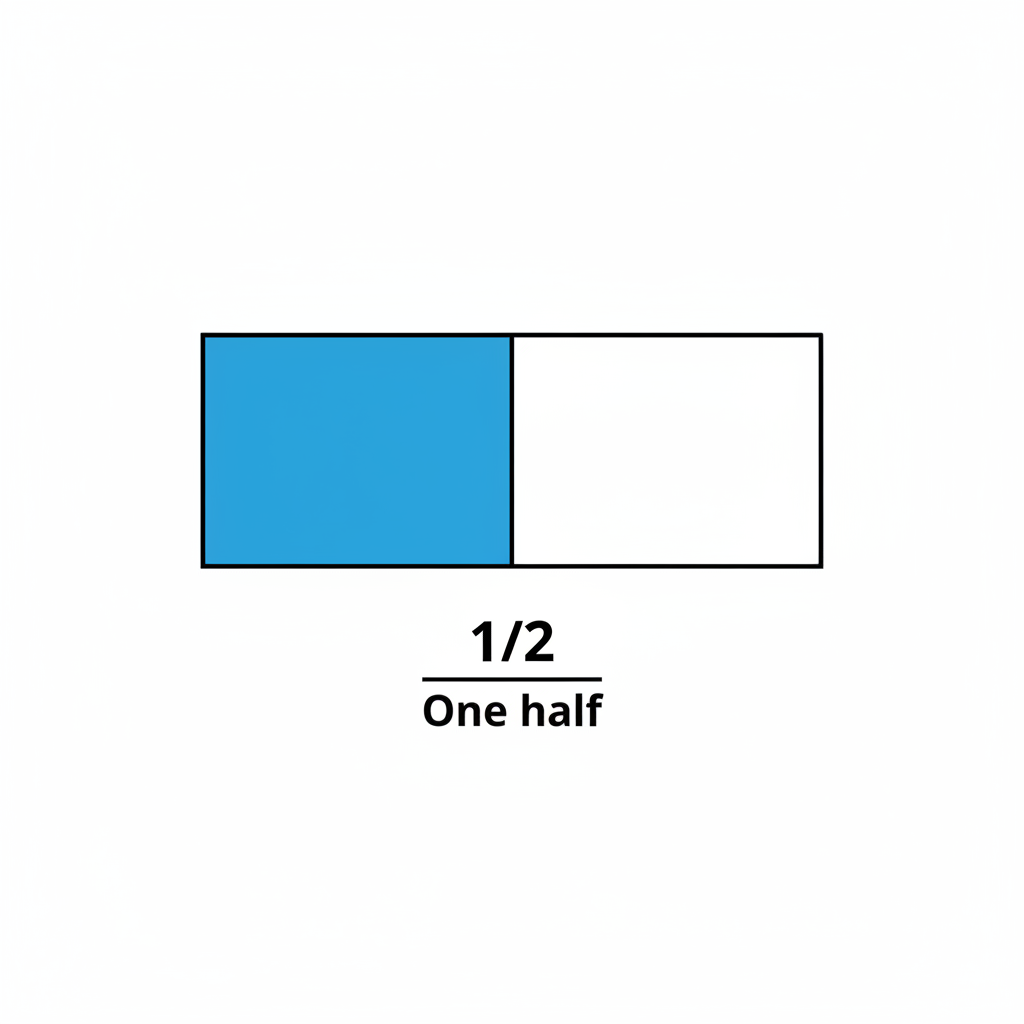
- Proper Fraction: Numerator is smaller than the denominator (e.g., 1/2, 3/4). These are less than one whole.
- Improper Fraction: Numerator is equal to or larger than the denominator (e.g., 5/4, 7/3). These are equal to or more than one whole.
- Mixed Number: A whole number and a proper fraction together (e.g., 1 1/2, 2 3/4). You can always convert improper fractions to mixed numbers and vice versa!
Operation 1: Adding Fractions (Putting Pieces Together)
Case 1: Same Denominators (Easy Peasy!)
Imagine you have 1/4 of a chocolate bar, and your friend gives you another 2/4 of the same chocolate bar. How much do you have in total? You simply add the number of pieces (numerators) and keep the total number of pieces the whole was divided into (denominator) the same.
1/4 + 2/4 = (1+2)/4 = 3/4
Analogy: If you have 1 red apple and 2 red apples, you have 3 red apples. You don't change what kind of fruit they are!
Case 2: Different Denominators (Finding Common Ground)
What if you have 1/2 of a cake and your sister gives you 1/3 of another identical cake? You can't just add 1+1 and say 2/something, because the 'somethings' (denominators) are different sizes! It's like trying to add apples and oranges.
To add fractions with different denominators, you need to find a Common Denominator. This means finding a number that both original denominators can divide into evenly. The easiest way is often to find the Least Common Multiple (LCM) of the denominators.
Let's add 1/2 + 1/3:
- Find the LCM of 2 and 3: The smallest number both 2 and 3 divide into is 6. So, 6 is our common denominator.
- Convert each fraction:
- For 1/2: To get a denominator of 6, we multiplied 2 by 3. So, we must also multiply the numerator (1) by 3. So, 1/2 becomes 3/6. (Imagine cutting your half cake into 3 smaller, equal pieces).
- For 1/3: To get a denominator of 6, we multiplied 3 by 2. So, we must also multiply the numerator (1) by 2. So, 1/3 becomes 2/6. (Imagine cutting your sister's third of a cake into 2 smaller, equal pieces).
- Now add: 3/6 + 2/6 = 5/6.
Analogy: You have a half dollar and a quarter. To add them, you convert them both to cents (the common unit). A half dollar is 50 cents, a quarter is 25 cents. Total: 75 cents!
Operation 2: Subtracting Fractions (Taking Pieces Away)
Subtracting fractions works almost exactly like adding fractions!
Case 1: Same Denominators
If you have 5/6 of a pie and eat 2/6 of it, how much is left? Simply subtract the numerators and keep the denominator the same.
5/6 - 2/6 = (5-2)/6 = 3/6
Remember to always simplify your answer! 3/6 can be simplified by dividing both the numerator and denominator by 3, giving you 1/2. You ate half the pie!
Case 2: Different Denominators
Just like with addition, you need to find a common denominator first. Then convert the fractions and subtract the numerators.
Let's subtract 3/4 - 1/8:
- Find the LCM of 4 and 8: The LCM is 8.
- Convert fractions:
- 3/4: To get a denominator of 8, multiply 4 by 2. So, multiply 3 by 2. 3/4 becomes 6/8.
- 1/8: Already has a denominator of 8.
- Subtract: 6/8 - 1/8 = 5/8.
Operation 3: Multiplying Fractions (Finding a Fraction OF a Fraction)
Multiplying fractions is often considered the easiest operation! You don't need a common denominator here.
Think of 'multiplying' as finding 'a fraction OF another fraction'. For example, what is 1/2 OF 1/4? It's like cutting a 1/4 piece of pizza in half. You'd get 1/8 of the whole pizza.
The Rule: Multiply the numerators together, and multiply the denominators together.
Let's multiply 1/2 x 1/4:
(1 x 1) / (2 x 4) = 1/8
Another Example: 2/3 x 3/5
(2 x 3) / (3 x 5) = 6/15
Remember to simplify! 6/15 can be simplified by dividing both by 3, giving 2/5.
Analogy: Imagine a recipe calls for 2/3 cup of flour, but you only want to make 1/2 of the recipe. You'd need 1/2 of 2/3 cup of flour. (1/2) * (2/3) = 2/6 = 1/3 cup.
Operation 4: Dividing Fractions (How Many Times Does One Fit Into Another?)
Dividing fractions might seem tricky, but there's a super helpful trick called 'Keep, Change, Flip' (KCF)!
The Rule:
- KEEP the first fraction as it is.
- CHANGE the division sign to a multiplication sign.
- FLIP (find the reciprocal of) the second fraction (swap its numerator and denominator).
- Then, just multiply the fractions as you learned above!
Let's divide 1/2 ÷ 1/4:
- KEEP 1/2
- CHANGE ÷ to x
- FLIP 1/4 to 4/1
- Now, multiply: 1/2 x 4/1 = (1 x 4) / (2 x 1) = 4/2
Simplify! 4/2 = 2. So, 1/2 divided by 1/4 is 2. This makes sense: How many 1/4 pieces fit into 1/2? Two of them!
Another Example: 3/4 ÷ 2/3
KEEP 3/4
CHANGE ÷ to x
FLIP 2/3 to 3/2
Multiply: 3/4 x 3/2 = (3 x 3) / (4 x 2) = 9/8
You can leave this as an improper fraction or convert it to a mixed number: 1 1/8.
Analogy: You have 2 whole pizzas. Each person wants 1/2 of a pizza. How many people can you feed? 2 ÷ 1/2. Keep 2 (which is 2/1), Change to x, Flip 1/2 to 2/1. So, 2/1 x 2/1 = 4/1 = 4 people!
Remember to Simplify!
After every operation, always check if your answer can be simplified. This means dividing both the numerator and the denominator by their greatest common factor (GCF) until they can't be divided any further. This gives you the fraction in its simplest or lowest terms.
Congratulations! You've just learned the foundational operations on fractions. Keep practicing, and you'll become a fraction master in no time!
Keep learning, free
Create a free Syllabax account to unlock practice questions and games for this topic.
Visual Learning Enhanced! 🚀
To help you master this topic, we use Advanced Syllabax AI to generate detailed diagrams and visual models.
Note on Visuals: The AI sometimes makes spelling errors in image labels. Please refer to the lesson text for the correct terminology.