Irrigation methods[BIOLOGY]
Watch this topic in 60 seconds
Free preview · Lesson 1
Understanding Irrigation methods[BIOLOGY]
Irrigation Methods: Bringing Water to Life!
Imagine you're a tiny seed, buried deep in the soil. What's the most important thing you need to sprout and grow into a big, strong plant? Water, of course! Just like you need water to drink, plants need water to live and thrive. But what happens when nature doesn't provide enough rain? That's where irrigation comes in!
What is Irrigation?
Irrigation is basically the way we humans help plants by giving them water when they need it, especially when there isn't enough natural rainfall. Think of it like giving your pet a drink from a bowl when it's thirsty. Farmers use irrigation to make sure their crops get the water they need to grow well and produce delicious food for us to eat.
Why is irrigation so important? Well, without it, many places would be too dry to grow anything. Irrigation allows us to grow food in areas that would otherwise be deserts! It's like giving a desert a lifeline of water.
Why Do Plants Need Water So Much?
Plants are amazing! They use water for many important jobs:
- To make their food (photosynthesis): This is like a plant's kitchen! Water is a key ingredient, along with sunlight and carbon dioxide from the air, that plants use to create their energy (sugars). Without water, the kitchen is closed!
- To stay strong and upright: Water fills up the plant's cells, like air fills up a balloon. This makes the plant firm and helps it stand tall. When a plant wilts, it's because its cells have lost water, just like a deflated balloon.
- To carry important nutrients: Water acts like a delivery truck, carrying minerals and nutrients from the soil up into the plant, all the way to the leaves.
- To stay cool: Just like you sweat when you get hot, plants release water vapor from their leaves, which helps them cool down.
Different Ways to Water Plants: Irrigation Methods
There are many clever ways farmers bring water to their plants. These are called irrigation methods. Each method has its own way of delivering water to the soil where the plant roots can soak it up. Let's explore some of the most common ones!
1. Surface Irrigation
This is one of the oldest and simplest ways to irrigate. Imagine pouring water directly onto the ground. That's the basic idea of surface irrigation!
How it works: Water flows over the surface of the land, either by gravity or by being pumped. The water then soaks into the soil.
Types of Surface Irrigation:
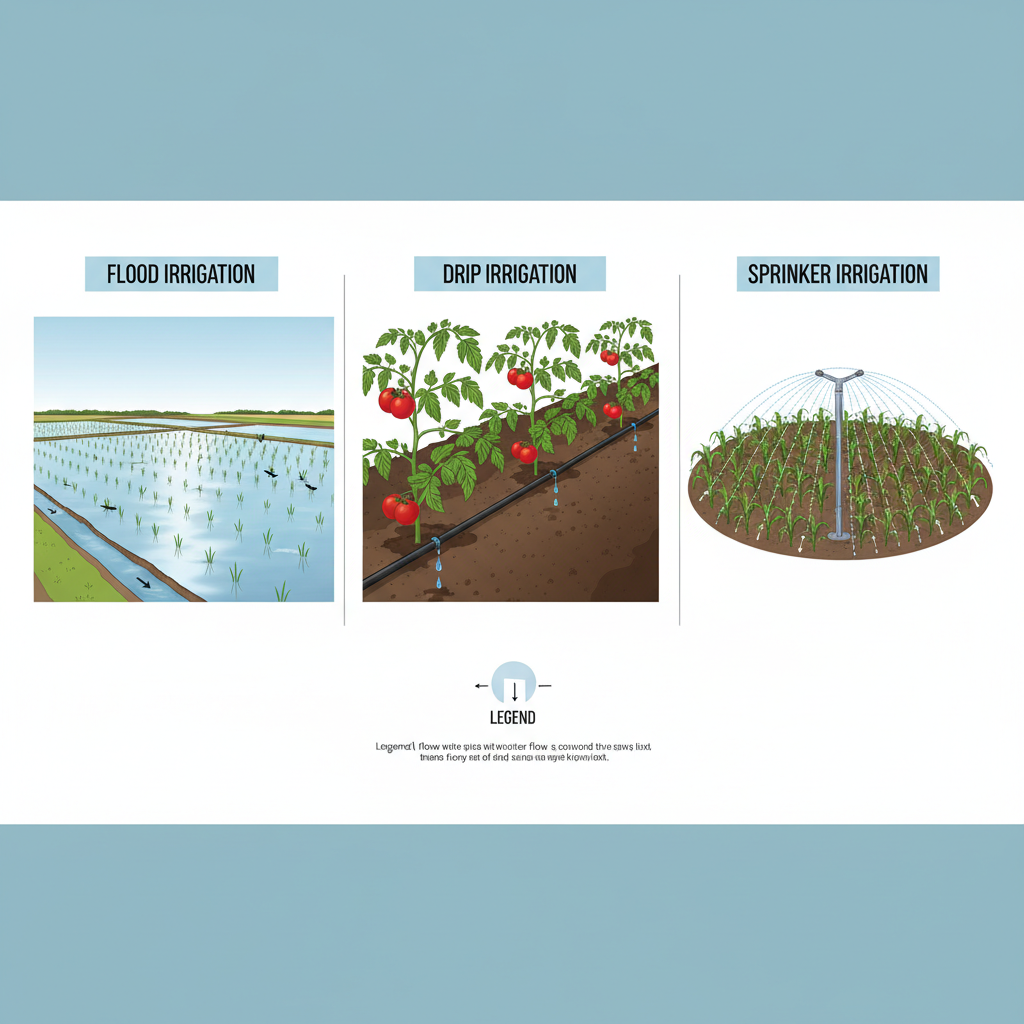
- Flood Irrigation: This is like filling up a bathtub! The entire field is covered with water. Sometimes, farmers build small walls (called dikes or levees) to hold the water in place for a while so it can soak in.
- Furrow Irrigation: Imagine digging little trenches between rows of plants. Water is then directed into these trenches, and it slowly seeps into the soil on either side, watering the plant roots. It's like giving each plant its own little riverbed.
Pros: It's usually cheap to set up and easy to manage.
Cons: It can waste a lot of water because some water evaporates into the air or runs off the field without being used by the plants. It can also lead to uneven watering, where some parts get too much water and others not enough.
2. Drip Irrigation
This method is super efficient, like giving each plant a tiny, precise drink right at its roots. It's also called micro-irrigation.
How it works: Water is delivered through a network of pipes, tubes, and emitters (tiny holes or nozzles). These emitters slowly release water directly to the base of each plant, drop by drop.
Analogy: Think of it like using a straw to drink your juice, but instead of you drinking, the straw is watering the plant's roots. Or, imagine tiny little faucets right at the base of each plant.
Pros: It saves a HUGE amount of water because very little is lost to evaporation or runoff. It's very precise, giving each plant exactly what it needs. It also helps prevent weeds from growing between plants, as only the area around the plant gets watered.
Cons: It can be more expensive to set up than surface irrigation because of all the pipes and emitters. The emitters can also get clogged if the water isn't clean.
3. Sprinkler Irrigation
This method is like a gentle rain shower over your plants!
How it works: Water is pumped through pipes to sprinklers, which then spray the water over the crops. There are different types of sprinklers, from big ones that rotate in circles to smaller ones that pop up from the ground.
Analogy: It’s like having a miniature rainstorm over your garden whenever you want it. Or think of a sprinkler you might use in your backyard on a hot day.
Pros: It can water large areas relatively evenly. It's also good for uneven land where surface irrigation might not work well. It can even help cool down plants on very hot days!
Cons: Some water is lost to evaporation as it falls through the air, and wind can blow the water off course. It also requires a good amount of water pressure to work properly.
 ⚠️ This picture may have spelling mistakes. Trust the words in the lesson.
Choosing the Right Method
Farmers choose the best irrigation method based on several things:
- The type of crop: Some plants prefer a lot of water, while others need very little.
- The soil type: Some soils hold water better than others.
- The climate: How much rain usually falls? How hot is it?
- The cost: How much money is available for setting up the system?
- Water availability: How much water can be sourced reliably?
Each method has its advantages and disadvantages, and the goal is always to get the right amount of water to the plant roots efficiently and effectively. Irrigation is a vital part of modern farming, helping us grow the food we need to live!
Keep learning, free
Create a free Syllabax account to unlock practice questions and games for this topic.
Visual Learning Enhanced! 🚀
To help you master this topic, we use Advanced Syllabax AI to generate detailed diagrams and visual models.
Note on Visuals: The AI sometimes makes spelling errors in image labels. Please refer to the lesson text for the correct terminology.