Ozone Layer & Depletion – Environment & Ecology
Free preview · Lesson 1
Ozone Layer & Depletion – Environment & Ecology (Foundational)
Ozone Layer & Depletion – Environment & Ecology (Foundational)
Welcome to this lesson on the ozone layer and ozone depletion. We'll explore what the ozone layer is, why it's important, and what causes it to thin, a process known as ozone depletion. This lesson will be a basic introduction, suitable for Grade 8 students.
What is the Ozone Layer?
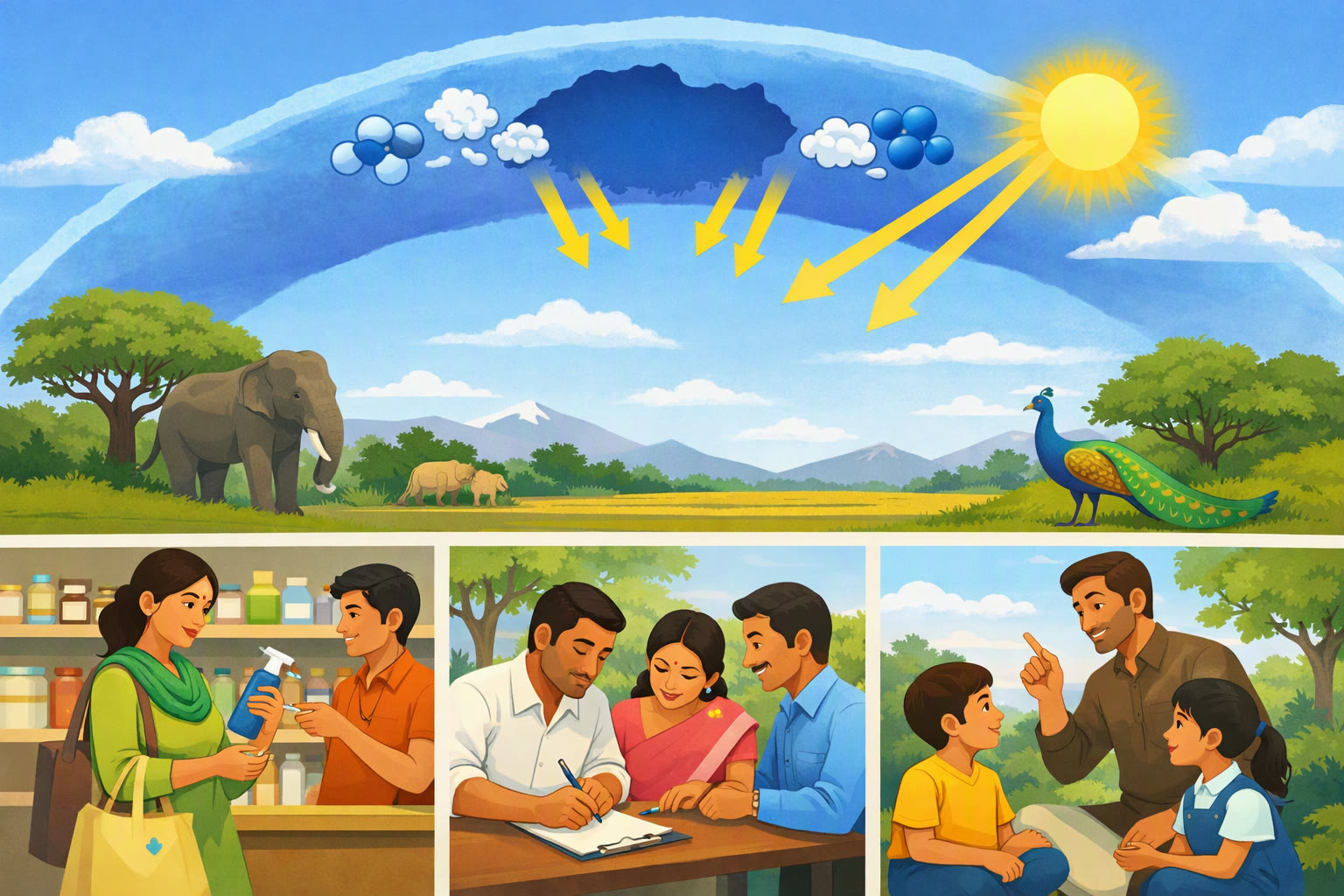
The ozone layer is a region of Earth's stratosphere that absorbs most of the Sun's ultraviolet (UV) radiation. It's like a sunscreen for the planet! Ozone is a special type of oxygen molecule, made up of three oxygen atoms (O3) instead of the usual two (O2) that we breathe.
Where is the Ozone Layer?
The ozone layer is located in the stratosphere, a layer of the atmosphere that is about 15 to 35 kilometers (9 to 22 miles) above the Earth's surface. It’s not a solid layer, but rather a region where ozone molecules are more concentrated.
Why is the Ozone Layer Important?
The ozone layer is vital for life on Earth because it absorbs harmful UV radiation from the sun. UV radiation can cause skin cancer, cataracts, and damage to plants and marine life. Without the ozone layer, life as we know it wouldn't be possible.
What is Ozone Depletion?
Ozone depletion refers to the thinning of the ozone layer in the stratosphere. This thinning allows more harmful UV radiation to reach the Earth's surface.
What Causes Ozone Depletion?
The main cause of ozone depletion is the release of man-made chemicals, particularly chlorofluorocarbons (CFCs), halons, and other ozone-depleting substances (ODS). These chemicals were once widely used in refrigerators, aerosols, and fire extinguishers.
When these chemicals reach the stratosphere, UV radiation breaks them down, releasing chlorine or bromine atoms. These atoms then react with ozone molecules, destroying them and thinning the ozone layer. A single chlorine atom can destroy thousands of ozone molecules.
What are the Effects of Ozone Depletion?
Ozone depletion has several negative effects, including:
- Increased risk of skin cancer and cataracts in humans.
- Damage to plants and crops, reducing agricultural yields.
- Harm to marine ecosystems, affecting plankton and other marine organisms.
What is Being Done to Protect the Ozone Layer?
The Montreal Protocol, an international treaty, was established in 1987 to phase out the production and use of ODS. This treaty has been very successful in reducing ozone depletion. Many countries have stopped using CFCs and other harmful chemicals, and the ozone layer is slowly recovering. However, it will take many decades for the ozone layer to fully recover.
What Can You Do?
While international agreements are crucial, individuals can also help protect the ozone layer by:
- Being aware of products that may contain ODS and choosing alternatives.
- Supporting policies and regulations that protect the ozone layer.
- Educating others about the importance of the ozone layer.
Keep learning, free
Create a free Syllabax account to unlock the other 1 lesson, practice questions and games.
Visual Learning Enhanced! 🚀
To help you master this topic, we use Advanced Syllabax AI to generate detailed diagrams and visual models.
Note on Visuals: The AI sometimes makes spelling errors in image labels. Please refer to the lesson text for the correct terminology.