Common household tools: hammer, screwdriver (Tools & machines)
Watch this topic in 60 seconds
Free preview · Lesson 1
Understanding Common household tools: hammer, screwdriver (Tools & machines)
Hello, Young Builders! Exploring Tools Around Us!
Have you ever seen your grown-ups fixing things around the house? Maybe they were putting together a new toy, hanging a picture, or tightening something wobbly. When they do these things, they often use special helpers called tools!
Think of tools like superheroes for your hands! They help us do jobs that our hands alone might find too hard or even impossible. Just like a chef uses a whisk to mix ingredients or an artist uses a paintbrush to create a masterpiece, grown-ups use tools to build, fix, and create things around the house. Today, we're going to meet two very common and super helpful household tools: the hammer and the screwdriver.
Meet the Hammer: Our Powerful Pounding Pal!
Imagine you need to push a nail into a piece of wood to hang a picture. Your finger would probably hurt, right? That's where our friend, the hammer, comes in! A hammer is a tool that helps us hit things with a lot of force. It's like having a super strong arm that never gets tired!
What does a Hammer Look Like?
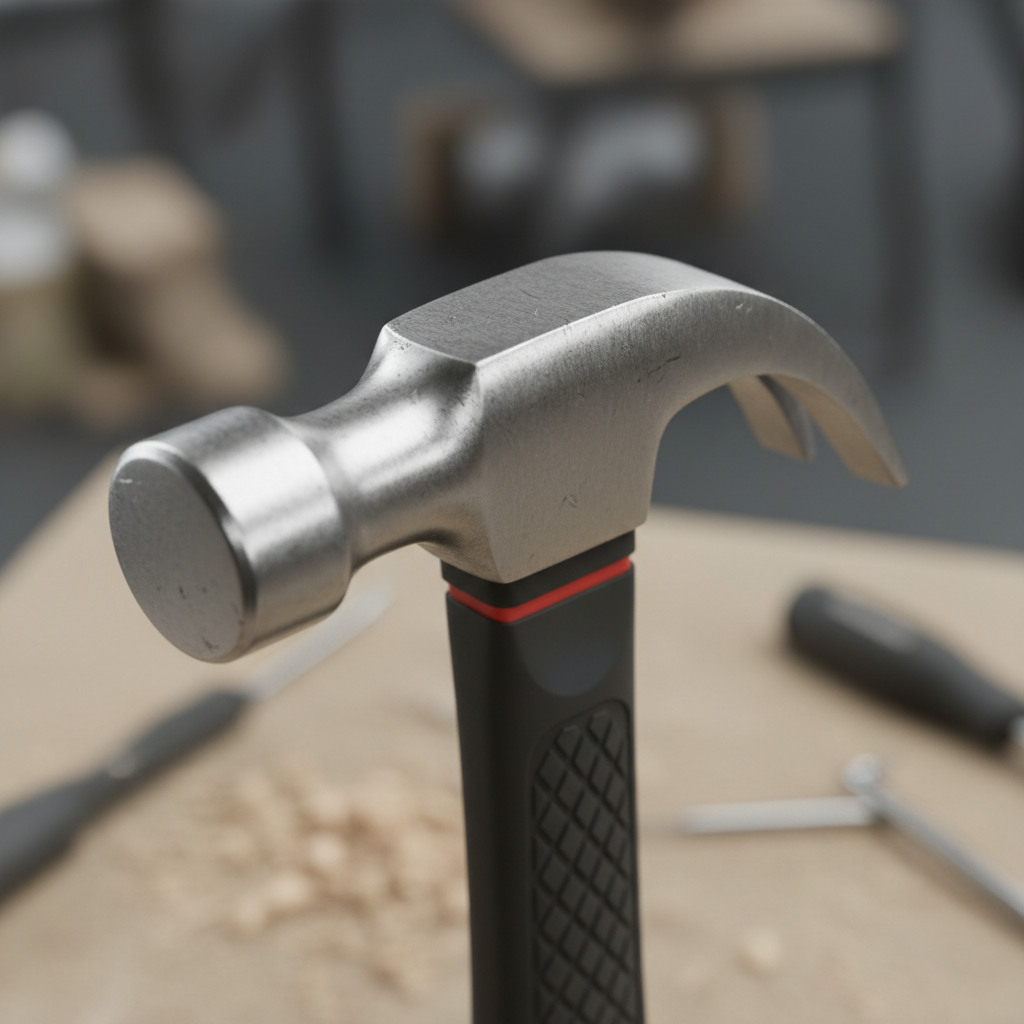
A hammer usually has two main parts:
- The Head: This is the heavy, metal part at the top. One side is flat and is called the 'face' – this is what you use to hit nails. The other side often has a 'claw' which looks like two sharp teeth. This claw is super handy for pulling nails out of wood, just like a strong pair of pincers!
- The Handle: This is the part you hold onto. It's usually made of wood, plastic, or metal, and it helps you swing the hammer safely and powerfully.
Here's what a hammer looks like:
What Does a Hammer Do?
- Pound Nails: The most common job for a hammer is to push nails into wood or other materials. It helps connect pieces together or hang things up. Imagine putting a tiny flag into a sandcastle – the hammer helps the nail go into the wood just like you'd push the flag into the sand!
- Pull Nails Out: If a nail goes in crooked or needs to be removed, the claw on the back of the hammer is perfect for prying it out. It's like a strong tooth pulling out a stubborn sticker!
Safety First with Hammers!
Hammers are strong tools, so we must always be careful! Only grown-ups should use hammers, and children should always watch from a safe distance with an adult nearby. Always remember to hold the handle firmly and hit carefully.
Meet the Screwdriver: Our Twisting Tool!
Now, let's talk about the screwdriver! Have you ever seen screws holding things together? Screws are like special nails that have grooves on their head, and they need to be turned, not hit. That's where our twisting friend, the screwdriver, comes in!
A screwdriver is a tool that helps us turn screws to tighten or loosen them. It's like having a special finger that can twist and turn in just the right way!
What Does a Screwdriver Look Like?
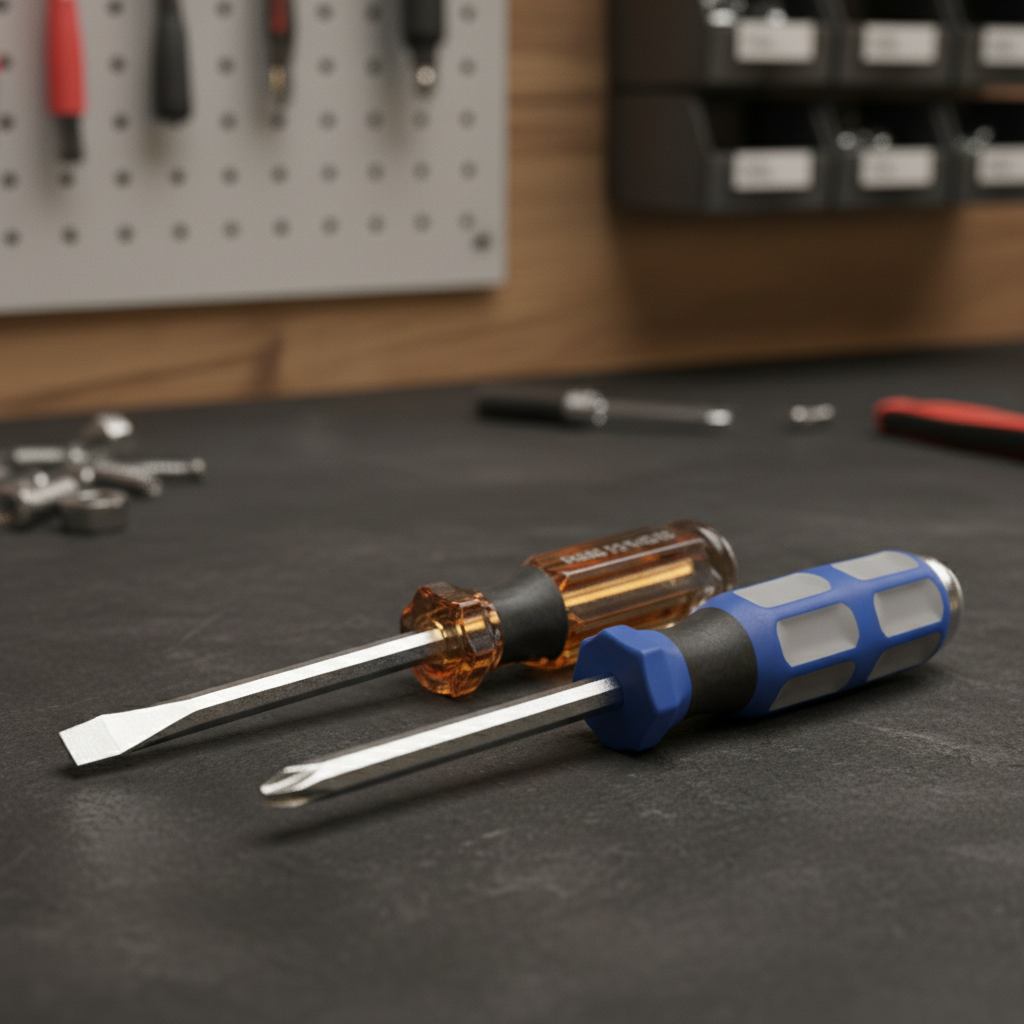
A screwdriver also has a few important parts:
- The Handle: This is the part you hold. It's usually comfortable to grip and helps you twist the tool.
- The Shaft: This is the long, thin metal rod that connects the handle to the tip.
- The Tip: This is the most important part! It's shaped to fit into the head of a screw. There are different kinds of tips because there are different kinds of screws!
Different Kinds of Screwdriver Tips:
- Flat-head (or Slotted) Screwdriver: This tip looks like a straight line. It fits into screws that have a single slot across their head. Imagine trying to turn a coin with a straight edge!
- Phillips-head Screwdriver: This tip looks like a plus sign (+). It fits into screws that have a cross-shaped indentation on their head. Many toys and electronics use these kinds of screws.
Here's what a screwdriver looks like, with its different tips:
What Does a Screwdriver Do?
- Tighten Screws: When you turn a screw clockwise (like turning the hands of a clock forward), you are usually tightening it, making things more secure. It's like winding up a toy!
- Loosen Screws: When you turn a screw counter-clockwise (like turning the hands of a clock backward), you are usually loosening it, which helps take things apart. It's like unwinding a string!
Safety First with Screwdrivers!
Just like hammers, screwdrivers should only be used by grown-ups or with a grown-up's help and permission. Always make sure the screwdriver tip fits the screw head perfectly so it doesn't slip. Never point a screwdriver at anyone!
Hammer vs. Screwdriver: When to Use Which?
It's important to know which tool is the right helper for the job!
- Use a hammer when you need to hit a nail or pull out a nail. Think of hitting or pulling!
- Use a screwdriver when you need to twist a screw (to tighten or loosen it). Think of twisting or turning!
They both help build and fix things, but they do it in different ways, like different superheroes having different powers!
Remembering Our Tool Friends!
Hammers and screwdrivers are amazing tools that help grown-ups make and fix things all the time. They are strong helpers that make big jobs easier. Always remember to respect tools, use them safely (with adult supervision!), and appreciate how they help keep our homes working smoothly. Maybe next time you see a grown-up using one, you can tell them what it's called and what it does!
Keep learning, free
Create a free Syllabax account to unlock practice questions and games for this topic.
Visual Learning Enhanced! 🚀
To help you master this topic, we use Advanced Syllabax AI to generate detailed diagrams and visual models.
Note on Visuals: The AI sometimes makes spelling errors in image labels. Please refer to the lesson text for the correct terminology.