Logical Sequences -Verbal Reasoning
Watch this topic in 60 seconds
Free preview · Lesson 1
Logical Sequences -Verbal Reasoning (Foundational)
Hello, Future Pattern Detectives! 🕵️♀️🔍
Welcome to an exciting journey into the world of Logical Sequences - Verbal Reasoning! Have you ever noticed how some things just go together in a particular order? Like the days of the week, or the steps to bake a cake? That's what we're going to explore today!
Think of yourself as a super-smart detective, ready to uncover hidden rules and patterns using words. It's going to be fun, challenging, and help your brain grow super strong!
What is a Sequence?
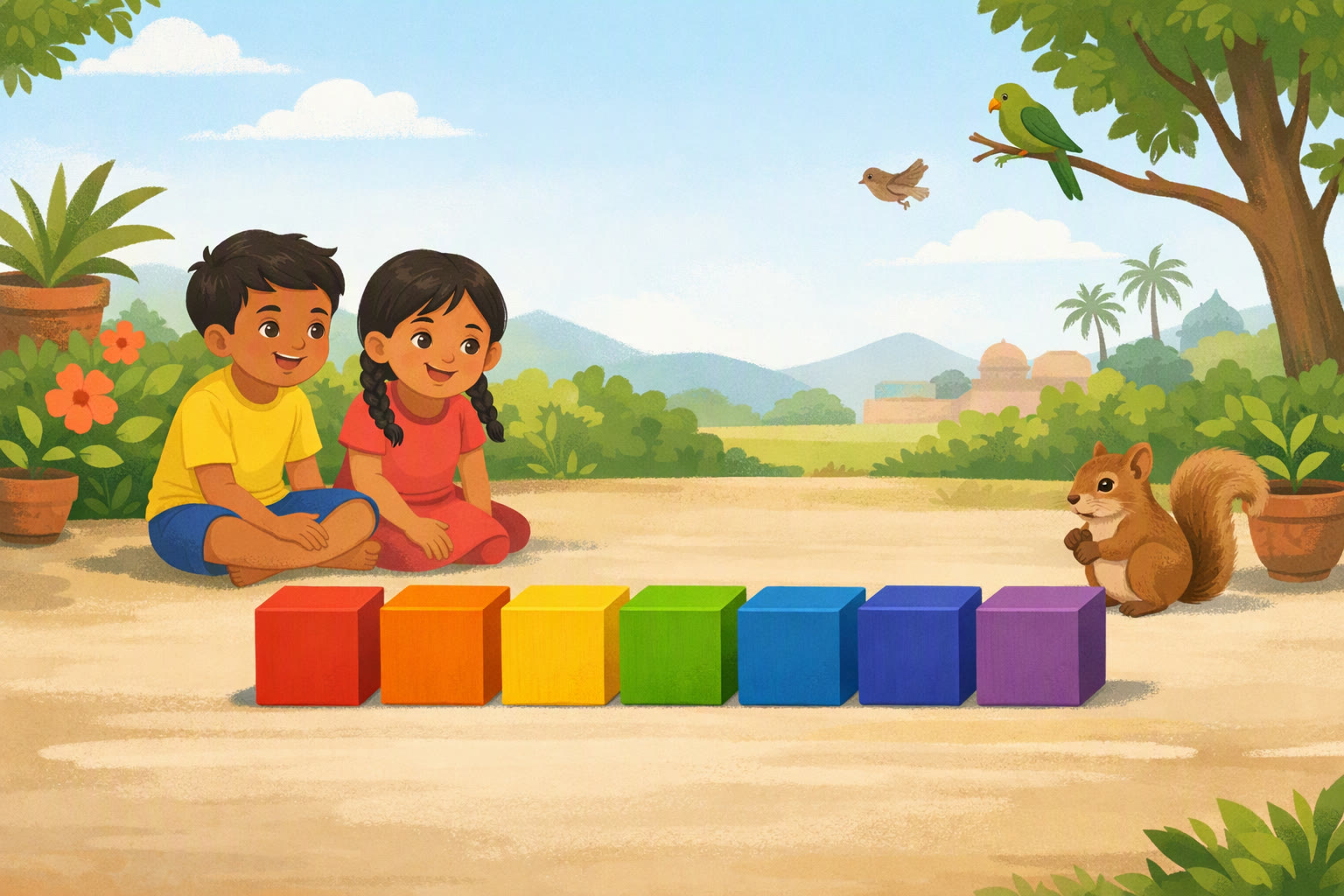
Let's start with the basics! A sequence is simply a group of items, numbers, or events that follow one after another in a particular order. It's like a line-up where everyone knows their spot!
- Example: Monday, Tuesday, Wednesday, Thursday, Friday, Saturday, Sunday. (This is a sequence of days!)
- Example: 1, 2, 3, 4, 5. (This is a sequence of numbers!)
What is a Logical Sequence?
Now, here's where it gets interesting! A logical sequence is a sequence where the order isn't just random. There's a special rule or pattern that connects each item to the next one. Our job is to find that rule!
- The word "logical" means "making sense" or "following a good reason." So, a logical sequence is one that makes sense because it follows a clear rule.
What is Verbal Reasoning?
When we talk about "verbal reasoning," we're talking about using words and language to solve problems and understand patterns. Instead of numbers, we'll be looking at words, letters, and sentences to figure out the logic.
- You'll use your reading skills and your ability to think about how words relate to each other.
Becoming a Pattern Detective: Types of Logical Verbal Sequences
There are many kinds of patterns we can find in verbal sequences. Let's look at some common ones:
1. Alphabetical Order
This is probably one you know well! Items are arranged based on the order of letters in the alphabet (A, B, C...).
- Example: Apple, Banana, Cherry, Date, ______
- Rule: Fruits listed in alphabetical order.
- Next in sequence: Elderberry
2. Size or Quantity Order
Sometimes, items are ordered from smallest to largest, shortest to tallest, or least to most.
- Example: Speck, Dot, Pebble, Stone, ______
- Rule: Objects increasing in size.
- Next in sequence: Boulder
3. Event or Process Order
These sequences describe steps in a process or events happening one after another in time.
- Example: Seed, Sprout, Plant, Flower, ______
- Rule: Stages of a plant's growth.
- Next in sequence: Fruit

4. Category Grouping
In these sequences, the items belong to the same group or category, and often there's an implied order or progression within that category.
- Example: Dog, Cat, Fish, Bird, ______
- Rule: Common household pets.
- Next in sequence: Hamster (or another common pet)
5. Number Patterns (Disguised as Words)
Sometimes, numbers are written out as words, and they follow a numerical pattern.
- Example: One, Two, Three, Four, ______
- Rule: Counting numbers in order.
- Next in sequence: Five
How to Solve Logical Verbal Sequences: Your Detective Steps!
- Read Carefully: Look at all the words in the sequence.
- Spot the Pattern: Ask yourself:
- Are they in alphabetical order?
- Are they getting bigger or smaller?
- Are they steps in a process?
- Do they belong to a certain group?
- Are they numbers written as words?
- Find the Rule: Once you think you know the pattern, state the rule clearly.
- Predict the Next Item: Use your rule to figure out what comes next!
You've got this! Logical sequences are like puzzles, and every time you solve one, you make your brain even smarter. Keep practicing, and you'll become a master pattern detective!
Keep learning, free
Create a free Syllabax account to unlock practice questions and games for this topic.
Visual Learning Enhanced! 🚀
To help you master this topic, we use Advanced Syllabax AI to generate detailed diagrams and visual models.
Note on Visuals: The AI sometimes makes spelling errors in image labels. Please refer to the lesson text for the correct terminology.