Sources of water (CHEMISTRY)
Watch this topic in 60 seconds
Free preview · Lesson 1
Understanding Sources of water (CHEMISTRY)
Water, Water Everywhere: Where Does It Come From?
Hello young scientists! Today, we're going on an exciting adventure to explore the amazing world of water. We use water every single day – to drink, to bathe, to cook, and even to grow the yummy food we eat. But have you ever stopped to think, "Where does all this water come from?" In chemistry, we call the origins of water its sources.
What is Water? (A Quick Refresher)
Before we dive into where water comes from, let's quickly remember what water is. You might know it as H₂O. This means that one molecule of water is made up of two hydrogen atoms (H) and one oxygen atom (O) joined together. It's like a tiny LEGO structure that repeats over and over to make up all the water we see!
The Big Picture: Earth's Water Cycle
Imagine the Earth is like a giant, closed playground, and the water is like the kids playing on it. The water doesn't really leave the playground; it just moves around and changes its form. This continuous movement of water on, above, and below the surface of the Earth is called the water cycle. It's like a never-ending water journey!
The water cycle has many steps, but the main ones are:
- Evaporation: When the sun heats up water in rivers, lakes, and oceans, it turns into a gas called water vapor. This is like when you boil water in a pot, and you see steam rising – that's evaporation! The water vapor floats up into the sky.
- Condensation: As the water vapor rises higher and gets colder, it turns back into tiny water droplets or ice crystals. These tiny droplets gather together to form clouds. Think of it like the fog you see on a cold window.
- Precipitation: When the clouds get too full of water droplets, the water falls back to Earth. This can be in the form of rain, snow, sleet, or hail. This is how the Earth gets its fresh water!
- Collection: The water that falls back to Earth collects in oceans, lakes, rivers, and even soaks into the ground. This collected water then starts the cycle all over again.
Primary Sources of Water
Now let's get specific about where we find this water. We can think of water sources in two main ways: surface water and groundwater.
1. Surface Water
Surface water is exactly what it sounds like: water that is on the surface of the Earth. It's the water we can often see and touch.
A. Oceans and Seas
This is the biggest source of water on our planet! Oceans and seas cover about 71% of the Earth's surface. However, the water in oceans and seas is saltwater. We can't drink saltwater because it has a lot of salt dissolved in it. Imagine trying to drink salty soup – it wouldn't taste good and wouldn't be good for you!
B. Rivers and Streams
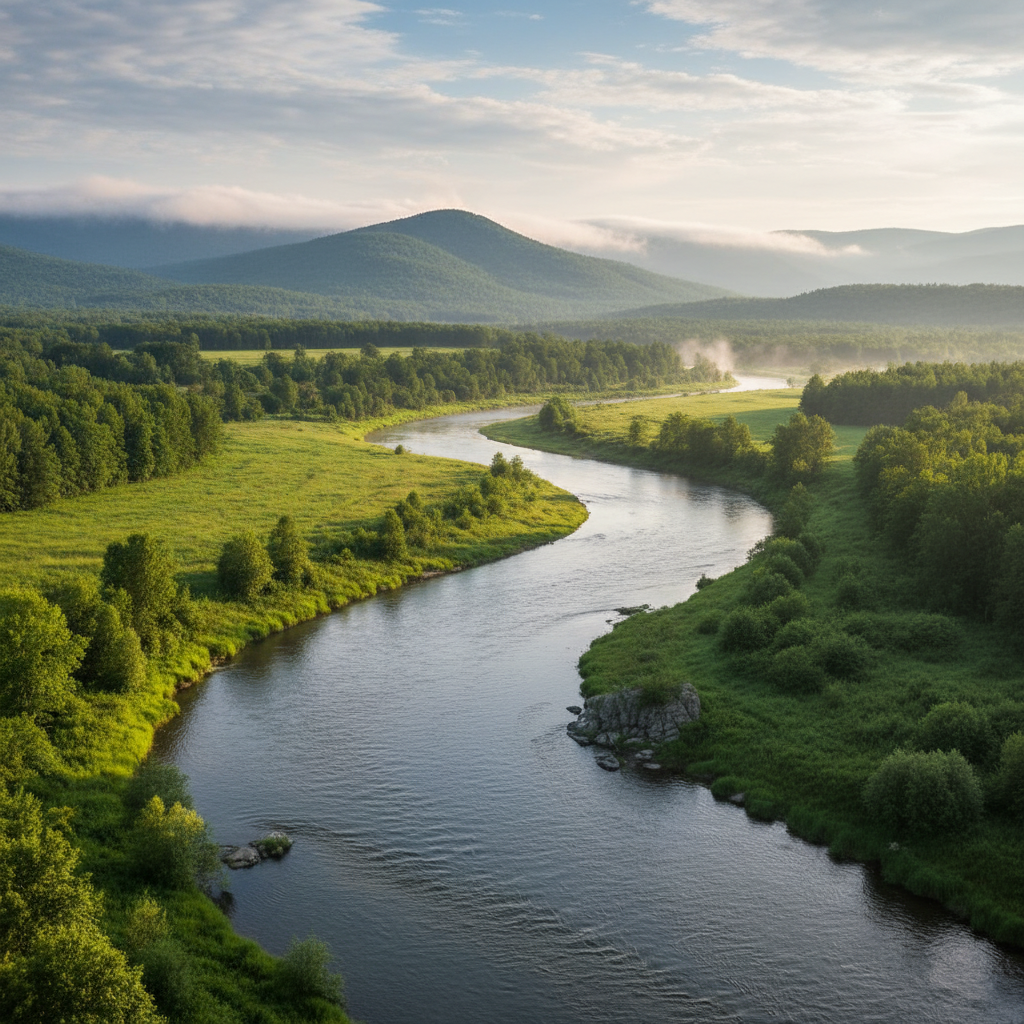
Rivers and streams are like the highways for water. They are flowing bodies of water that usually start from higher ground (like mountains) and flow towards larger bodies of water like lakes or oceans. The water in rivers and streams is usually freshwater. This is the water we often use for drinking, growing crops, and for many animals to live in.
Think of a river like a long, winding waterslide for water. It carries water from one place to another.
C. Lakes and Ponds
Lakes and ponds are like bowls that hold water. They are areas where water has collected and is surrounded by land. Most lakes and ponds contain freshwater. They are important homes for fish, frogs, and many types of plants.
A lake is like a big bathtub, and a pond is like a smaller, shallower bathtub!
D. Glaciers and Ice Caps
These are huge masses of ice that store a lot of freshwater. When these glaciers melt, the water flows into rivers and lakes, becoming part of the water cycle. Think of them as giant ice cubes that slowly melt and feed our rivers.
2. Groundwater
Groundwater is water that is hidden beneath the surface of the Earth. It's like the Earth's secret water stash!
A. Aquifers
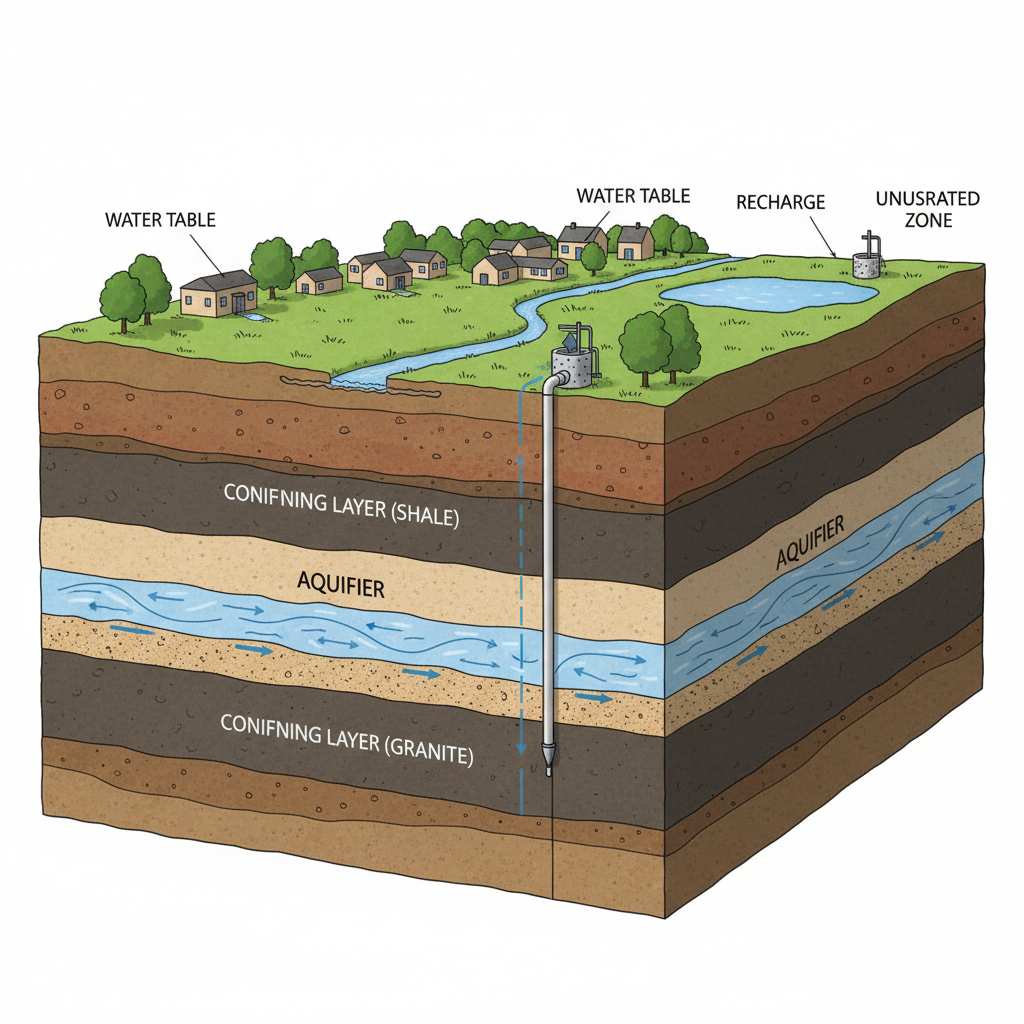
Aquifers are underground layers of rock, sand, or gravel that hold water. When rain falls, some of it soaks into the ground and travels down until it reaches these layers. This water can be stored there for a very long time. We often get groundwater by drilling wells deep into the ground.
Imagine the ground is like a big sponge. When it rains, the sponge soaks up water. Aquifers are like the parts of the sponge that hold onto the water really well.
 ⚠️ This picture may have spelling mistakes. Trust the words in the lesson.
B. Springs
Sometimes, groundwater finds a way to come back to the surface through cracks or openings in rocks. This is called a spring. It's like the Earth is gently pushing out some of its hidden water!
Why is Understanding Water Sources Important?
Knowing where our water comes from helps us understand how precious it is. We need to take care of our water sources and make sure they stay clean. Pollution can make water unsafe to drink, even if it comes from a river or a lake. Just like we wouldn't want dirt in our juice, we don't want dirt or harmful chemicals in our drinking water.
Every drop of water is important, and understanding its journey helps us appreciate it even more!
Keep learning, free
Create a free Syllabax account to unlock practice questions and games for this topic.
Visual Learning Enhanced! 🚀
To help you master this topic, we use Advanced Syllabax AI to generate detailed diagrams and visual models.
Note on Visuals: The AI sometimes makes spelling errors in image labels. Please refer to the lesson text for the correct terminology.