Industrial Revolution - World History
Watch this topic in 60 seconds
Free preview · Lesson 1
Industrial Revolution - World History (Foundational)
The Industrial Revolution: A Big Change!
Imagine a world without cars, computers, or even factories! That's how things were before the Industrial Revolution. This was a HUGE change in how things were made, where people lived, and how they worked. Let's explore!
What was the Industrial Revolution?
- The Industrial Revolution was a period of big changes from about 1760 to 1840.
- It started in Great Britain and spread to other parts of the world.
- The biggest change was the shift from making things by hand to making things with machines in factories.
Key Concepts
- Industry: Making things, especially in factories.
- Revolution: A big and important change.
- Factories: Large buildings where machines are used to make goods.
- Machines: Devices that help us do work, often powered by steam or water.
Why did it start in Great Britain?
- Great Britain had lots of coal and iron, which were needed to power and build machines.
- They also had colonies that provided raw materials like cotton.
- People in Britain were willing to invest money in new inventions and businesses.
Important Inventions
- The Steam Engine:
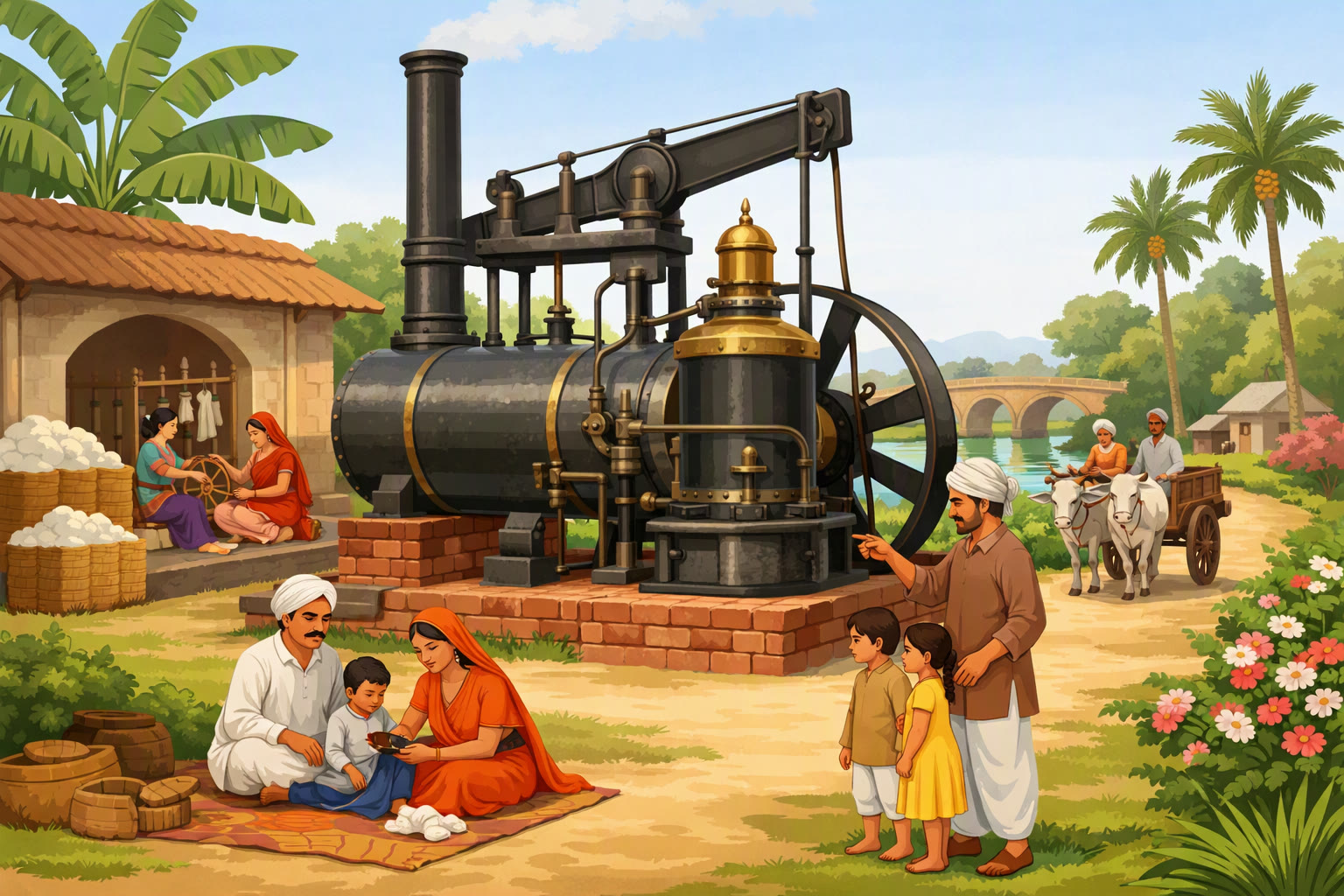 This invention, improved by James Watt, used steam to power machines. It was used in factories, trains, and boats!
- The Spinning Jenny: This machine made it much faster to spin cotton into thread.
- The Power Loom: This machine made it much faster to weave thread into cloth.
Changes in Society
- More people moved to cities: As factories grew, people moved from farms to cities to find work.
- New jobs were created: People worked in factories operating machines.
- New social classes emerged: A wealthy class of factory owners and a working class of factory laborers.
- Child labor was common: Children often worked in factories because they were small and could fit into tight spaces.
Impact of the Industrial Revolution
- Mass production: Factories could make many products quickly and cheaply.
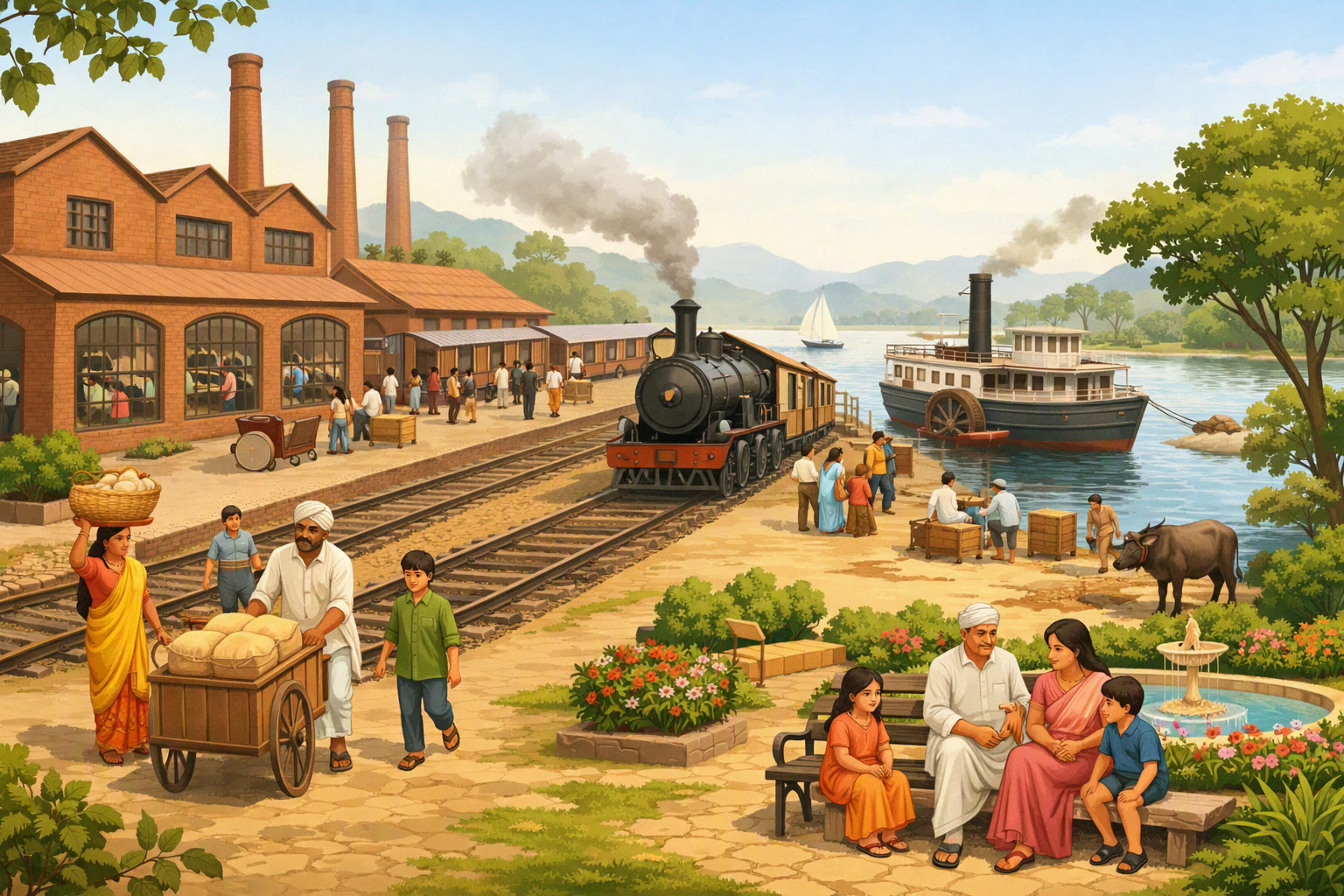
- Improved transportation: Steam engines led to trains and steamships, making it easier to travel and trade.
- New technologies: The Industrial Revolution paved the way for many more inventions and technological advancements.
Keep learning, free
Create a free Syllabax account to unlock practice questions and games for this topic.
Visual Learning Enhanced! 🚀
To help you master this topic, we use Advanced Syllabax AI to generate detailed diagrams and visual models.
Note on Visuals: The AI sometimes makes spelling errors in image labels. Please refer to the lesson text for the correct terminology.