Asking Statistical Questions
Watch this topic in 60 seconds
Free preview · Lesson 1
Understanding Asking Statistical Questions
Understanding Statistical Questions: Let's Be Data Detectives!
Imagine you're a detective, but instead of solving mysteries about who stole the cookies, you're solving mysteries about information! This kind of detective work is called statistics. And every good detective knows that the first step to solving any mystery is asking the right questions.
What is a Question, Anyway?
You ask questions all the time! "What's for dinner?" "Can I play outside?" "What's 2 + 2?" Simple, right? But in the world of statistics, we need a special kind of question called a statistical question.
The Superpower of a Statistical Question: Variability!
This is the most important part! A statistical question is super because it expects to have lots of different answers. Think of it like a magician's hat – you reach in, and you never know exactly what you'll pull out! Each time you ask, you might get something new and interesting.
Analogy Time! The Great Fruit Basket Mystery
Imagine you have a big basket full of different kinds of fruit: apples, bananas, oranges, and grapes.
- If I ask, "What kind of fruit is this one?" while pointing to a single apple, what's the answer? Just "An apple!" (Only one answer, right?) This is NOT a statistical question.
- But if I ask, "What are all the different kinds of fruit in this whole basket?" Now what? You'd say, "Apples, bananas, oranges, and grapes!" (Lots of different answers!) This IS a statistical question because the answers vary, or are different.
The word "vary" means to be different. So, a statistical question is a question that you expect to have many different answers from different people or things in a group.
It's All About the Group!
Another big clue for a statistical question is that it's usually about a whole group of people or things, not just one. It's like asking about the whole class instead of just one student.
Analogy Time! The Class's Favorite Color
Let's say you're in a classroom.
- If you ask your friend Maya, "What is your favorite color?" She might say, "Blue!" That's just one answer from one person. This is NOT a statistical question.
- But if you ask the *whole class*, "What are the favorite colors of the students in our class?" Wow! You might get blue, red, green, yellow, purple, orange, pink... so many different answers! This IS a statistical question because you're asking about a group and expecting varied answers.
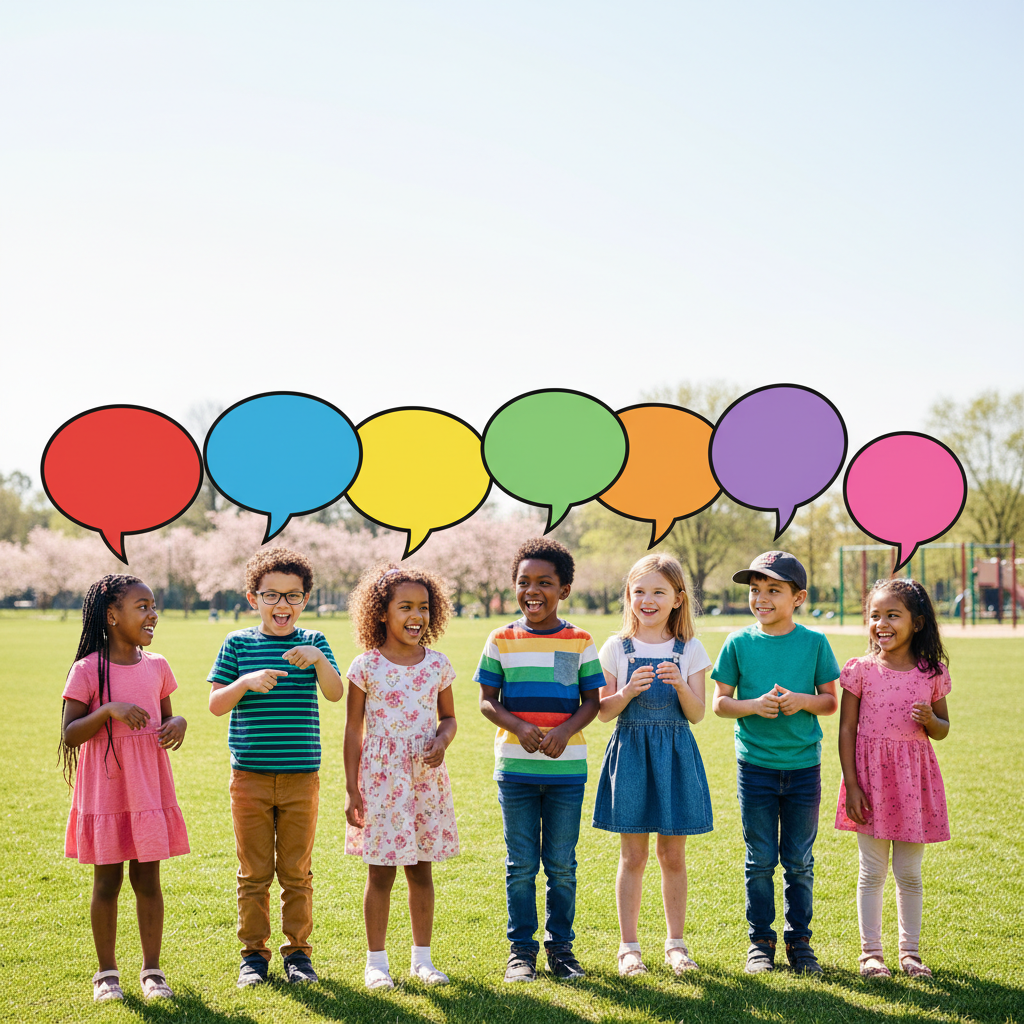 ⚠️ This picture may have spelling mistakes. Trust the words in the lesson.
Spotting a Statistical Question: The Two Big Checks!
To figure out if a question is statistical, ask yourself these two things:
- Will I get many different answers? (Does it have variability?)
- Am I asking about a group of people or things? (Does it gather information from more than one source?)
If you can say "YES!" to both, then you've got yourself a statistical question!
Let's Look at Some Examples!
Statistical Questions (YES! They have variability and are about a group):
- "How many hours did the students in our 5th-grade class sleep last night?"
- Variability? Yes! Some kids slept 8 hours, some 9, some 7. Different answers!
- Group? Yes! It's about "students in our 5th-grade class" – a whole group!
- "What kinds of pets do families on our street own?"
- Variability? Yes! Some families have dogs, some have cats, some have fish, some have no pets. Different answers!
- Group? Yes! It's about "families on our street" – many different families!
- "How many minutes does it take for different 5th graders to walk to school?"
- Variability? Yes! Some walk for 5 minutes, some for 15, some for 20. Different answers!
- Group? Yes! It's about "different 5th graders" – many students!
Non-Statistical Questions (NO! They usually have only one answer, or are about just one thing):
- "How old is my teacher?"
- Variability? No! Your teacher has only one age right now. Only one answer.
- Group? No! It's about "my teacher" – just one person.
- "What is the capital of France?"
- Variability? No! There's only one correct answer (Paris).
- Group? No! It's a fact, not about a group of data points.
- "How many books did *I* read last month?"
- Variability? No! You only read one specific number of books. Only one answer for *you*.
- Group? No! It's about "I" – just one person.
Why Do We Care About Statistical Questions?
Statistical questions are like keys that unlock doors to understanding the world around us! When we ask questions that have many different answers from a group, we can then collect that information (called data), organize it, and learn amazing things. We can find patterns, averages, and see how things are spread out. If we only ask questions with one answer, we don't get to explore and discover new insights!
Conclusion: Be a Data Detective!
So, next time you think of a question, stop and ask yourself: "Is this a statistical question? Will I get lots of different answers from a group of people or things?" If the answer is yes, then you're on your way to becoming an awesome data detective!
Keep learning, free
Create a free Syllabax account to unlock practice questions and games for this topic.
Visual Learning Enhanced! 🚀
To help you master this topic, we use Advanced Syllabax AI to generate detailed diagrams and visual models.
Note on Visuals: The AI sometimes makes spelling errors in image labels. Please refer to the lesson text for the correct terminology.