Ancient civilizations (Greek, Egyptian, Chinese) – World History & Culture
Watch this topic in 60 seconds
Free preview · Lesson 1
Ancient civilizations (Greek, Egyptian, Chinese) – World History & Culture (Foundational)
Ancient Civilizations: A Foundation
Welcome to the fascinating world of ancient civilizations! In this lesson, we will explore the foundational aspects of three prominent civilizations: Ancient Greece, Ancient Egypt, and Ancient China. We will focus on their core characteristics and significant contributions to history and culture.
Ancient Greece
Ancient Greece flourished from around 800 BCE to 600 CE, leaving an indelible mark on Western civilization. They are renowned for their philosophy, democracy, art, and architecture.
Key Concepts:
- Democracy: Greece, particularly Athens, pioneered the concept of democracy, where citizens directly participated in government.
- Philosophy: Greek philosophers like Socrates, Plato, and Aristotle laid the foundation for Western thought, exploring ethics, logic, and metaphysics.
- Architecture: Greek architecture, characterized by columns (Doric, Ionic, and Corinthian), temples, and theaters, influenced building design for centuries.
Ancient Egypt
Ancient Egypt thrived along the Nile River from around 3100 BCE to 30 BCE. They are known for their pharaohs, pyramids, hieroglyphics, and complex religious beliefs.
Key Concepts:
- Pharaohs: Egyptian pharaohs were considered divine rulers who held absolute power.
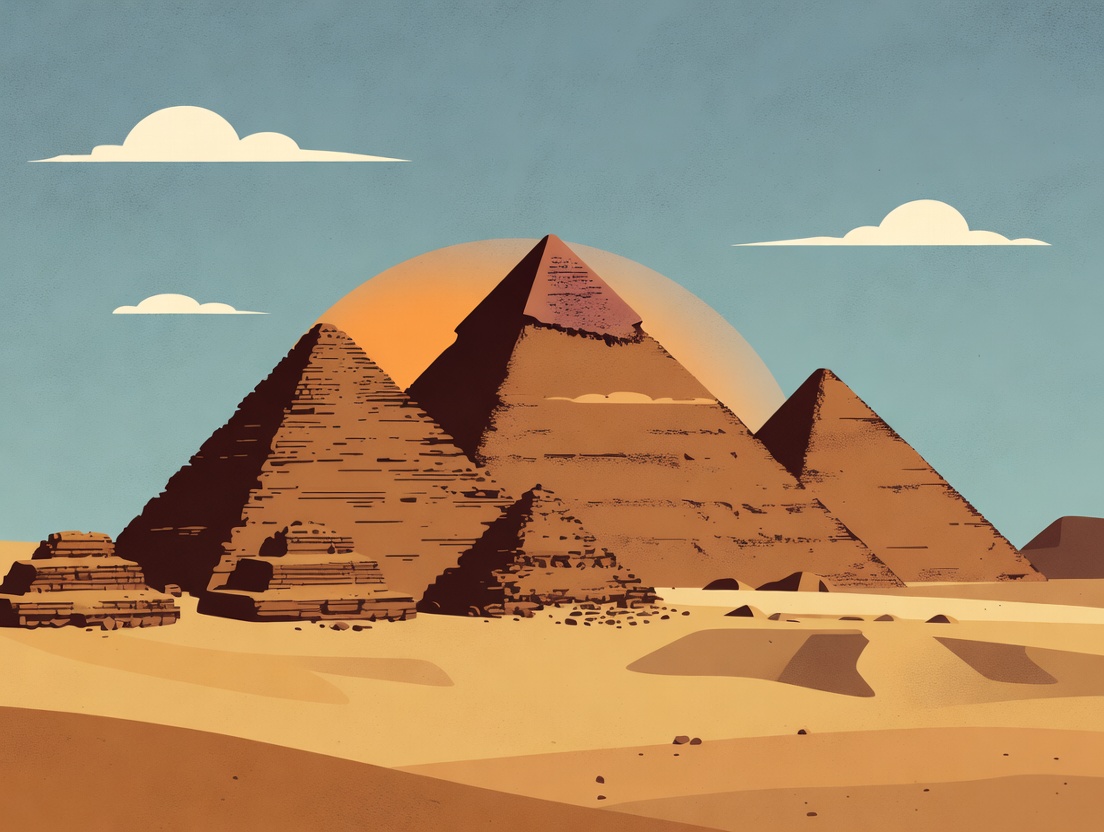
- Pyramids: These monumental structures served as tombs for pharaohs and symbolized their power and connection to the afterlife.
 ⚠️ This picture may have spelling mistakes. Trust the words in the lesson.
- Hieroglyphics: Ancient Egyptians used a complex writing system called hieroglyphics, which consisted of symbols representing words or sounds.
Ancient China
Ancient China's civilization emerged along the Yellow and Yangtze Rivers around 2000 BCE. It developed a sophisticated system of governance, philosophy, and technological innovations.
Key Concepts:
- Dynasties: Chinese history is divided into dynasties, or ruling families, each with its own distinct characteristics and contributions.
- Confucianism: This philosophy, founded by Confucius, emphasized social harmony, respect for elders, and moral conduct.
- Great Wall: A massive defensive structure built over centuries to protect China from invasions.
Keep learning, free
Create a free Syllabax account to unlock practice questions and games for this topic.
Visual Learning Enhanced! 🚀
To help you master this topic, we use Advanced Syllabax AI to generate detailed diagrams and visual models.
Note on Visuals: The AI sometimes makes spelling errors in image labels. Please refer to the lesson text for the correct terminology.