Learning Journey
Watch this topic in 60 seconds
Free preview · Lesson 1
Understanding Near/far (Spatial Understanding)
Understanding Near and Far: A First Grade Adventure!
Hello, young explorers! Today, we're going on an exciting adventure to learn about something super important: understanding **near** and **far**. Imagine you're playing with your toys. Some toys are right next to you, and others are across the room. That's near and far!
What Does 'Near' Mean?
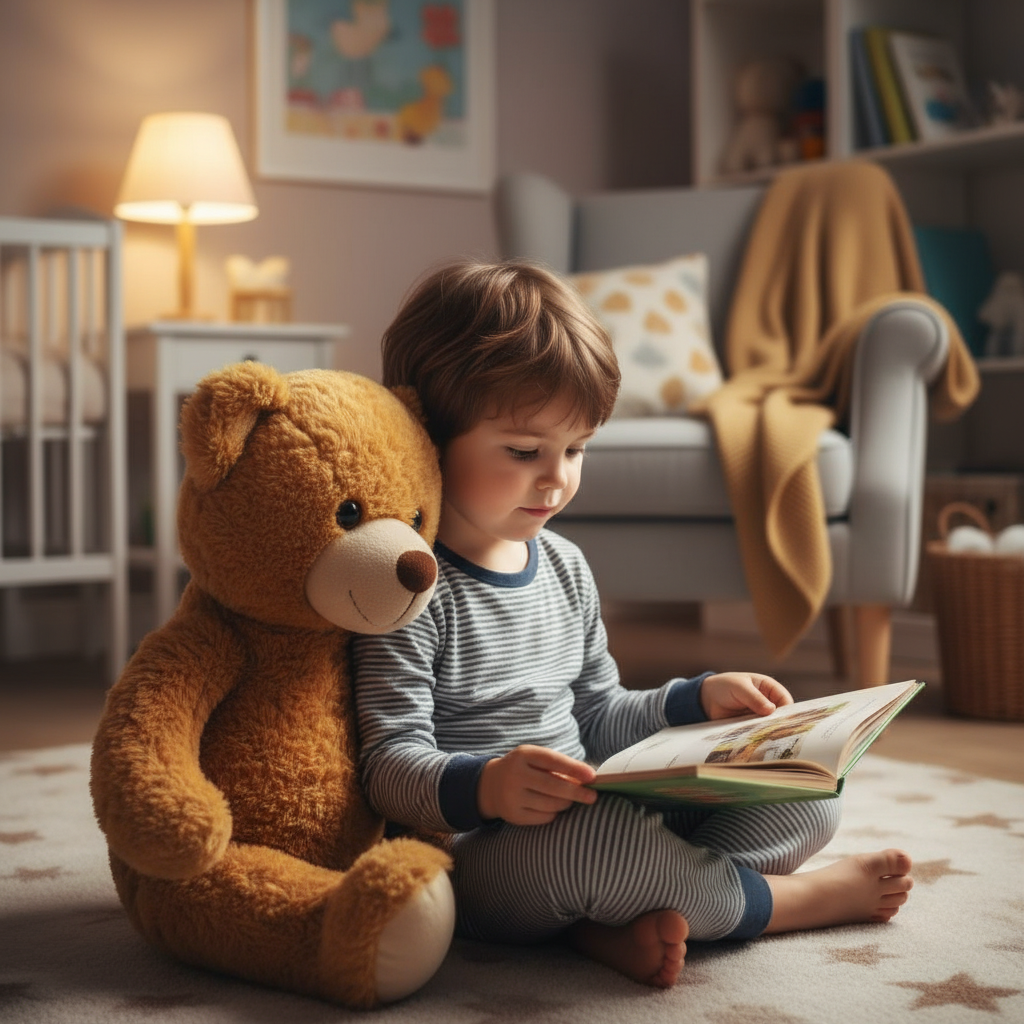
Near means something is very close to you. It's not far away at all. Think about your favorite teddy bear when it's sitting right beside you on the bed. That's near!
Let's think of some other examples:
- Your pencil when it's on your desk, right in front of you.
- Your mom or dad when they are standing right next to you.
- A ladybug on a leaf that is right in front of your eyes.
- Your house when you are standing in your yard.
Near is like a big, warm hug – it's close and cozy!
What Does 'Far' Mean?
Far means something is a long way away from you. It's not close at all. Think about the moon in the sky at night. It looks very small because it is very, very far away!
Here are some other examples of things that are far:
- The sun in the sky.
- A tall mountain you can see in the distance.
- A car driving down the street when you are inside your house.
- Birds flying high up in the sky.
Far is like looking out a window and seeing something way, way over there. You might not be able to touch it, and it might look smaller than it really is.
Comparing Near and Far
It's like looking at your shoes and then looking at a cloud. Your shoes are near. The cloud is far.
Imagine you are at the park. The bench right next to you is near. The slide on the other side of the playground is also near, but maybe a little bit farther than the bench. The big tree at the very edge of the park is even farther away.
We can use words like closer and farther to talk about how near or far things are. If something is closer, it's more near. If something is farther, it's more far.
Why is Understanding Near and Far Important?
Knowing about near and far helps us understand the world around us. It helps us:
- Play games: Like 'Red Light, Green Light,' where you stop when the person is far and run when they are near!
- Follow directions: "Put the book on the shelf near the door." or "Look at the bird in the tree that is far away."
- Draw pictures: We draw things that are near bigger and things that are far away smaller.
- Be safe: Knowing what is near us helps us not bump into things, and knowing what is far away helps us be aware of our surroundings.
Let's Practice!
Look around your room. What is something near you right now? What is something far away? Maybe a clock on the wall is far, but your toy car is near.

Think about a big tree. If you are standing right next to the tree, it is near. If you are in your house and can see the tree out the window, it is far.
Remember, near is close, and far is a long way away. Keep looking around and practicing – you'll become a near and far expert in no time!
Keep learning, free
Create a free Syllabax account to unlock practice questions and games for this topic.
Visual Learning Enhanced! 🚀
To help you master this topic, we use Advanced Syllabax AI to generate detailed diagrams and visual models.
Note on Visuals: The AI sometimes makes spelling errors in image labels. Please refer to the lesson text for the correct terminology.