Learning Journey
Watch this topic in 60 seconds
Free preview · Lesson 1
Understanding Reading clock to minute hand (Time)
Telling Time: Reading the Minute Hand!
Welcome, super time travelers! Today, we're going on an exciting adventure to learn how to read the minute hand on a clock. Clocks are like magic wheels that help us know when it's time to play, time to learn, and time to eat yummy snacks!
What is a Clock?
Imagine a clock as a special circle with numbers from 1 to 12. It has two (or sometimes three!) hands that move around the circle. These hands are like tiny pointers that tell us the time. The two most important hands are the hour hand (the shorter, fatter one) and the minute hand (the longer, thinner one). Today, we're focusing all our attention on the minute hand!
Meet the Minute Hand!
The minute hand is like the speedy runner of the clock. It moves faster than the hour hand. Every time the minute hand makes a full circle around the clock, a whole hour has passed! When we want to know the minutes, we look at where the minute hand is pointing.
Counting the Minutes: The Big Secret!
This is where the magic happens! The numbers on the clock (1 through 12) don't just tell us the hours; they also help us count the minutes. But here's the secret: each number represents 5 minutes!
Let's pretend the numbers are like yummy chocolates in a box. If the minute hand points to the 1, it's like having 1 group of 5 chocolates, which is 5 minutes. If it points to the 2, it's like having 2 groups of 5 chocolates, which is 10 minutes. We can count by fives all the way around the clock!
- 1 = 5 minutes
- 2 = 10 minutes
- 3 = 15 minutes
- 4 = 20 minutes
- 5 = 25 minutes
- 6 = 30 minutes
- 7 = 35 minutes
- 8 = 40 minutes
- 9 = 45 minutes
- 10 = 50 minutes
- 11 = 55 minutes
- 12 = 60 minutes (which is also the start of a new hour, or 0 minutes!)
What About the Tiny Lines?
Between each big number on the clock, you'll see little tiny lines. Each of these tiny lines represents 1 minute. Think of them as tiny steps the minute hand takes. So, if the minute hand is pointing to the number 1, and then moves one tiny line past it, it's not just 5 minutes anymore; it's 5 + 1 = 6 minutes!
It's like walking up stairs. The big numbers are like landing spots, and the tiny lines are the individual steps you take to get there. When counting minutes, we can first look at the big number the minute hand has passed and multiply by 5, then count on the tiny lines for the extra minutes.
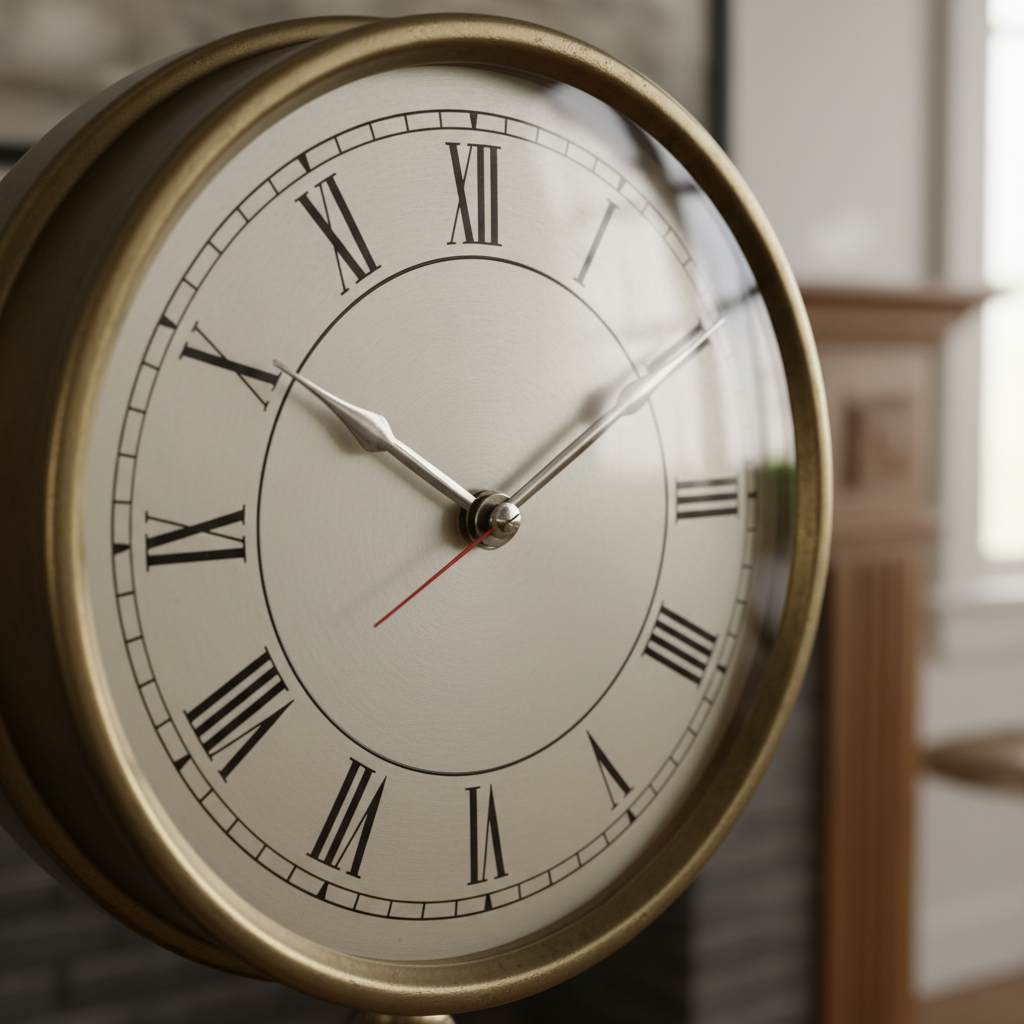 ⚠️ This picture may have spelling mistakes. Trust the words in the lesson.
Putting it All Together: Reading the Time
To read the time, we look at both hands. The hour hand tells us the hour (which hour we are currently in or have just passed). The minute hand tells us the minutes past that hour.
Example 1: Imagine the hour hand is pointing near the 3, and the minute hand is pointing directly at the 6.
- Hour: The hour hand is pointing at or just past the 3, so it's the 3 o'clock hour.
- Minutes: The minute hand is pointing at the 6. We count by fives: 5, 10, 15, 20, 25, 30. So it's 30 minutes past the hour.
- The Time: It is 3:30. We often say this as "three thirty".
Example 2: Let's say the hour hand is just past the 9, and the minute hand is pointing at the 2.
- Hour: The hour hand is just past the 9, so we are in the 9 o'clock hour.
- Minutes: The minute hand is pointing at the 2. We count by fives: 5, 10. So it's 10 minutes past the hour.
- The Time: It is 9:10. We say this as "nine ten".
Example 3: What if the hour hand is near the 11, and the minute hand is pointing at the 7?
- Hour: The hour hand is near the 11.
- Minutes: The minute hand is pointing at the 7. Let's count: 5, 10, 15, 20, 25, 30, 35. It's 35 minutes past the hour.
- The Time: It is 11:35. We say this as "eleven thirty-five".
Special Case: The 12! When the minute hand points to the 12, it means 0 minutes past the hour, or the start of a brand new hour! If the hour hand is pointing directly at the 4 and the minute hand is at the 12, the time is exactly 4:00, or "four o'clock".
Why is Knowing Time Important?
Knowing how to read a clock is like having a superpower! It helps you know when your favorite cartoons are on, when it's time for lunch, or when it's time to go to bed. It helps you plan your day and be on time for special events. You're becoming a time master!
Let's Practice!
Now that you've learned the secrets of the minute hand, let's test your new skills with some fun practice questions!
Keep learning, free
Create a free Syllabax account to unlock practice questions and games for this topic.
Visual Learning Enhanced! 🚀
To help you master this topic, we use Advanced Syllabax AI to generate detailed diagrams and visual models.
Note on Visuals: The AI sometimes makes spelling errors in image labels. Please refer to the lesson text for the correct terminology.