Attraction and repulsion of Magnets (PHYSICS)
Watch this topic in 60 seconds
Free preview · Lesson 1
Understanding Attraction and repulsion of Magnets (PHYSICS)
Magnets: The Push and Pull of Invisible Forces!
Have you ever played with magnets? You know, those cool things that stick to your refrigerator or that you might use in science class? Magnets are amazing because they have a special power: they can push or pull other magnetic things without even touching them! This invisible push or pull is called a force, and for magnets, it's called magnetic force.
What Makes a Magnet Magnetic?
Think of a magnet like a tiny, busy city. Inside the magnet, there are even tinier particles called electrons. These electrons are always moving, like little cars zooming around. In most materials, these electron cars zoom around in all sorts of random directions. But in magnetic materials, something special happens: lots of these electron cars start to line up and spin in the same direction! When they all spin together, they create a powerful, invisible field around the magnet. This is like the whole city's traffic suddenly deciding to go in the same direction, creating a strong current.
Meet the Poles: North and South!
Every magnet has two special ends, kind of like a head and a tail. We call these ends the poles. One pole is called the North pole (often marked with an 'N'), and the other is called the South pole (often marked with an 'S'). These poles are where the magnetic force is strongest, like the busiest train stations in our magnet city.
The Amazing Rule of Magnets: Like Repels, Unlike Attracts!
Now for the really exciting part! Magnets have a special way of interacting with each other based on their poles. It's like a dance with very specific rules:
- Opposites Attract: If you bring the North pole of one magnet close to the South pole of another magnet, they will pull towards each other. They want to hug! This is called attraction. Imagine two friends who haven't seen each other in a while – they can't wait to get together!
- Likes Repel: If you try to bring two North poles together, or two South poles together, they will push away from each other. They don't want to touch! This is called repulsion. It's like two people who have different ideas and just can't agree, so they keep their distance.
This rule, "Opposites attract, and likes repel," is the most important thing to remember about how magnets work!
Magnetic Fields: The Invisible Shield
Around every magnet, there's an invisible area where its magnetic force can be felt. This area is called the magnetic field. Think of it like an invisible bubble surrounding the magnet. If another magnetic object, like a paperclip or another magnet, enters this bubble, it will feel the push or pull.
We can see the shape of these magnetic fields using iron filings. When you sprinkle tiny pieces of iron around a magnet, they line up along the lines of the magnetic field, showing us the invisible forces at play. These lines always go from the North pole to the South pole outside the magnet, and then from the South pole back to the North pole inside the magnet, creating loops.
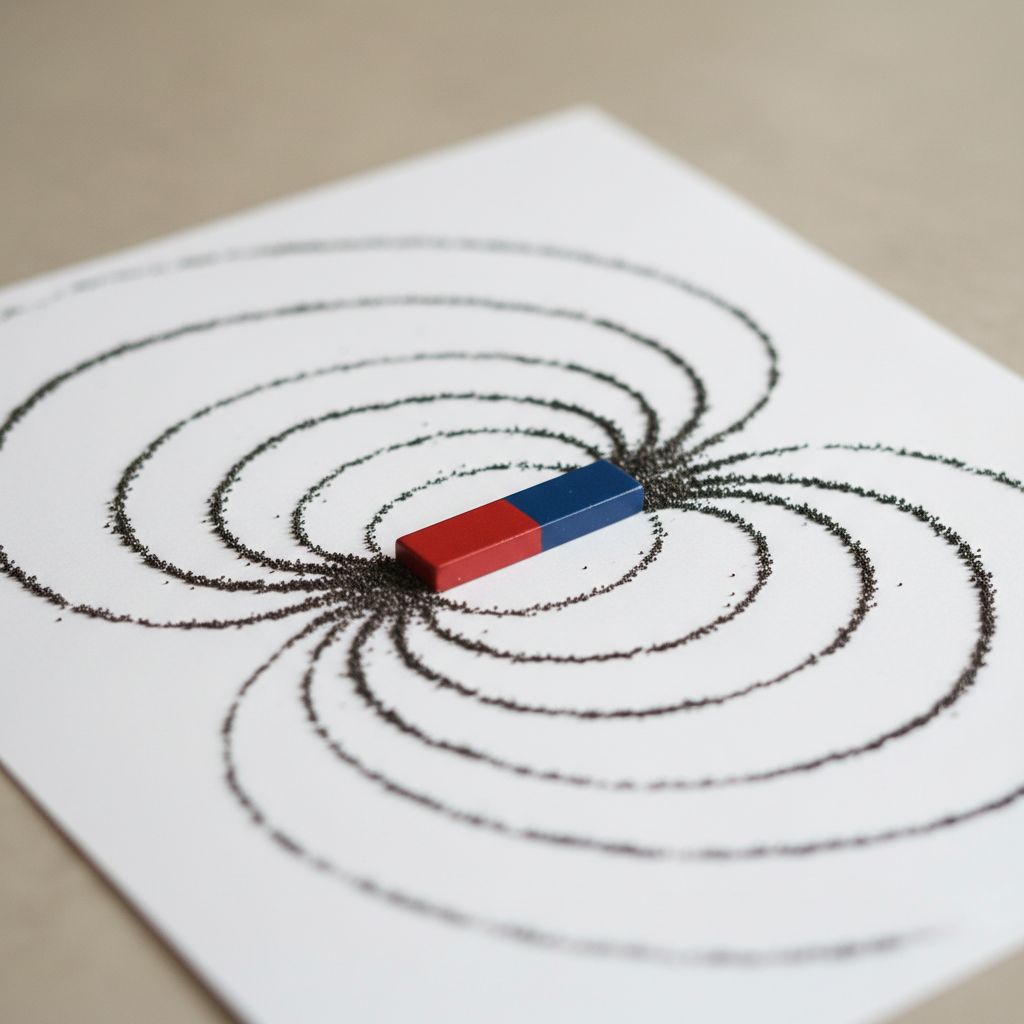
Think of the magnetic field lines like invisible highways that the magnetic force travels on. When another magnet or a magnetic material gets close enough to these highways, it gets affected by the traffic!
What Can Magnets Stick To?
Not everything can be pulled or pushed by a magnet. Magnets only affect things made of certain materials, most commonly iron. That's why paperclips, nails, and screws made of iron stick to magnets. Some other metals, like nickel and cobalt, are also magnetic. Materials like wood, plastic, glass, and aluminum are not magnetic, so magnets won't stick to them.
Real-World Magnets: They're Everywhere!
Magnets aren't just for science experiments! They are used in so many things we use every day:
- Refrigerator doors: The rubber seal around your fridge door has a magnet in it to keep the door tightly shut.
- Speakers: Magnets help create the sound you hear from your speakers and headphones.
- Electric motors: Many toys, fans, and even electric cars use magnets to make things spin.
- Credit cards and ID cards: The black stripe on the back of your credit card has magnetic information stored on it.
- Compasses: A compass needle is a tiny magnet that always points towards the Earth's North pole, helping us find our way.
The Earth: A Giant Magnet!
Did you know that our entire planet Earth acts like a giant magnet? It has a huge magnetic field generated deep inside its core. This is why a compass needle always points north! It's like the Earth has its own North and South poles, and the compass needle is a tiny magnet that's always trying to line up with them.
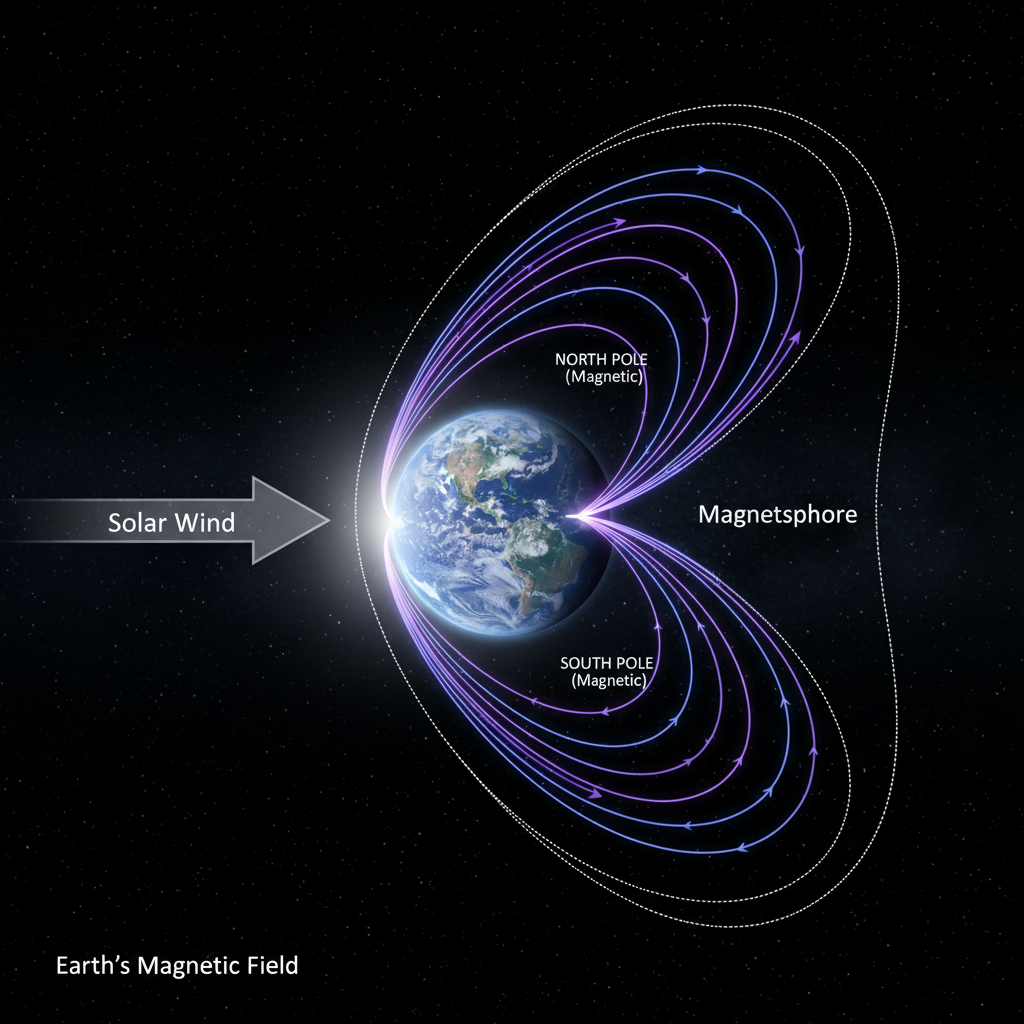
So, magnets are not just simple objects; they are powerful tools that use invisible forces to attract and repel. Understanding these forces helps us understand how many amazing technologies work all around us!
Keep learning, free
Create a free Syllabax account to unlock practice questions and games for this topic.
Visual Learning Enhanced! 🚀
To help you master this topic, we use Advanced Syllabax AI to generate detailed diagrams and visual models.
Note on Visuals: The AI sometimes makes spelling errors in image labels. Please refer to the lesson text for the correct terminology.