Sorting & grouping objects (Data Handling)
Watch this topic in 60 seconds
Free preview · Lesson 1
Understanding Sorting & grouping objects (Data Handling)
Sorting and Grouping Objects: Making Sense of Our World
Imagine your toy box after a fun afternoon of playing. All your cars, dolls, blocks, and crayons are mixed up together! It can be a little messy, right? Sorting and grouping is like tidying up that toy box. It helps us organize things so we can find what we need easily and understand what we have.
In 4th grade, we're going to learn how to sort and group objects. This is a super important skill that helps us understand information, which is called data handling. Think of data as just a fancy word for information, like the toys in your toy box, the different types of fruits in a basket, or even the different colors of pencils in your classroom.
What is Sorting?
Sorting means putting things in a specific order. It's like lining up your toy soldiers from tallest to shortest, or arranging your books by the color of their covers. When we sort, we look for a rule or a characteristic to help us decide where each item goes.
Analogy: Sorting Socks!
Think about your sock drawer. After laundry day, you have lots of socks! To sort them, you might put all the white socks together, all the blue socks together, and all the striped socks together. You are using the 'color' or 'pattern' as your sorting rule. Or, you might even sort them by pairing up the matching ones!
What is Grouping?
Grouping is very similar to sorting, but instead of putting things in a line or order, we put them into different piles or categories based on shared characteristics. If you're sorting your socks, putting all the white socks in one pile and all the blue socks in another pile is grouping. You're creating 'groups' of similar items.
Analogy: A Fruit Salad Party!
Let's say you're making a fruit salad. You have apples, bananas, oranges, and grapes. You might first group all the apples together, all the bananas together, and so on. You're putting them into groups based on what kind of fruit they are. Once they're in groups, it's easier to decide how many of each fruit you want to add to your salad. You're using the 'type of fruit' as your grouping rule.
Why Do We Sort and Group?
Sorting and grouping help us in many ways:
- Easier to Find Things: Like finding your favorite red crayon when all the red crayons are in one box.
- Understanding What We Have: If you group all your building blocks, you can easily see if you have more blue blocks or more yellow blocks.
- Making Comparisons: Once grouped, it's easy to compare the sizes of the groups. Do you have more small toys or big toys?
- Solving Problems: If you need to pick out five blue objects, sorting them into a 'blue' group first makes it much faster!
Common Ways to Sort and Group
We can sort and group objects based on many different things. Here are some common ways:
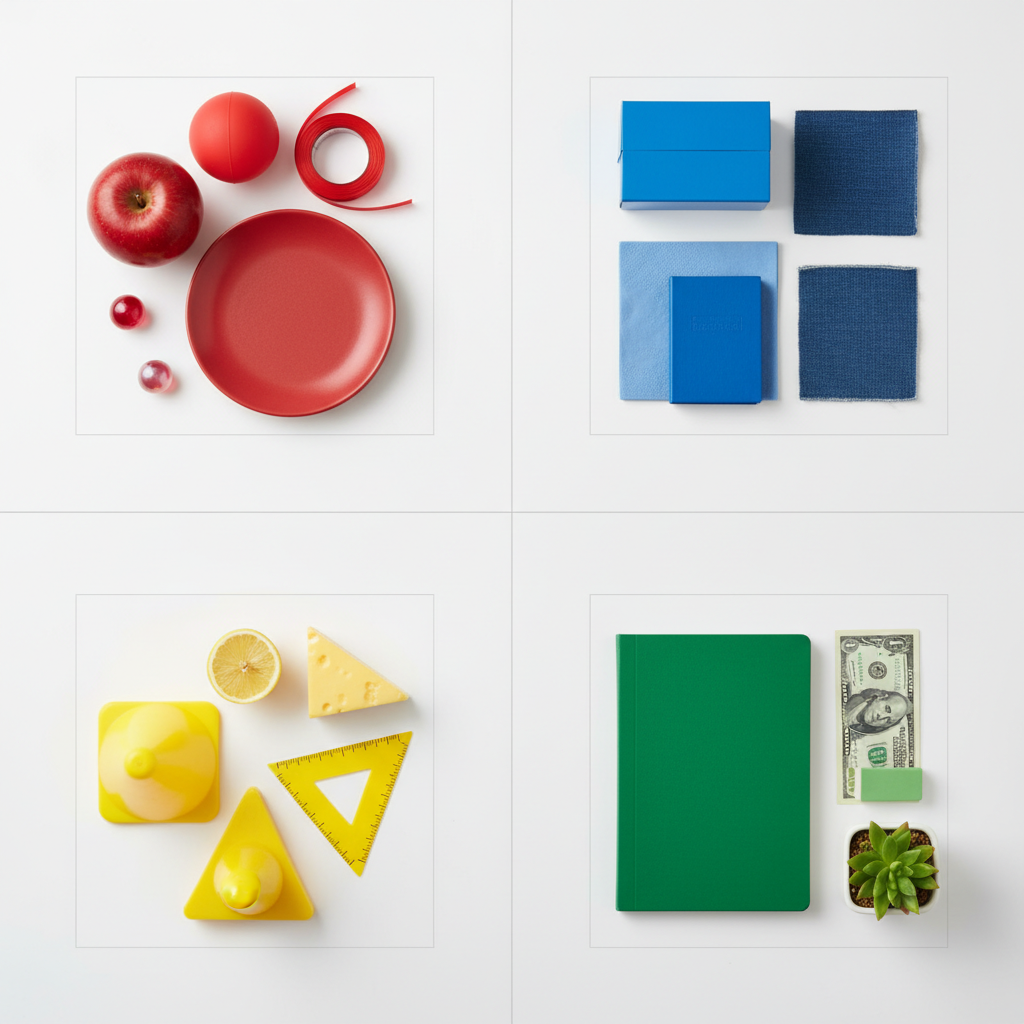
1. By Color
This is one of the easiest ways! You can group all the red objects together, all the green objects together, and so on. Think about a box of crayons – you can sort them by color easily.
2. By Size
You can put big things in one group and small things in another. Or you could sort them from smallest to biggest, like arranging stuffed animals from tiniest to largest.
3. By Shape
Objects can be grouped by their shape. All the round things together (like balls and plates), all the square things together (like blocks and windows), and all the triangular things together (like pizza slices or party hats).
4. By Type or Category
This is when you group things that are alike in what they are. For example:
- Animals: Farm animals in one group, pets in another.
- Food: Fruits in one group, vegetables in another.
- Transportation: Cars in one group, airplanes in another.
5. By Material
You can group things based on what they are made of. All the wooden toys together, all the plastic toys together, and all the fabric toys together.
Let's Practice with an Example!
Imagine you have a collection of school supplies. You have pencils, erasers, rulers, and paper clips. Let's sort and group them!
Scenario 1: Grouping by Type
We can make the following groups:
- Pencils: All the pencils go here.
- Erasers: All the erasers go here.
- Rulers: All the rulers go here.
- Paper Clips: All the paper clips go here.
This helps us see how many of each item we have. Maybe we have 10 pencils, 5 erasers, 3 rulers, and 20 paper clips!
Scenario 2: Grouping by Color (let's pretend some items have color)
Let's say you have:
- Red pencils
- Blue pencils
- Pink erasers
- White erasers
- Yellow rulers
- Green paper clips
Now we can group by color:
- Red Group: Red pencils
- Blue Group: Blue pencils
- Pink Group: Pink erasers
- White Group: White erasers
- Yellow Group: Yellow rulers
- Green Group: Green paper clips
This is useful if you need to find a red pencil, for example.
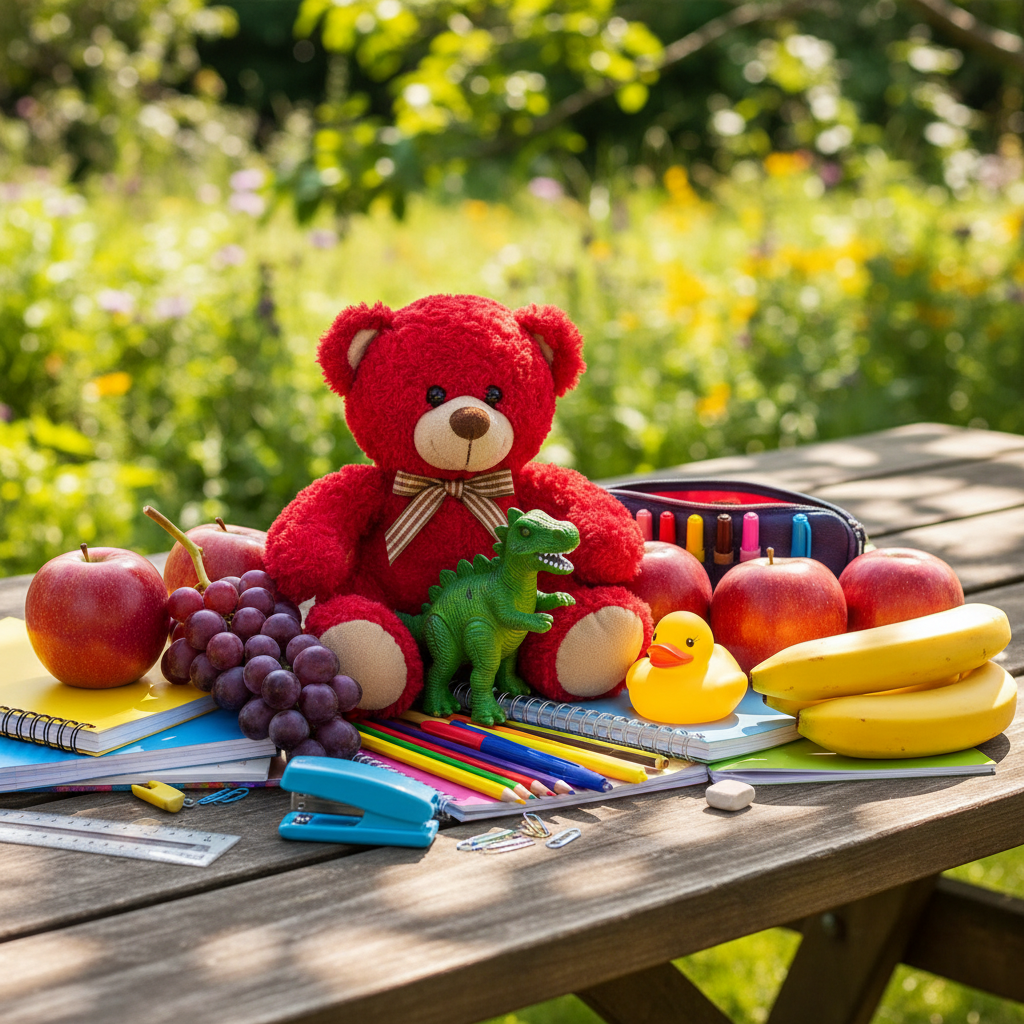
Here is an image showing different objects that can be sorted and grouped:
Sorting and Grouping in Real Life
Sorting and grouping aren't just for school! We do it all the time:
- Grocery Store: Fruits are grouped together, vegetables are grouped together, and canned goods are on their own shelves.
- Library: Books are sorted by genre (like fiction or non-fiction) and then often by author's last name.
- Clothing Store: Shirts are grouped by size and style, pants are in another section.
- Recycling Bin: We sort our trash into paper, plastic, and glass to make recycling easier.
It's like having a system for everything, making life a bit more organized and manageable. When we learn to sort and group, we are learning to understand the world around us better by organizing the information we see.
Here's another visual to help understand the concept:
So, the next time you're tidying up your room, think about how you are sorting and grouping your toys! You're already a data handler!
Keep learning, free
Create a free Syllabax account to unlock practice questions and games for this topic.
Visual Learning Enhanced! 🚀
To help you master this topic, we use Advanced Syllabax AI to generate detailed diagrams and visual models.
Note on Visuals: The AI sometimes makes spelling errors in image labels. Please refer to the lesson text for the correct terminology.