Learning Journey
Watch this topic in 60 seconds
Free preview · Lesson 1
Understanding Inside-outside (Spatial Understanding)
Understanding Inside and Outside: A Spatial Journey!
Hello, super explorers! Today, we're going on an amazing adventure to understand two very important words: INSIDE and OUTSIDE. These words help us describe where things are. Think of them like secret codes for talking about space!
What Does "Inside" Mean?
When something is INSIDE, it means it is contained within something else. Imagine you have a toy box. All your toys are inside the toy box, right? The toy box is like a cozy house for your toys, keeping them all together. Nothing is outside the house!
Let's think of some other examples:
- Your body: Your heart, your lungs, and your tummy are all inside your body.
- A house: You and your family are inside the house when you are playing or sleeping. The walls and roof keep you safe and warm inside.
- A refrigerator: The milk, juice, and yummy snacks are kept inside the refrigerator to stay cold.
- A balloon: The air you blow into a balloon is inside the balloon, making it big and round.
See? When we say something is inside, it's like it's being hugged by another thing. It's on the inner side of a boundary or a container.
What Does "Outside" Mean?
Now, let's talk about OUTSIDE. If something is outside, it means it is not contained. It's not within that special boundary or container. Think about that toy box again. If a teddy bear is sitting next to the toy box, on the floor, it is outside the toy box. It's not in its cozy house!
Here are some examples of things being outside:
- The playground: When you are playing on the swings or the slide, you are outside your house. The fresh air and sunshine are around you.
- A car: When you are walking down the street, you are outside the car. The car is a container for people, but you are not in it right now.
- A bird's nest: A bird's eggs are inside the nest, but the mommy bird might be flying outside the nest to find food.
- A garden: Flowers and trees grow outside in the garden. They are not in a house or a pot, but in the open ground.
Being outside means you are in the open, not in a closed space. It's like stepping out of a hug and into the big world!
Inside vs. Outside: The Big Difference!
Let's look at some pictures to make it even clearer!
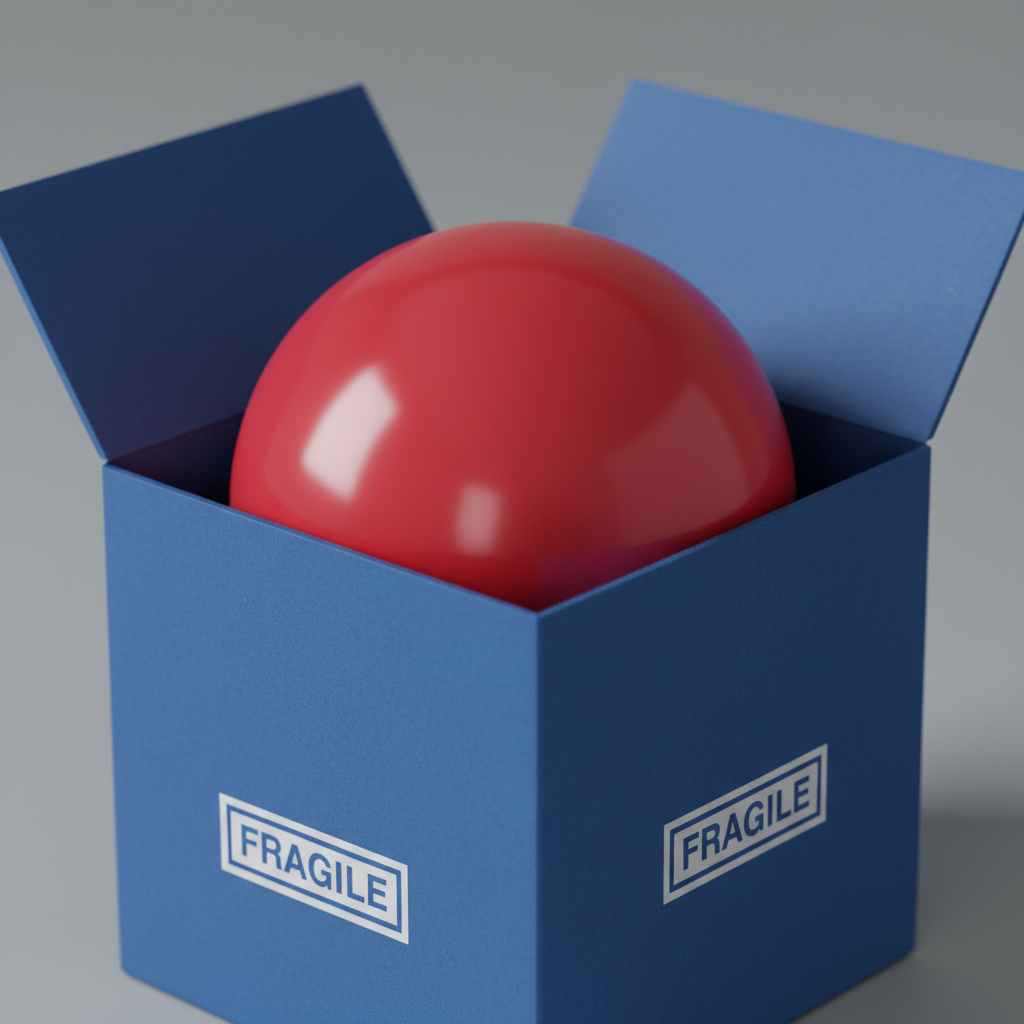
In this picture, the red ball is INSIDE the blue box. The blue box is like a fence or a wall around the ball, keeping it contained.
Now, look at this picture! The green ball is OUTSIDE the blue box. It is not in the box. It's in the open space next to it.
Let's Play a Game!
Imagine you are a detective! Your mission is to find things that are inside and outside.
In your classroom:
- What is inside your pencil case? (Pencils, erasers, crayons!)
- What is outside your pencil case but still in your desk? (Your book, your paper!)
- What is outside your desk? (The floor, the wall, your friend sitting nearby!)
At home:
- What is inside the oven? (Nothing, hopefully, unless you are baking! But usually, it's empty.)
- What is outside the oven but in the kitchen? (The sink, the table, the refrigerator!)
- What is outside the house? (The trees, the street, the sky!)
Why is this important?
Understanding inside and outside helps us understand the world around us. It helps us give directions, describe places, and even play games like hide-and-seek! Knowing where something is helps us find it, put it away, or know if it's safe. It's a basic building block for understanding space and location, which is super important for math, science, and even just everyday life!
Think about it:
When you are in a car, you are inside the car. But the car itself is outside on the road. So, you are inside something that is outside something else! Space can be tricky and fun!
Keep learning, free
Create a free Syllabax account to unlock practice questions and games for this topic.
Visual Learning Enhanced! 🚀
To help you master this topic, we use Advanced Syllabax AI to generate detailed diagrams and visual models.
Note on Visuals: The AI sometimes makes spelling errors in image labels. Please refer to the lesson text for the correct terminology.